Tell us about the job
Takes about a minute. No obligation.
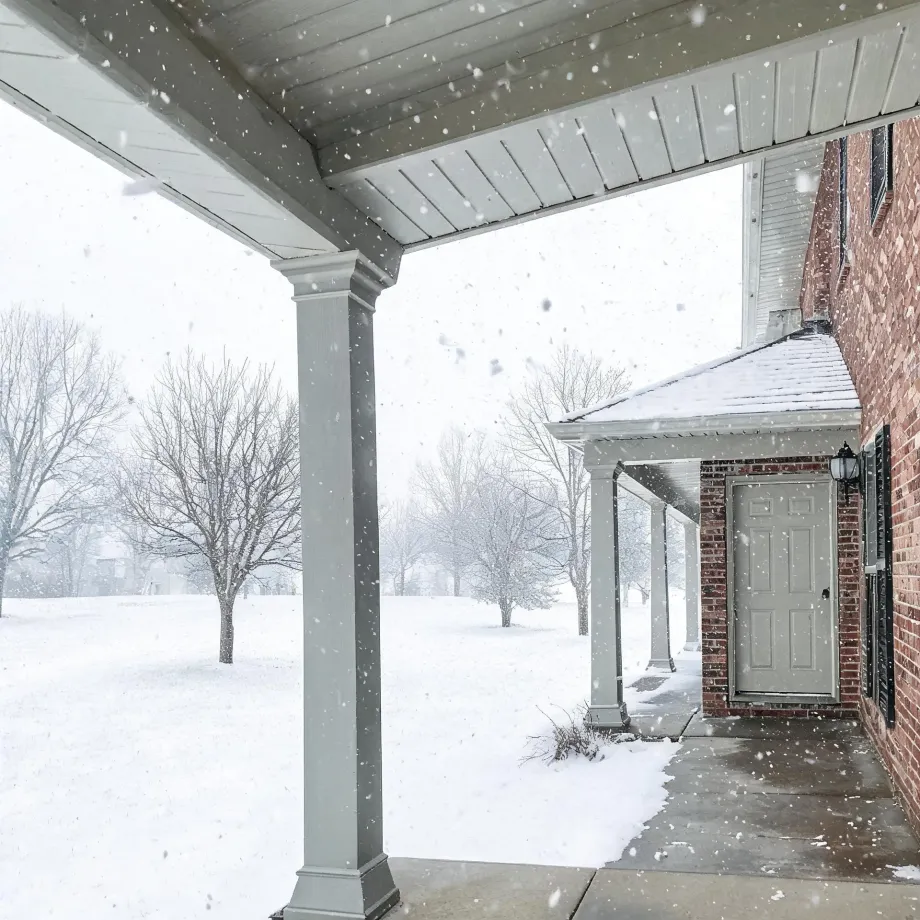
Sizing a furnace for this county starts with the load the burner and heat exchanger are actually asked to carry. Homes in Albany County, NY run heat about eight months a year, from October through May. A contractor who skips a proper load calculation and installs on rule of thumb leaves the heat exchanger cycling hard through cold month after cold month, and undersized equipment runs longer each cycle to hold temperature, which accumulates wear on the ignition system faster than the manufacturer's service intervals assume. The install quality shows the same way: duct runs sealed poorly enough to lose conditioned air force the burner to compensate, and the burner pays for it in runtime.
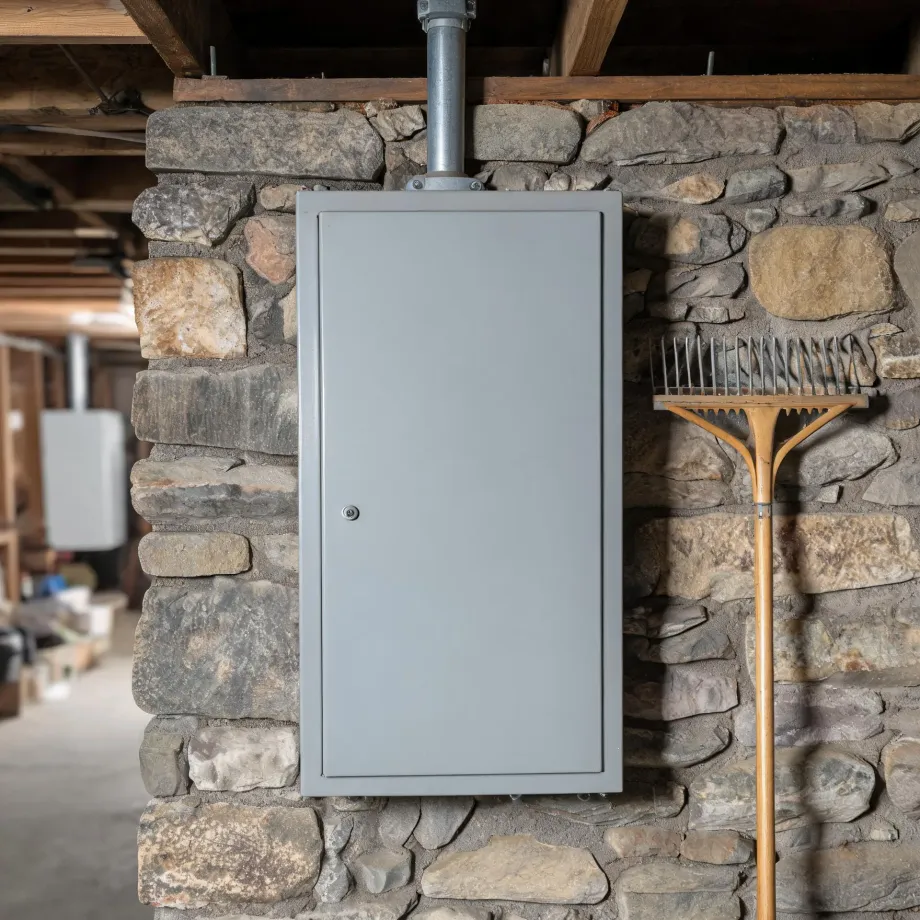
Existing ductwork is what a furnace installation turns on in this county. Half the homes in Albany County, New York were built in 1964 or earlier (2020-2024 ACS 5-year). Duct runs laid out for the equipment of that era follow the geometry and the load calculations of a different kind of heating, and a new furnace does not simply inherit them without assessment. A contractor sizing a new unit here has to measure what the existing duct network will actually move, because a mismatch between the new equipment and the old routing shows up in rooms that overheat or never catch up.
What Gets Installed With a New Furnace
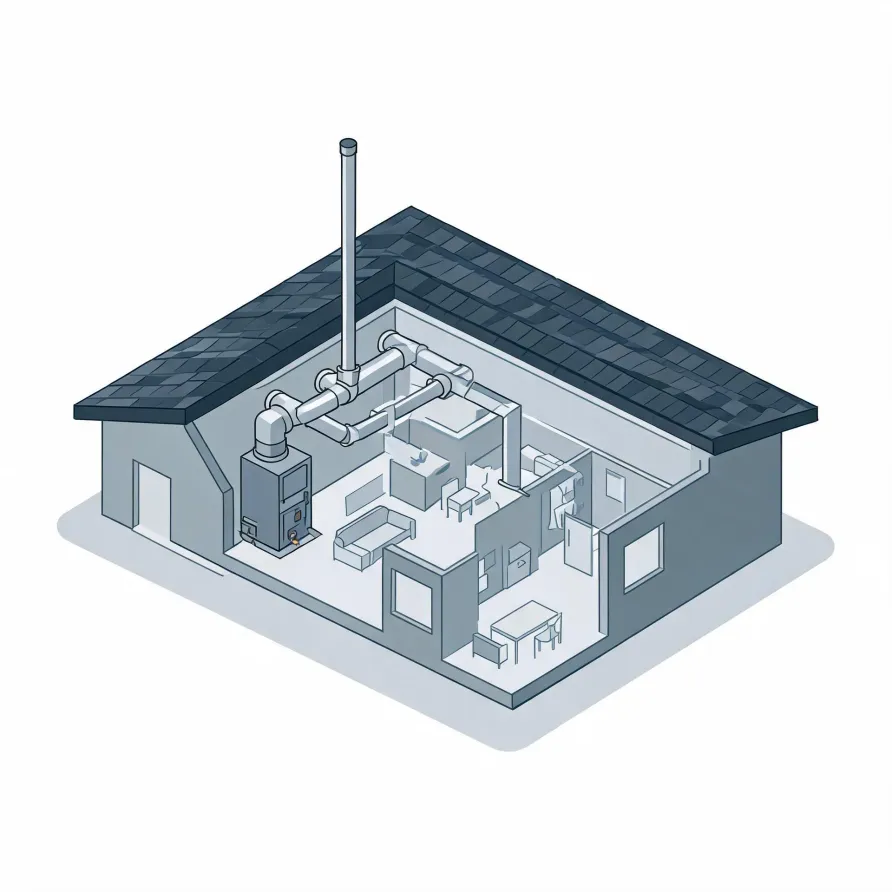
The furnace itself sits in the basement, utility room, or closet and is the unit that produces heat for the house. A contractor mounts the heat exchanger inside that cabinet, and the blower motor beside it pushes conditioned air out through the supply side of the duct system.
The flue pipe runs from the furnace up and out of the house, carrying combustion gases away. The thermostat mounts on a main-floor wall and is the control point that tells the furnace when to fire and when to shut off.
The drawing shows a typical layout, and a licensed contractor determines exactly which components and configurations apply to your home.
Get matched in Albany CountyAlbany County, by the numbers
435 severe weather events were recorded in Albany County, New York between 2015 and 2024.
NOAA National Centers for Environmental Information, Storm Events Database, bulk CSV export, events 2015-01-01 through 2024-12-31.Half the homes in Albany County, New York were built in 1964 or earlier (2020-2024 ACS 5-year).
U.S. Census Bureau, 2020-2024 American Community Survey 5-Year EstimatesAlbany County, New York holds 147,662 housing units (2020-2024 ACS 5-year).
U.S. Census Bureau, 2020-2024 American Community Survey 5-Year EstimatesOwners occupy 56.6% of the occupied homes in Albany County, New York (2020-2024 ACS 5-year).
U.S. Census Bureau, 2020-2024 American Community Survey 5-Year EstimatesFurnace Installation Rules for Albany County, New York4 codes, standards, and laws
What the Installation Actually Looks Like
Non-weatherized gas furnaces manufactured on or after November 19, 2015 must reach 80.0 percent AFUE.
Non-weatherized oil-fired furnaces manufactured on or after November 19, 2015 must reach 83.0 percent AFUE.
Mobile home gas furnaces manufactured on or after November 19, 2015 must reach 80.0 percent AFUE.
Non-weatherized gas furnaces manufactured on or after December 18, 2028 must reach 95.0 percent AFUE, up from the 80.0 percent minimum that applies to units manufactured before that date.
Severe Weather Events in Albany County
Weather puts real demands on heating equipment: the harder a winter, the harder a furnace works to hold temperature. How much strain equipment faces in Albany County is a local question, and the record below reflects the conditions contractors here actually size and install for.
435 severe weather events, 2015–2024. Source: NOAA National Centers for Environmental Information, Storm Events Database.