Tell us about the job
Takes about a minute. No obligation.
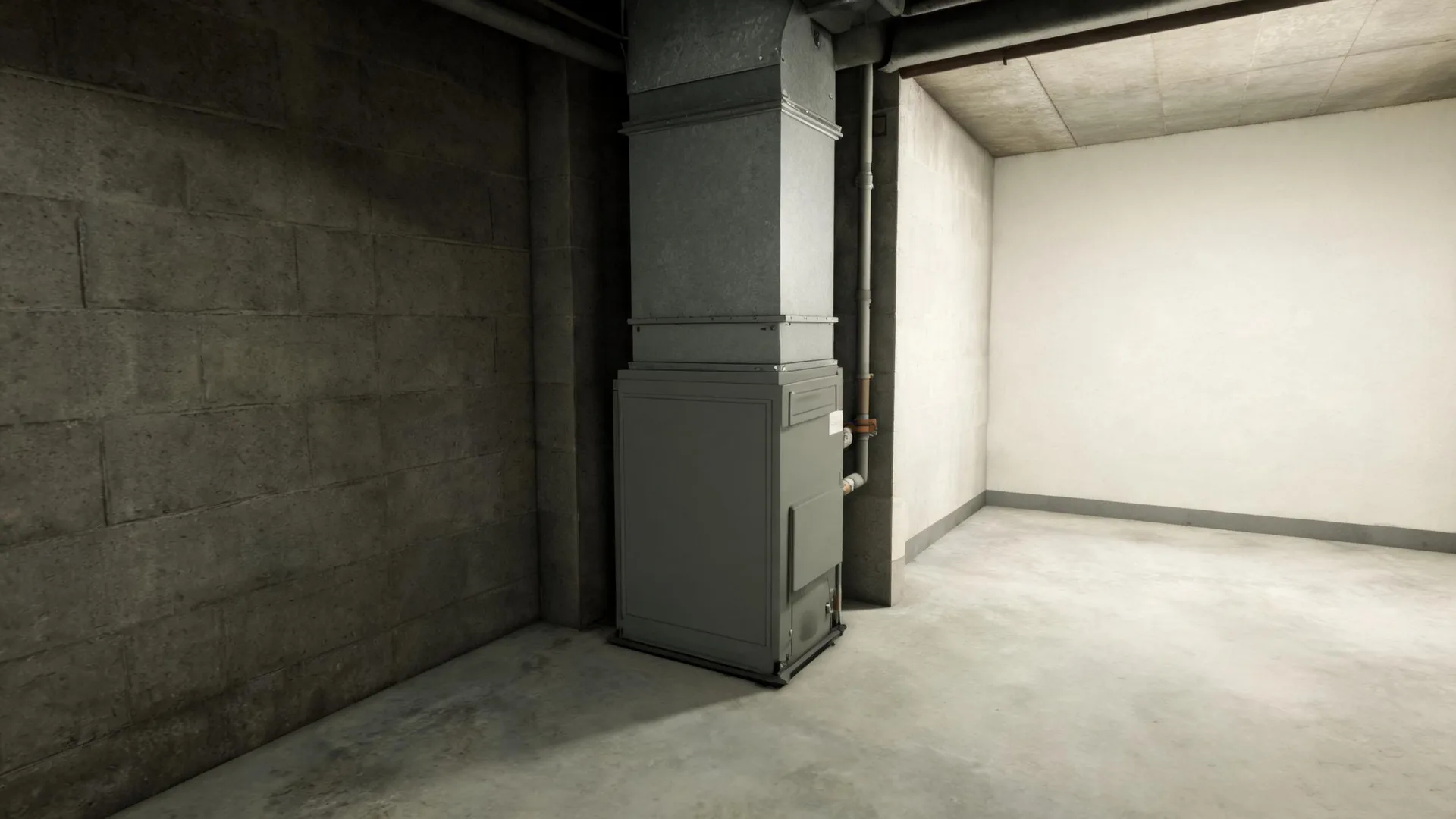
Sizing a furnace for a Cortland County home starts with what the burner is actually being asked to carry. Homes in Cortland County, NY run heat about nine months a year, from September through May. A heat exchanger cycling through a season that long accumulates wear on the ignition system and the burner components at a pace that a loose or underspecified install accelerates. Contractors quoting a replacement here run a full load calculation before touching equipment, because an undersized unit works harder and fails sooner on this schedule.
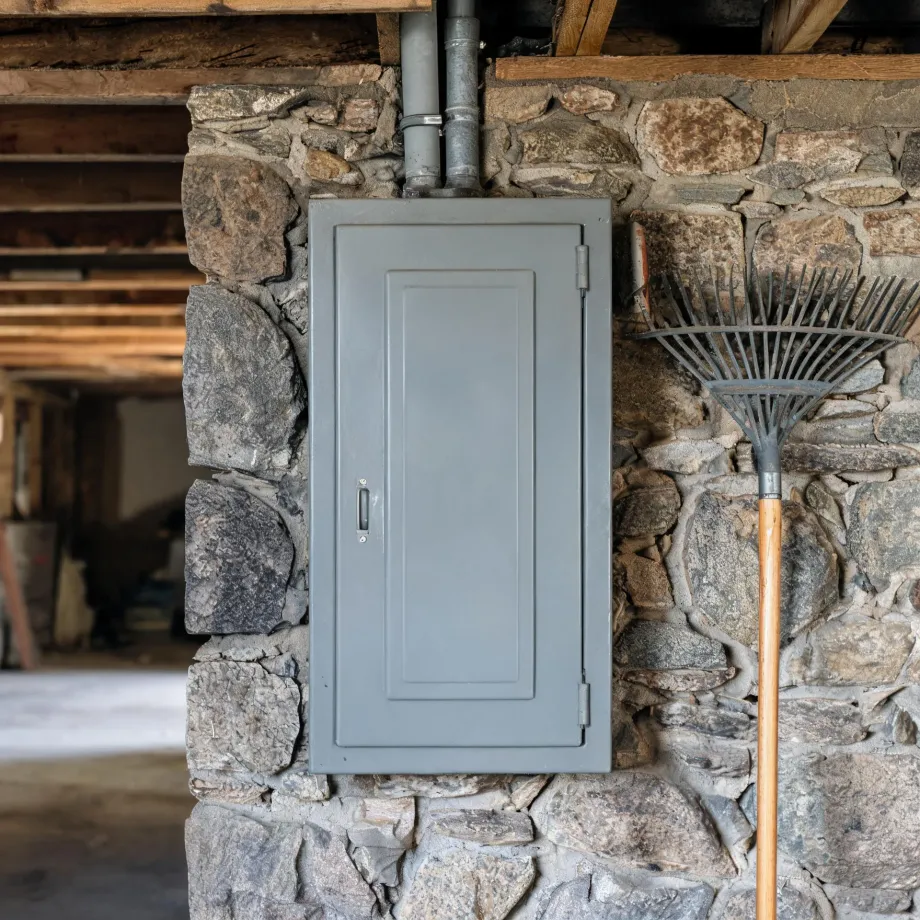
Existing ductwork is where a furnace installation either fits or does not. Half the homes in Cortland County, New York were built in 1961 or earlier (2020-2024 ACS 5-year). Ducts put in for an older system carry specific dimensions, routing paths, and load assumptions that a new furnace may not match, and a contractor has to assess what is already in the walls before the new unit can be correctly placed and connected. The electrical service gets the same look, since what a modern furnace draws has to be supported by what the house already has. Those two findings shape the scope before any equipment is ever ordered.
What Gets Installed With a New Furnace
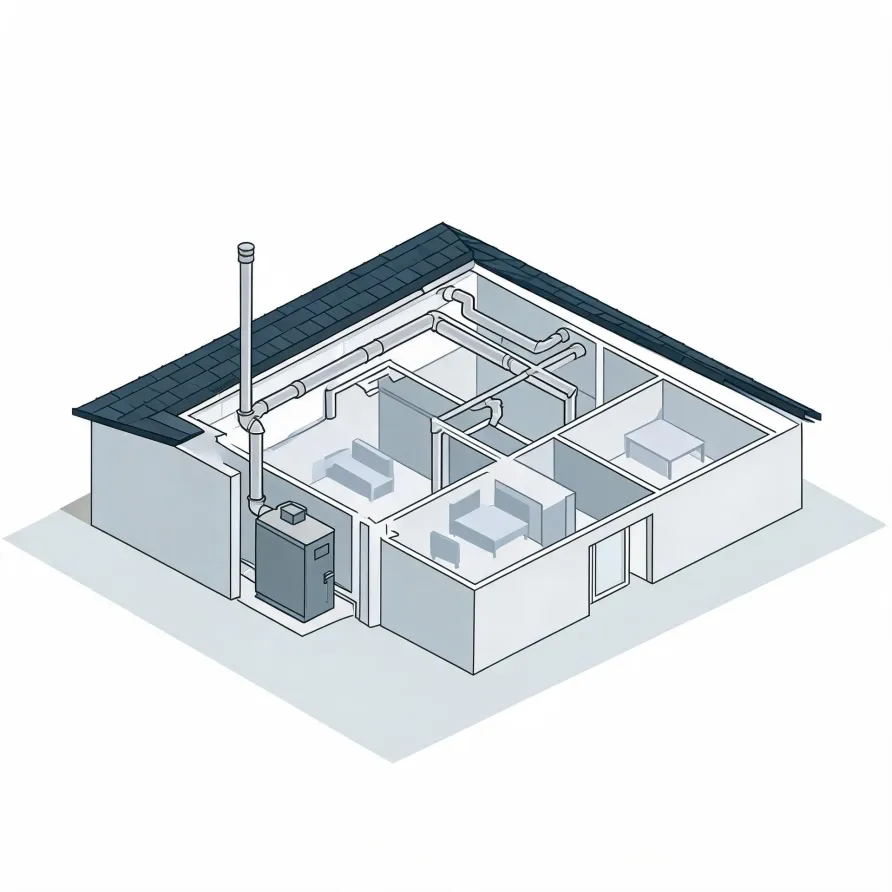
The furnace itself sits in the basement, utility room, or crawl space and is the unit that generates heat. A heat exchanger inside it warms the air that moves through your home, while a burner assembly and ignition system handle combustion. The blower motor, housed in the same cabinet, pushes that warmed air out.
The flue pipe runs from the furnace to an exterior wall or through the roof, carrying combustion gases out of the house. A separate supply plenum connects the furnace cabinet to the duct system above it. The thermostat mounts on an interior wall and tells the furnace when to fire and when to stop.
The drawing shows a typical layout, and a licensed contractor determines what the configuration looks like in your specific home.
Get matched in Cortland CountyCortland County, by the numbers
156 severe weather events were recorded in Cortland County, New York between 2015 and 2024.
NOAA National Centers for Environmental Information, Storm Events Database, bulk CSV export, events 2015-01-01 through 2024-12-31.Half the homes in Cortland County, New York were built in 1961 or earlier (2020-2024 ACS 5-year).
U.S. Census Bureau, 2020-2024 American Community Survey 5-Year EstimatesCortland County, New York holds 20,841 housing units (2020-2024 ACS 5-year).
U.S. Census Bureau, 2020-2024 American Community Survey 5-Year EstimatesOwners occupy 66.3% of the occupied homes in Cortland County, New York (2020-2024 ACS 5-year).
U.S. Census Bureau, 2020-2024 American Community Survey 5-Year EstimatesFurnace Installation Rules for Cortland County, New York4 sourced standards and codes
What HVAC Installation Looks Like in Cortland County
Non-weatherized gas furnaces manufactured on or after November 19, 2015 must reach 80.0 percent AFUE.
Non-weatherized oil-fired furnaces manufactured on or after November 19, 2015 must reach 83.0 percent AFUE.
Mobile home gas furnaces manufactured on or after November 19, 2015 must reach 80.0 percent AFUE.
Non-weatherized gas furnaces manufactured on or after December 18, 2028 must reach 95.0 percent AFUE, up from the 80.0 percent minimum that applies to units manufactured before that date.
Severe Weather Events in Cortland County
Extreme weather puts real hours on heating equipment. A furnace that carries a home through hard winters in Cortland County ages differently than one in a mild climate, and that shapes what a contractor recommends for installation here.
156 severe weather events, 2015–2024. Source: NOAA National Centers for Environmental Information, Storm Events Database.