Tell us about the job
Takes about a minute. No obligation.
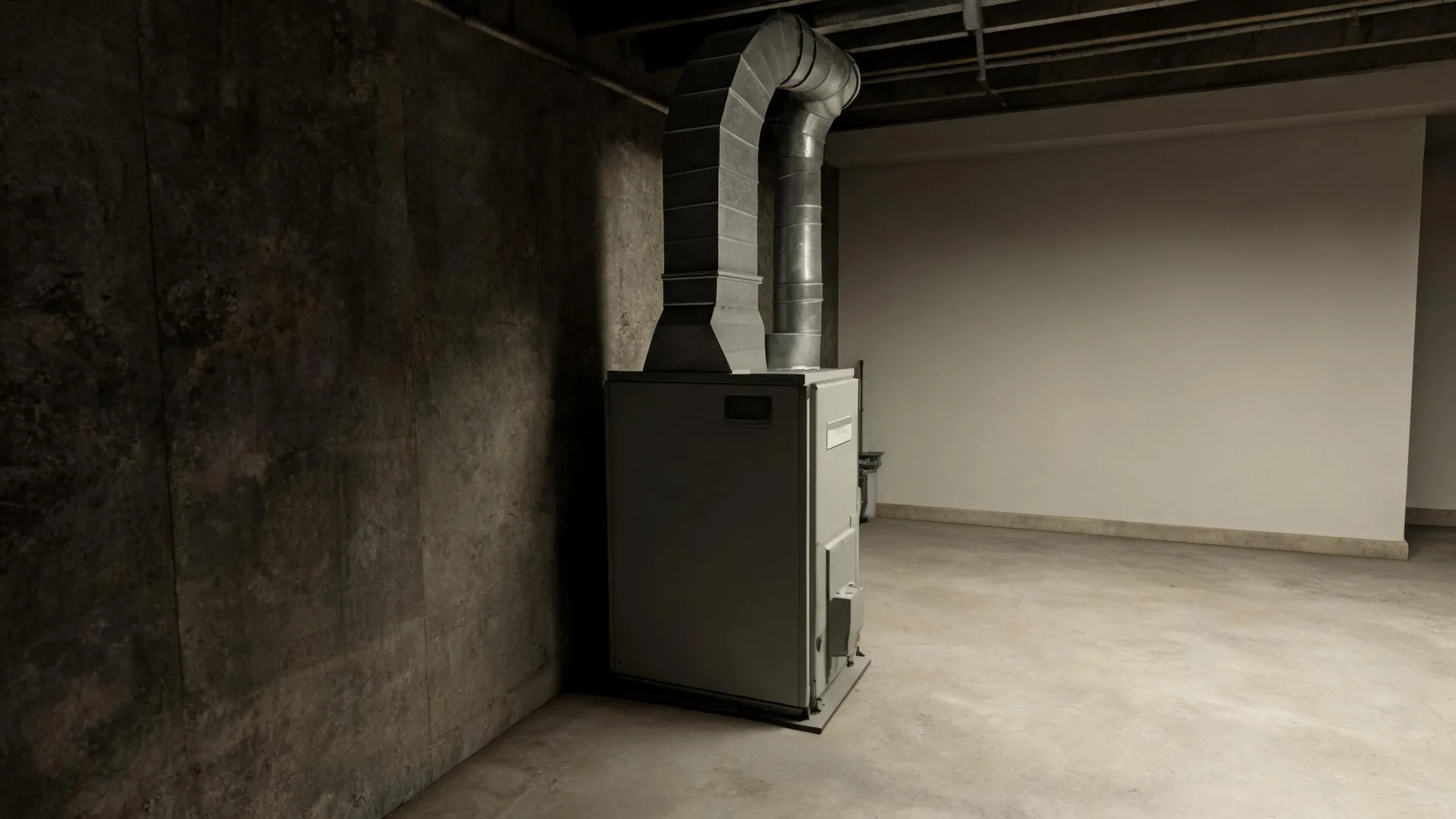
Sizing a furnace for Warren County means accounting for a load that runs the burner and heat exchanger hard through most of the year, not just the coldest weeks. Homes in Warren County, NY run heat about nine months a year, from September through May. A contractor quoting a replacement here has to work out the right output for the house's envelope and duct layout before selecting equipment, because an undersized unit cycles harder and an oversized one short-cycles, and both patterns accelerate wear on the ignition system and heat exchanger. The quality of the installation itself carries the same weight: a poorly sealed duct connection or a miscalibrated burner reveals itself quickly when the equipment runs as much as it does here.
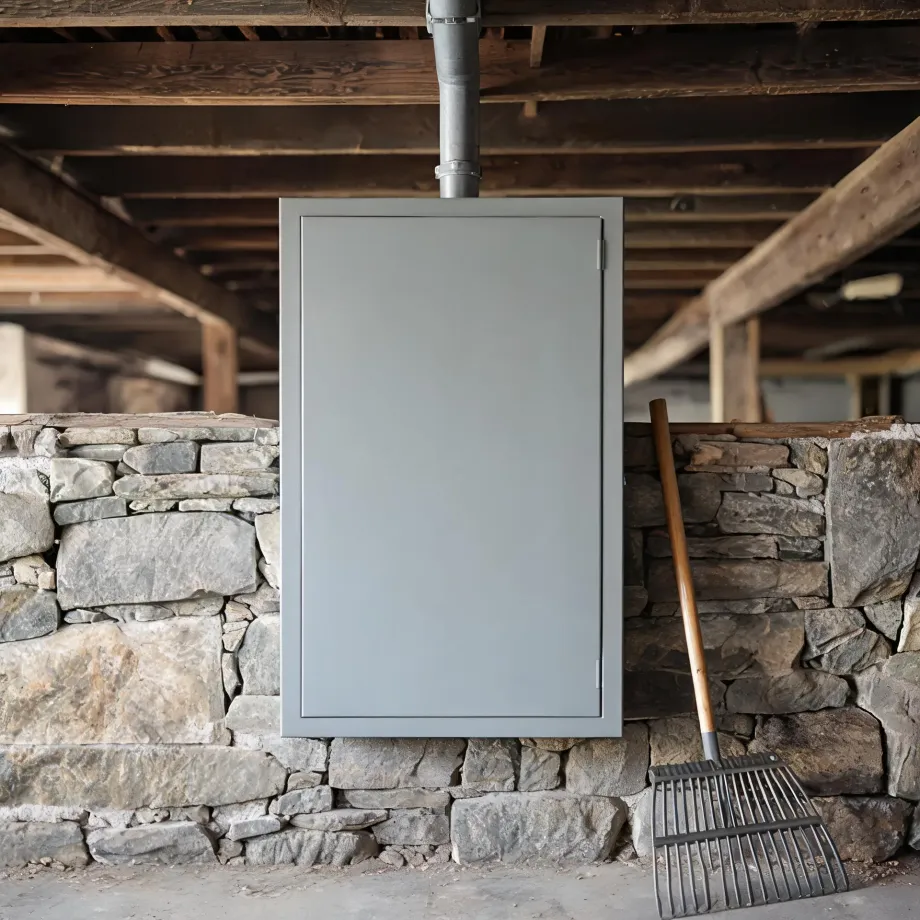
Ductwork laid down for one generation of equipment does not always carry the next. Half the homes in Warren County, New York were built in 1973 or earlier (2020-2024 ACS 5-year). A contractor sizing a new furnace here has to read what the existing runs will and will not pass before the equipment question even opens, because duct dimensions, trunk sizes, and branch layouts from that era were built around systems that are no longer made. The electrical side follows the same logic: what the panel was sized for and what a modern furnace draws are two figures a contractor measures on site. The unit itself gets chosen after the house has been read.
What Gets Installed With a New Furnace
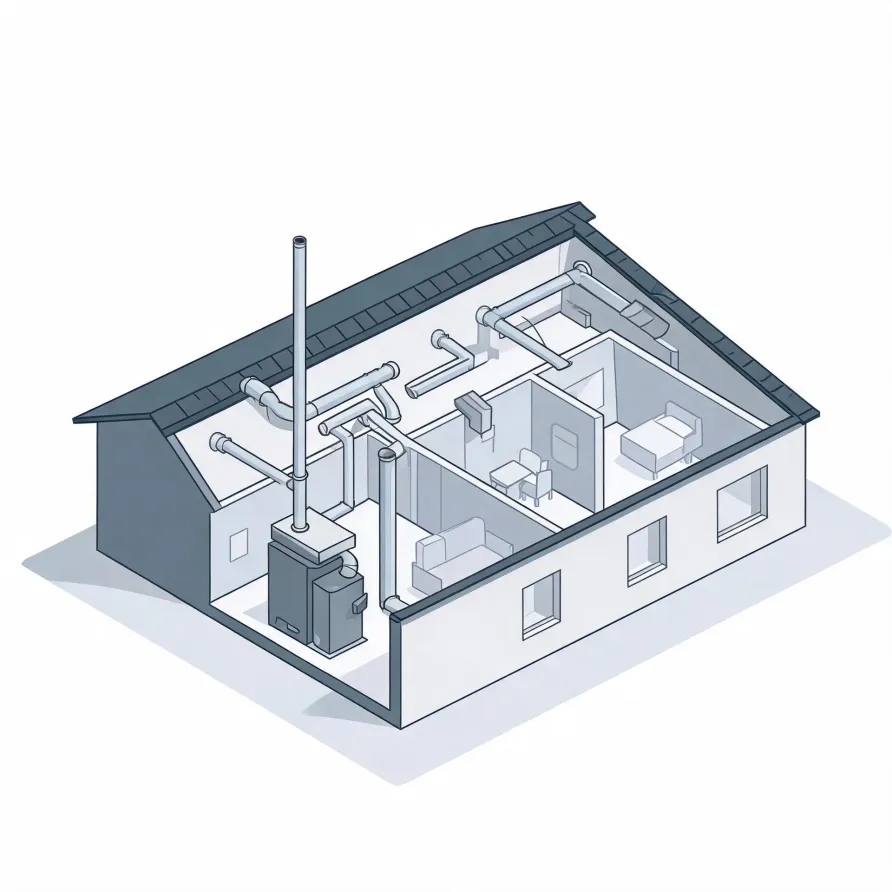
The furnace itself sits in the basement, utility room, or mechanical closet and is the unit that generates heat for the house. A contractor also installs the flue or venting pipe, which runs from the furnace to an exterior wall or up through the roof to exhaust combustion gases safely out of the home.
The air handler, if separate from the furnace cabinet, gets placed alongside it and moves conditioned air into the duct system. The thermostat goes on an interior wall, giving the homeowner control over when the furnace runs and what temperature it holds.
The drawing shows the general layout of these components, and a licensed contractor determines exactly what applies to your house and its existing setup.
Get matched in Warren CountyWarren County, NY, by the numbers
265 severe weather events were recorded in Warren County, New York between 2015 and 2024.
NOAA National Centers for Environmental Information, Storm Events Database, bulk CSV export, events 2015-01-01 through 2024-12-31.Half the homes in Warren County, New York were built in 1973 or earlier (2020-2024 ACS 5-year).
U.S. Census Bureau, 2020-2024 American Community Survey 5-Year EstimatesWarren County, New York holds 40,342 housing units (2020-2024 ACS 5-year).
U.S. Census Bureau, 2020-2024 American Community Survey 5-Year EstimatesOwners occupy 72.1% of the occupied homes in Warren County, New York (2020-2024 ACS 5-year).
U.S. Census Bureau, 2020-2024 American Community Survey 5-Year EstimatesFurnace Installation Rules and Codes for Warren County, New York4 sourced rules and standards
What HVAC Installation Looks Like in Warren County
Non-weatherized gas furnaces manufactured on or after November 19, 2015 must reach 80.0 percent AFUE.
Non-weatherized oil-fired furnaces manufactured on or after November 19, 2015 must reach 83.0 percent AFUE.
Mobile home gas furnaces manufactured on or after November 19, 2015 must reach 80.0 percent AFUE.
Non-weatherized gas furnaces manufactured on or after December 18, 2028 must reach 95.0 percent AFUE, up from the 80.0 percent minimum that applies to units manufactured before that date.
Severe Weather Events in Warren County
Weather in Warren County puts real demands on heating equipment: hard winters and weather swings shorten the working life of a furnace and raise the stakes on how it is sized and installed. That is why local conditions matter when choosing a contractor who knows what the equipment is up against.
265 severe weather events, 2015–2024. Source: NOAA National Centers for Environmental Information, Storm Events Database.