
Tell us about the job
Takes about a minute. No obligation.
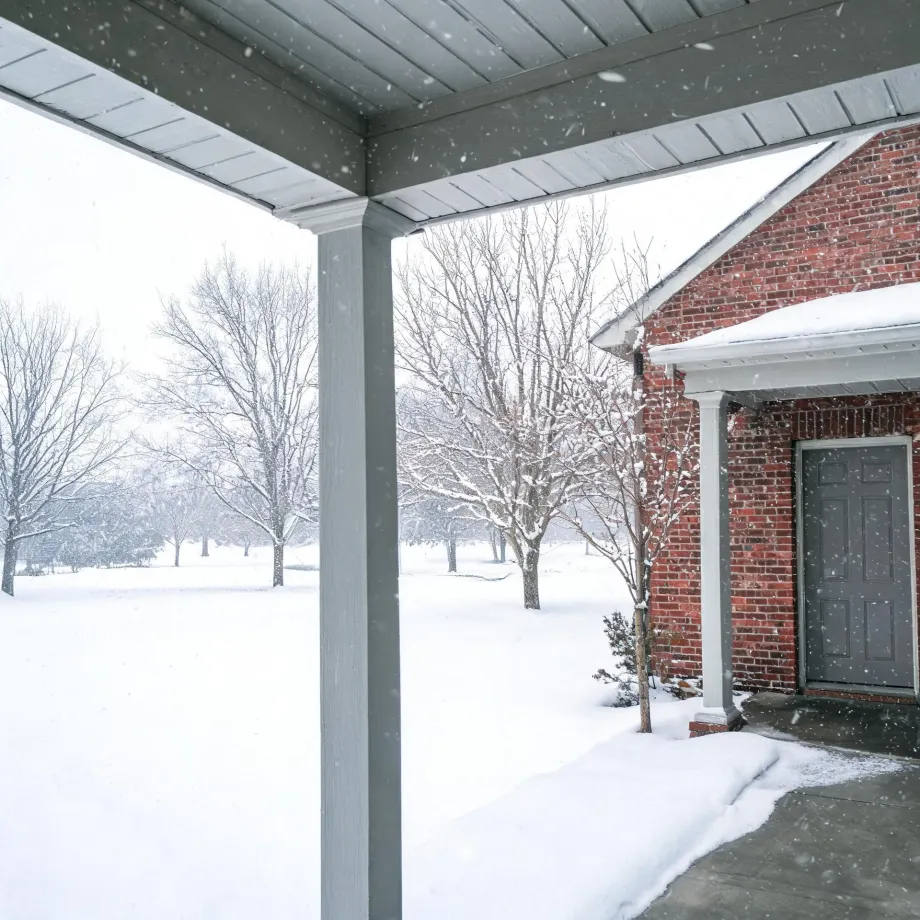
Sizing a furnace for Fulton County means accounting for a burner that cycles through cold nights from fall well into spring. Homes in Fulton County, NY run heat about nine months a year, from September through May. The heat exchanger, the ignition system, and the blower each accumulate wear against that kind of continuous demand, and a unit that is undersized or poorly sealed at installation has little idle time to mask the problem. A contractor quoting a new furnace here has to run a load calculation that reflects the actual envelope of the house, because a generic estimate produces a system that is chasing the thermostat before its first full season is out.
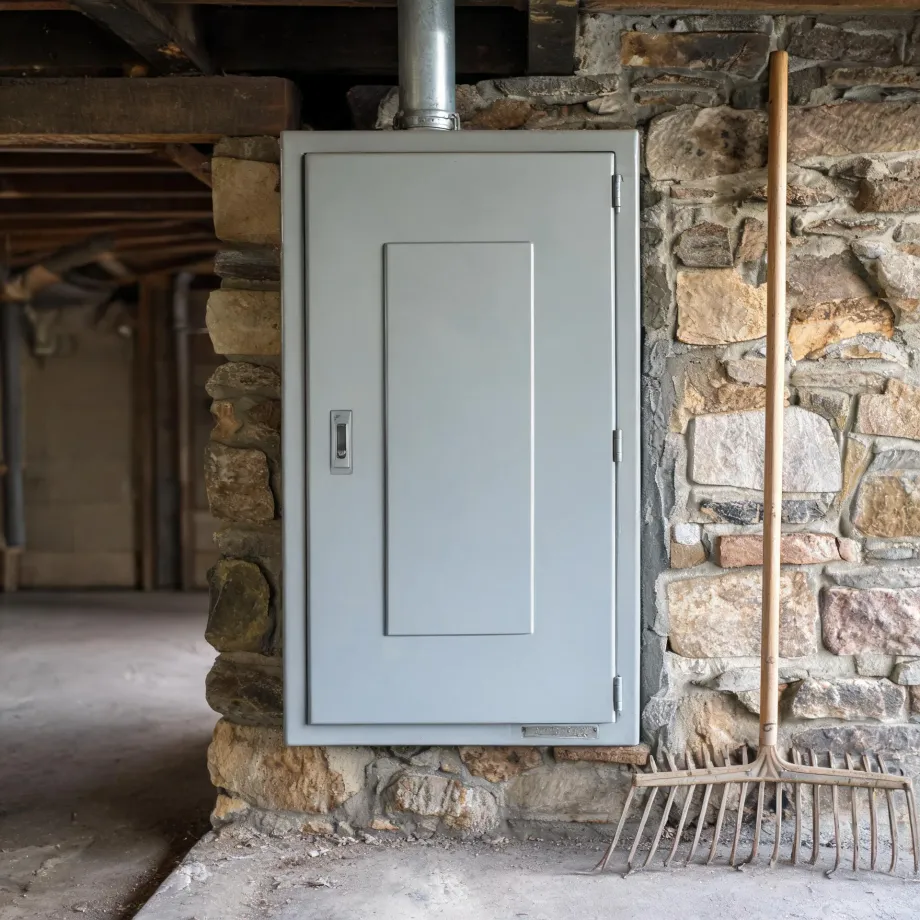
Ductwork laid down for older heating systems was sized for different load demands, and a new furnace has to move air through whatever those original runs allow. Where transitions, trunk sizing, or branch layouts were built around equipment long since replaced, a contractor has to assess whether the existing distribution can carry the new system before the unit itself matters at all. Half the homes in Fulton County, New York were built in 1954 or earlier (2020-2024 ACS 5-year). That depth of housing history shows up most directly in the duct system, where what remains from earlier installations sets the actual boundary of the job.
What Gets Installed With a New Furnace
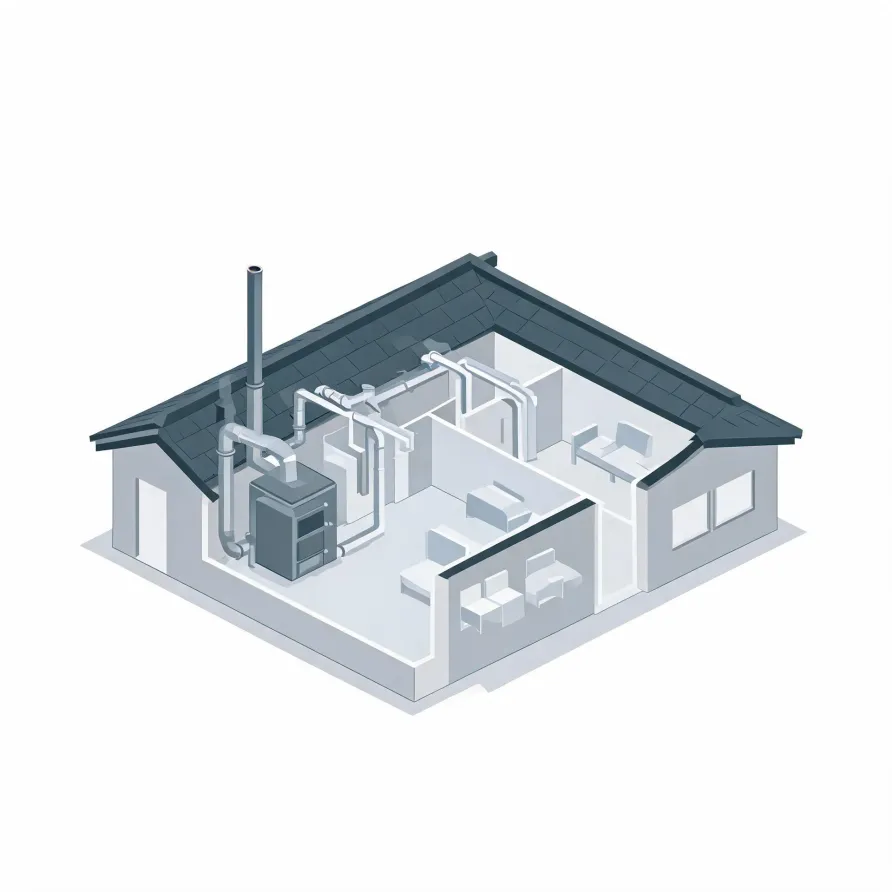
The furnace itself sits in a basement, utility room, or closet and is the central unit a contractor places first. Attached to it is the flue or vent pipe, which runs upward through the house and exits through a wall or roof to carry combustion gases out. The air handler section of the furnace draws in return air, conditions it, and pushes it back out.
The blower motor lives inside the furnace cabinet and moves air through the system once the burners have done their work. A contractor also sets the thermostat on an interior wall, wiring it back to the furnace so the homeowner has a single point of control. The gas line connection and shutoff valve are positioned at the unit itself.
The drawing shows a general layout of these components, and a licensed contractor determines exactly what applies to your house.
Get matched in Fulton CountyFulton County, by the numbers
220 severe weather events were recorded in Fulton County, New York between 2015 and 2024.
NOAA National Centers for Environmental Information, Storm Events Database, bulk CSV export, events 2015-01-01 through 2024-12-31.Half the homes in Fulton County, New York were built in 1954 or earlier (2020-2024 ACS 5-year).
U.S. Census Bureau, 2020-2024 American Community Survey 5-Year EstimatesFulton County, New York holds 28,199 housing units (2020-2024 ACS 5-year).
U.S. Census Bureau, 2020-2024 American Community Survey 5-Year EstimatesOwners occupy 71.4% of the occupied homes in Fulton County, New York (2020-2024 ACS 5-year).
U.S. Census Bureau, 2020-2024 American Community Survey 5-Year EstimatesFurnace Installation Rules for Fulton County, New York4 sourced standards and codes
What the Installation Actually Looks Like
Non-weatherized gas furnaces manufactured on or after November 19, 2015 must reach 80.0 percent AFUE.
Non-weatherized oil-fired furnaces manufactured on or after November 19, 2015 must reach 83.0 percent AFUE.
Mobile home gas furnaces manufactured on or after November 19, 2015 must reach 80.0 percent AFUE.
Non-weatherized gas furnaces manufactured on or after December 18, 2028 must reach 95.0 percent AFUE, up from the 80.0 percent minimum that applies to units manufactured before that date.
Severe Weather Events in Fulton County
Weather puts a measurable load on heating equipment, and that load shapes what a furnace needs to handle over its working life. What holds in one county does not hold everywhere, which is why installation decisions in Fulton County belong to contractors who know this area.
220 severe weather events, 2015–2024. Source: NOAA National Centers for Environmental Information, Storm Events Database.