Tell us about the job
Takes about a minute. No obligation.
Sizing a furnace for this county means accounting for a burner that cycles from October through May, not a few cold weeks. Homes in Nassau County, NY run heat about eight months a year, from October through May. The heat exchanger, the burner assembly, and the ignition system all accumulate wear across that stretch, and a system that leaves the installer's hands undersized or with leaky duct connections has nowhere to hide it. A contractor quoting a replacement here runs a load calculation against the actual floor area and insulation of the house before settling on equipment, because a unit that cannot sustain output through a long heating demand will fail the exchanger first.
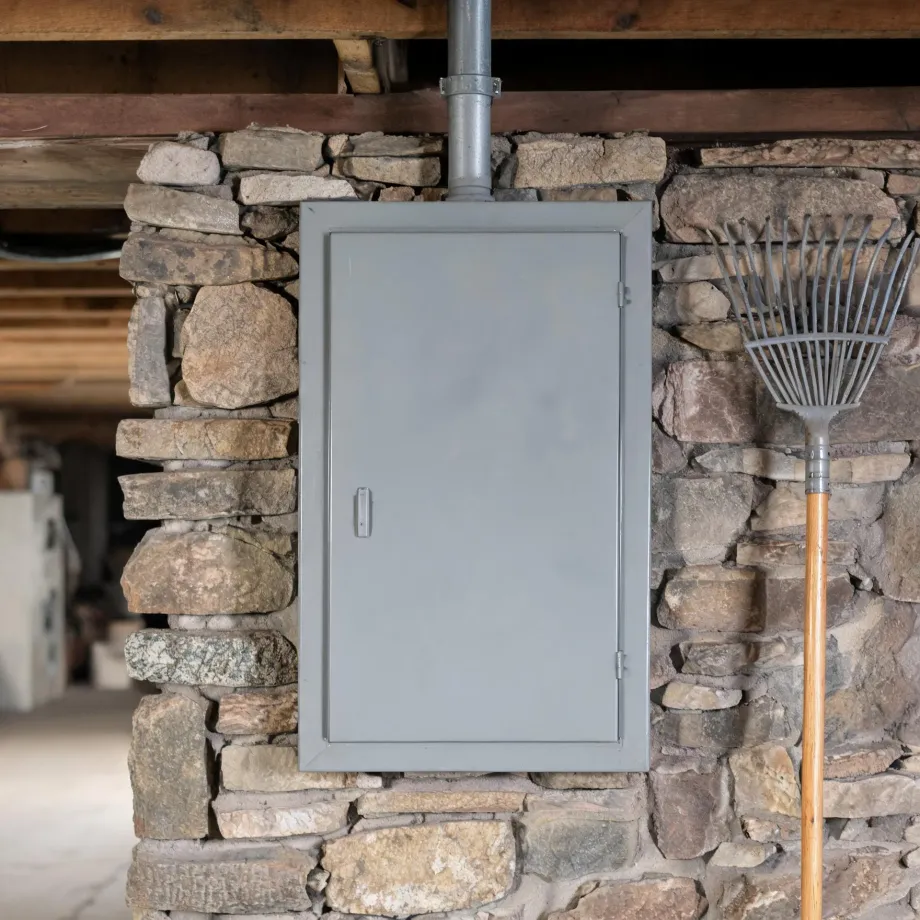
Ductwork laid out for an older furnace carries assumptions about airflow, static pressure, and trunk sizing that a new unit may not share. Half the homes in Nassau County, New York were built in 1955 or earlier (2020-2024 ACS 5-year). That span between when a house was built and what a contractor is now dropping into it is where furnace installation actually gets decided: whether the existing duct runs can carry the new system's output without pressure problems, and whether the electrical service at the panel can handle the load. A contractor who skips that assessment and quotes on the unit alone is pricing the wrong variable.
What Gets Installed With a New Furnace
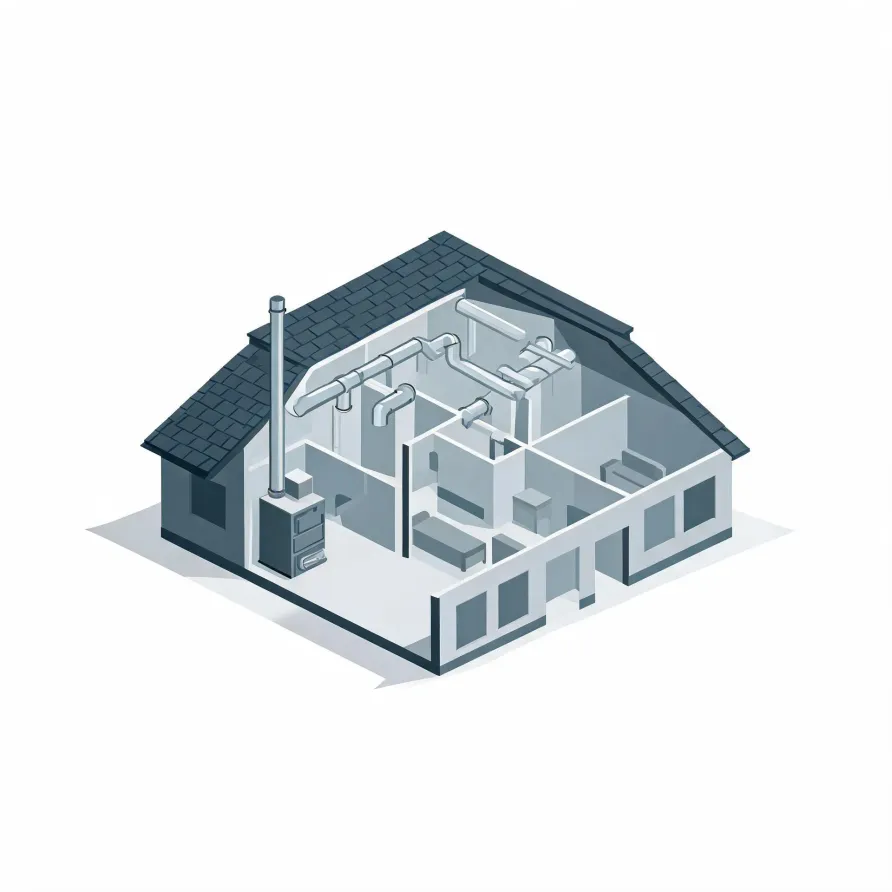
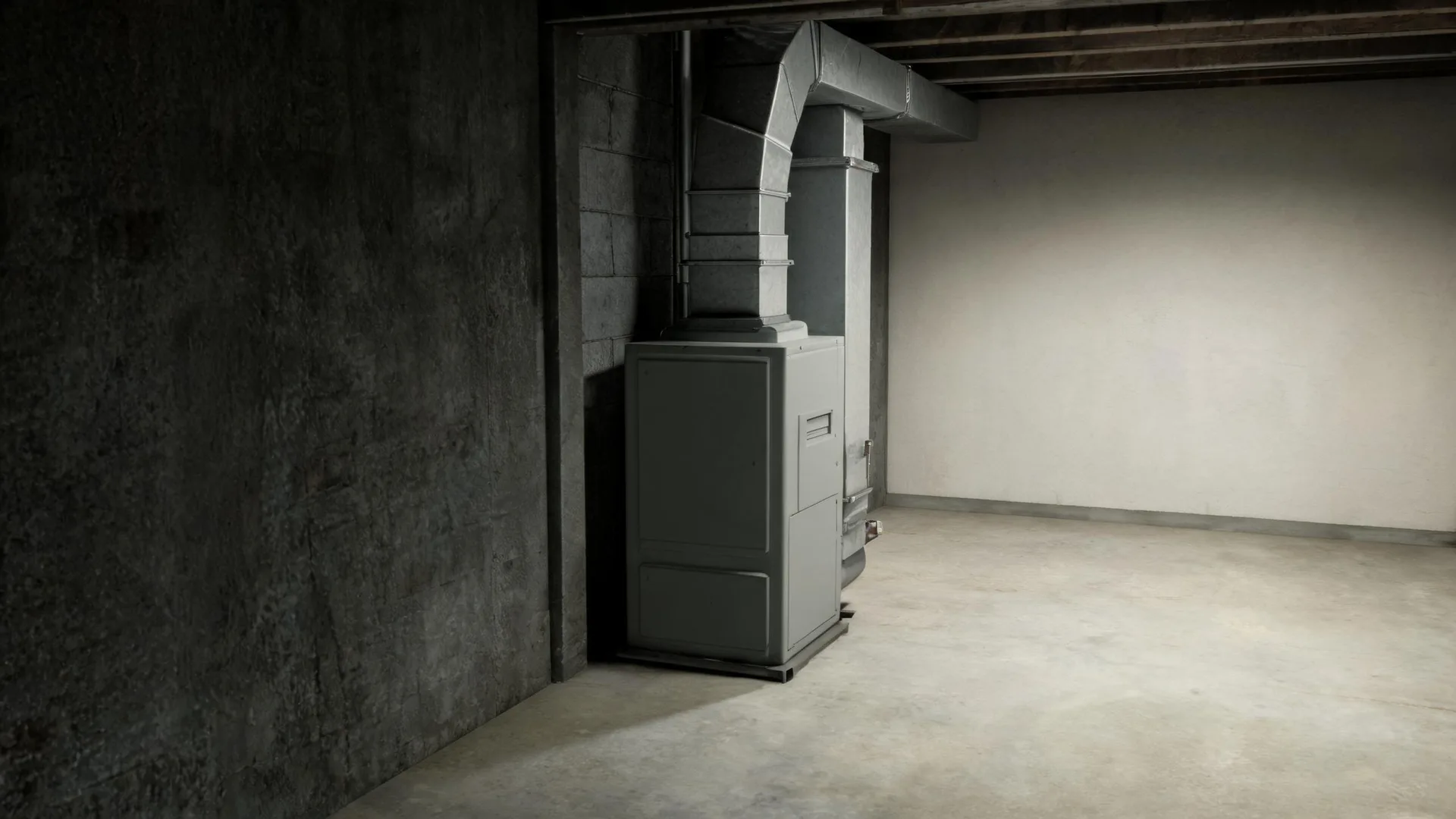
The furnace itself sits in the basement, utility room, or closet and is the unit a homeowner is most likely to recognize. It holds the heat exchanger and the burner assembly, which together produce and transfer heat to the air moving through the system. The blower motor lives inside the same cabinet and pushes that air onward.
The flue pipe runs from the furnace up and out of the house, carrying combustion gases away from the living space. Alongside the furnace, a contractor also installs the air handler components and the thermostat wiring connection point that lets the homeowner control the whole system from a single control.
The drawing shows a general layout of these components, and a licensed contractor determines exactly what applies to your house.
Get matched in Nassau CountyNassau County, by the numbers
206 severe weather events were recorded in Nassau County, New York between 2015 and 2024.
NOAA National Centers for Environmental Information, Storm Events Database, bulk CSV export, events 2015-01-01 through 2024-12-31.Half the homes in Nassau County, New York were built in 1955 or earlier (2020-2024 ACS 5-year).
U.S. Census Bureau, 2020-2024 American Community Survey 5-Year EstimatesNassau County, New York holds 479,044 housing units (2020-2024 ACS 5-year).
U.S. Census Bureau, 2020-2024 American Community Survey 5-Year EstimatesOwners occupy 81.9% of the occupied homes in Nassau County, New York (2020-2024 ACS 5-year).
U.S. Census Bureau, 2020-2024 American Community Survey 5-Year EstimatesFurnace Installation Rules for Nassau County, New York4 codes & standards
What the Contractor Does in Your Home
Non-weatherized gas furnaces manufactured on or after November 19, 2015 must reach 80.0 percent AFUE.
Non-weatherized oil-fired furnaces manufactured on or after November 19, 2015 must reach 83.0 percent AFUE.
Mobile home gas furnaces manufactured on or after November 19, 2015 must reach 80.0 percent AFUE.
Non-weatherized gas furnaces manufactured on or after December 18, 2028 must reach 95.0 percent AFUE, up from the 80.0 percent minimum that applies to units manufactured before that date.
Severe Weather Events in Nassau County
Heating equipment in Nassau County works against whatever the local climate throws at it, and storm activity is part of that load. A furnace sized and installed for local conditions holds up better than one that was not.
206 severe weather events, 2015–2024. Source: NOAA National Centers for Environmental Information, Storm Events Database.