Tell us about the job
Takes about a minute. No obligation.
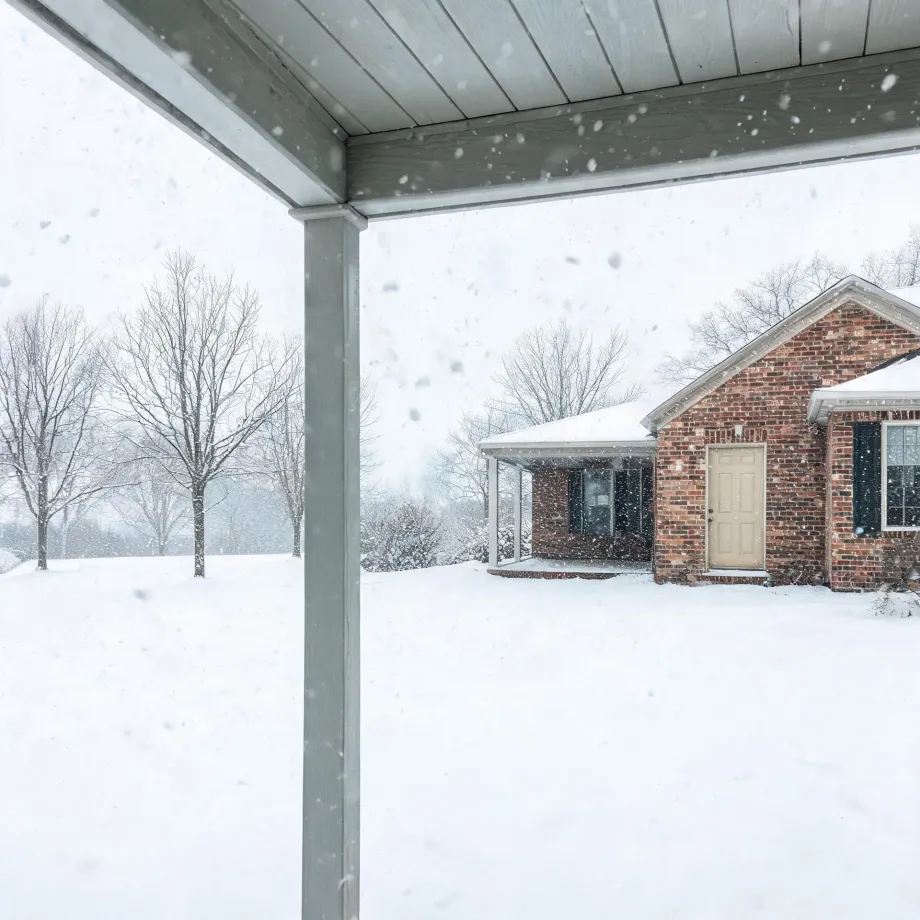
Sizing a furnace for a Niagara County home starts with what the burner and heat exchanger are actually being asked to carry. Homes in Niagara County, NY run heat about eight months a year, from October through May. A contractor has to run a proper load calculation before quoting, because a unit that falls short of the heating demand will cycle harder and longer through that season, loading the heat exchanger in a way a correctly sized unit avoids. Ignition system wear follows the same logic: more calls for heat, more ignition events, less recovery time between them. The quality of the install shapes how those parts age from the first winter on.
Ductwork sized for equipment that is no longer made is what a contractor finds in a substantial share of Niagara County homes. Half the homes in Niagara County, New York were built in 1958 or earlier (2020-2024 ACS 5-year). That generation of construction used duct layouts and trunk sizes matched to older, lower-output systems, and a new furnace has different airflow requirements. A contractor quoting the equipment price first is skipping the part of the job that actually varies: whether what is in the walls and ceilings will carry the new system without modification, or whether the ductwork gets reworked before the unit is set.
What Gets Installed With a New Furnace
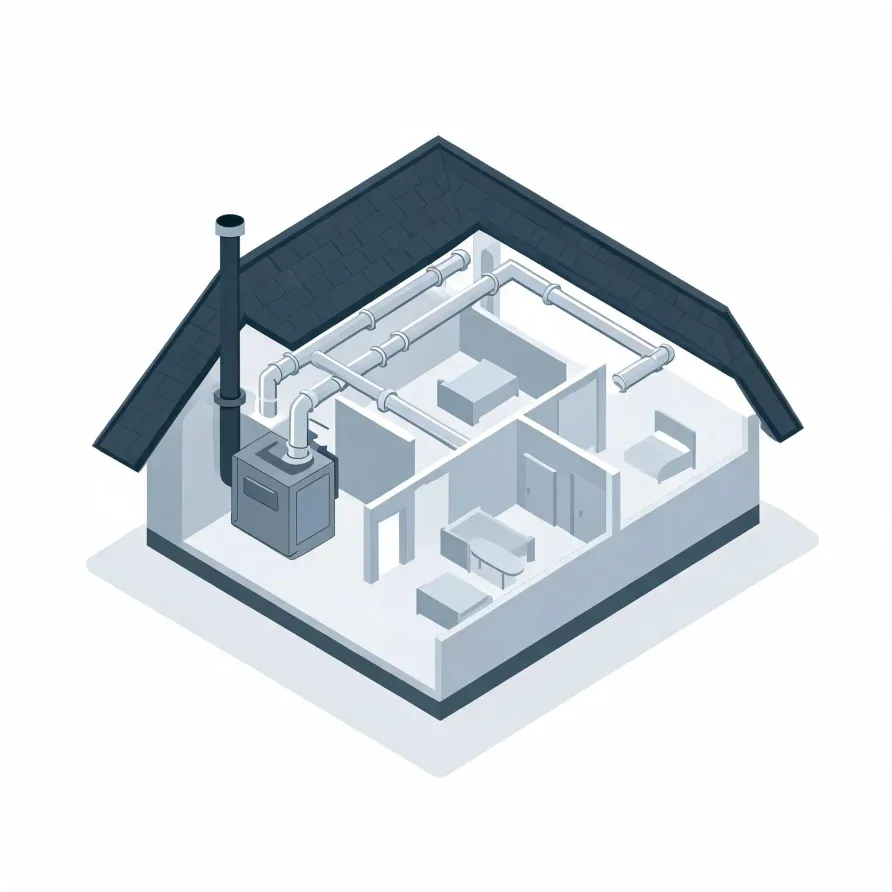
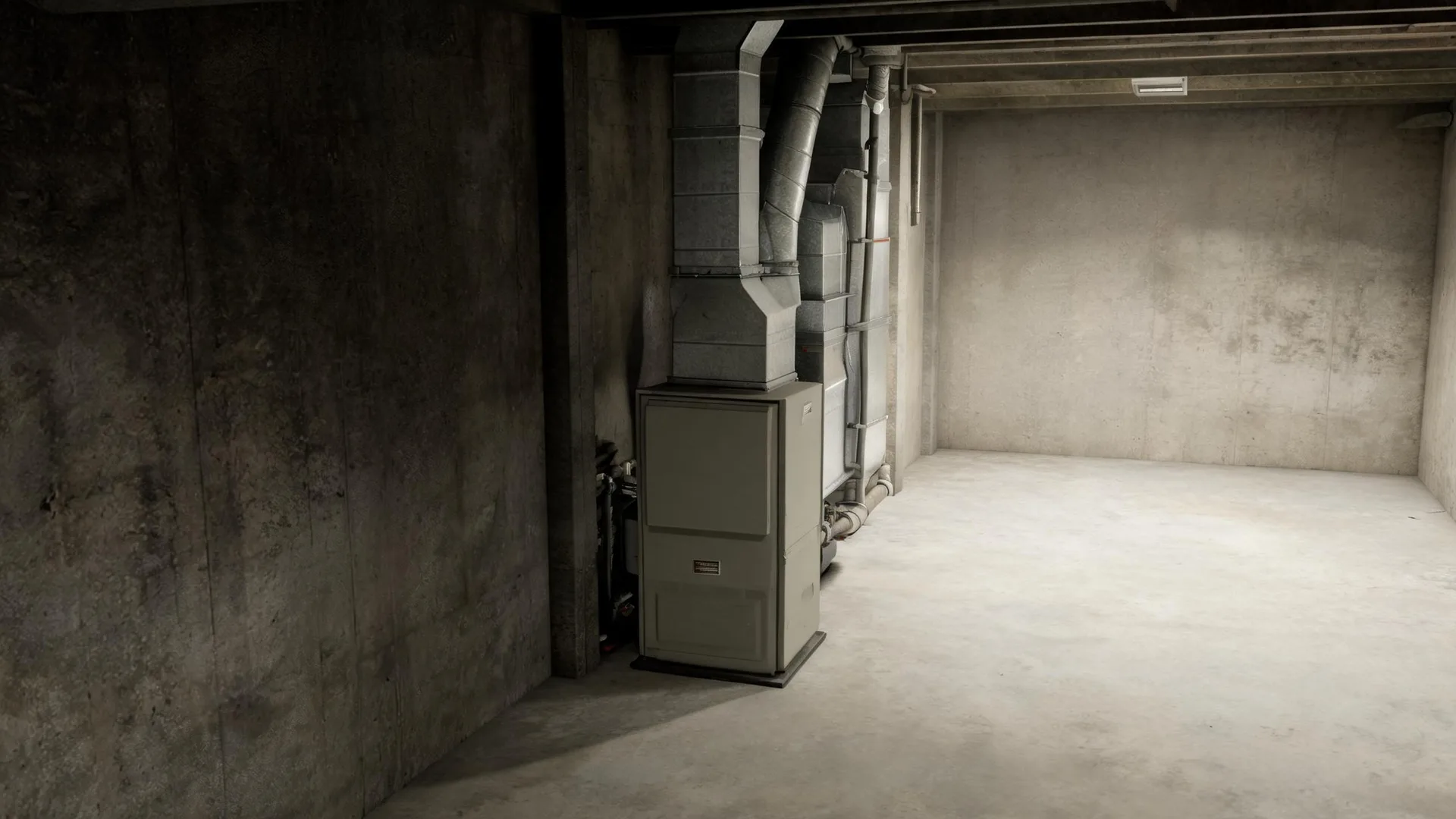
The furnace itself sits in the basement, utility room, or closet and is the unit that produces heat for the house. A heat exchanger inside it transfers combustion heat to the air moving through the system. The flue pipe runs from the furnace up and out of the house, carrying exhaust gases away.
The blower fan sits inside the furnace cabinet and pushes conditioned air into the duct system. The air handler and filter housing mount at the return side, pulling air back through before it circulates again. A thermostat goes on an interior wall and is the control point the homeowner uses to set temperature.
The drawing shows a typical layout, and a licensed contractor determines what applies to this specific house.
Get matched in Niagara CountyNiagara County, by the numbers
121 severe weather events were recorded in Niagara County, New York between 2015 and 2024.
NOAA National Centers for Environmental Information, Storm Events Database, bulk CSV export, events 2015-01-01 through 2024-12-31.Half the homes in Niagara County, New York were built in 1958 or earlier (2020-2024 ACS 5-year).
U.S. Census Bureau, 2020-2024 American Community Survey 5-Year EstimatesNiagara County, New York holds 100,446 housing units (2020-2024 ACS 5-year).
U.S. Census Bureau, 2020-2024 American Community Survey 5-Year EstimatesOwners occupy 71.2% of the occupied homes in Niagara County, New York (2020-2024 ACS 5-year).
U.S. Census Bureau, 2020-2024 American Community Survey 5-Year EstimatesFurnace Installation Rules for Niagara County, New York4 sourced standards and codes
What the contractor does when the work begins
Non-weatherized gas furnaces manufactured on or after November 19, 2015 must reach 80.0 percent AFUE.
Non-weatherized oil-fired furnaces manufactured on or after November 19, 2015 must reach 83.0 percent AFUE.
Mobile home gas furnaces manufactured on or after November 19, 2015 must reach 80.0 percent AFUE.
Non-weatherized gas furnaces manufactured on or after December 18, 2028 must reach 95.0 percent AFUE, up from the 80.0 percent minimum that applies to units manufactured before that date.
Severe Weather Events in Niagara County
Weather puts real load on heating equipment, and that load is local. What a furnace endures in Niagara County shapes how it should be sized, installed, and built to last.
121 severe weather events, 2015–2024. Source: NOAA National Centers for Environmental Information, Storm Events Database.