Tell us about the job
Takes about a minute. No obligation.
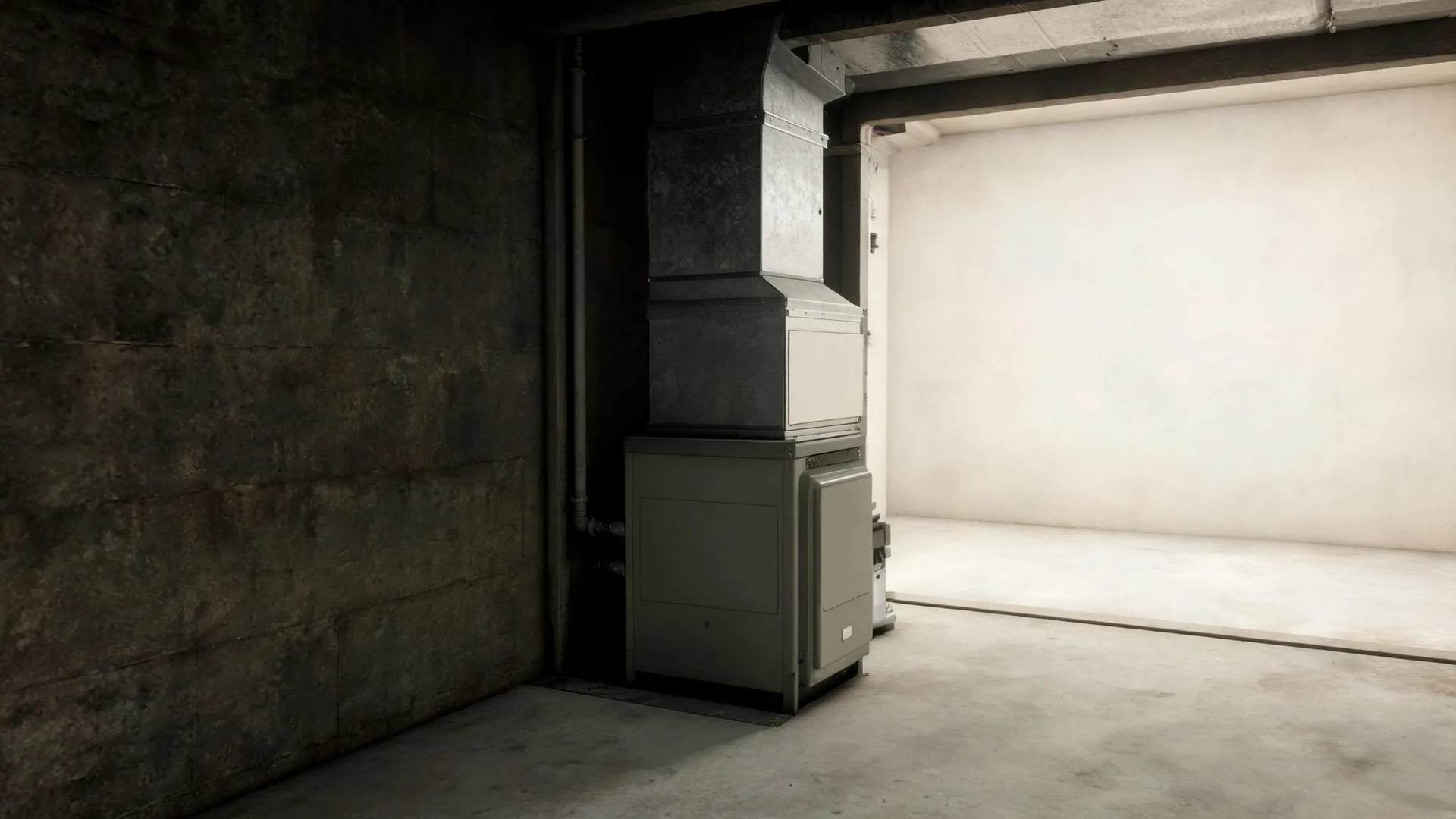
Sizing a furnace for Schenectady County starts with understanding how little downtime the equipment gets. Homes in Schenectady County, NY run heat about eight months a year, from October through May. The burner, heat exchanger, and ignition system cycle through that long run without meaningful rest, so any shortfall in sizing or installation quality shows up in the components sooner than a homeowner expects. A contractor quoting a replacement here has to establish the right output for the house before anything else, because an undersized unit will run longer cycles and accumulate wear faster on the parts that cost the most to fix.
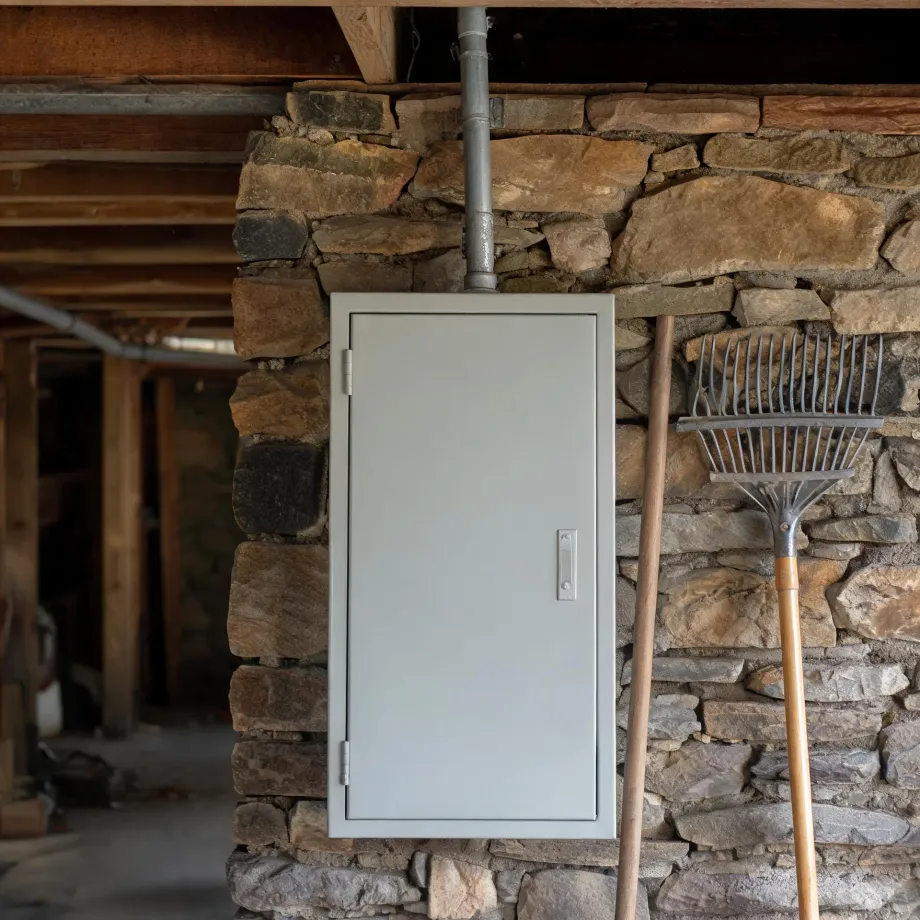
Ductwork laid down for earlier equipment does not simply hand off to whatever goes in next. The dimensions, layout, and static pressure a new furnace expects can run against what the existing trunk lines were sized for, and that gap is what a contractor has to map before any equipment gets ordered. Half the homes in Schenectady County, New York were built in 1956 or earlier (2020-2024 ACS 5-year). That share of the housing stock means a straight swap is the exception. A contractor pricing a furnace here measures the existing duct runs and checks the electrical service, because both were built for something that is no longer running in the house.
What Gets Installed With a New Furnace
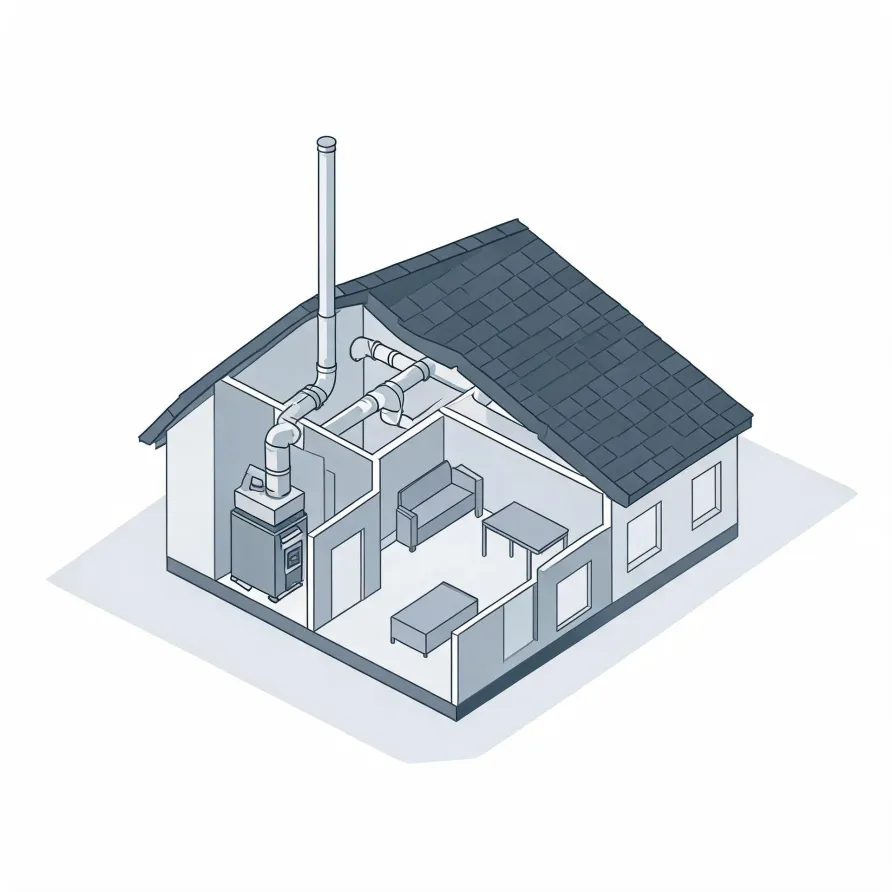
The furnace itself sits in a mechanical room, basement, or utility closet and is the central unit a contractor places during installation. Attached to it is the flue or exhaust vent, which runs through the wall or roof to carry combustion gases out of the house. The gas supply line connects directly to the burner assembly inside the cabinet.
The air handler or blower compartment sits within the furnace cabinet and moves conditioned air into the duct system. A contractor also installs the thermostat on an interior wall, wiring it back to the furnace as the control point for the whole system. The filter housing, positioned at the return-air intake, rounds out what a new installation puts in place.
The drawing shows a typical layout, and a licensed contractor determines exactly what applies to your home.
Get matched in Schenectady CountySchenectady County, by the numbers
248 severe weather events were recorded in Schenectady County, New York between 2015 and 2024.
NOAA National Centers for Environmental Information, Storm Events Database, bulk CSV export, events 2015-01-01 through 2024-12-31.Half the homes in Schenectady County, New York were built in 1956 or earlier (2020-2024 ACS 5-year).
U.S. Census Bureau, 2020-2024 American Community Survey 5-Year EstimatesSchenectady County, New York holds 71,244 housing units (2020-2024 ACS 5-year).
U.S. Census Bureau, 2020-2024 American Community Survey 5-Year EstimatesOwners occupy 64.0% of the occupied homes in Schenectady County, New York (2020-2024 ACS 5-year).
U.S. Census Bureau, 2020-2024 American Community Survey 5-Year EstimatesFurnace Installation Rules for Schenectady County, New York4 codes, standards, and laws
What the installation looks like in Schenectady County
Non-weatherized gas furnaces manufactured on or after November 19, 2015 must reach 80.0 percent AFUE.
Non-weatherized oil-fired furnaces manufactured on or after November 19, 2015 must reach 83.0 percent AFUE.
Mobile home gas furnaces manufactured on or after November 19, 2015 must reach 80.0 percent AFUE.
Non-weatherized gas furnaces manufactured on or after December 18, 2028 must reach 95.0 percent AFUE, up from the 80.0 percent minimum that applies to units manufactured before that date.
Severe Weather Events in Schenectady County
Weather puts a measurable load on heating equipment, and that load varies by location. How hard winters push a furnace in Schenectady County shapes what a contractor installs and what the system needs to handle year after year.
248 severe weather events, 2015–2024. Source: NOAA National Centers for Environmental Information, Storm Events Database.