Tell us about the job
Takes about a minute. No obligation.
A contractor quoting a furnace installation in Seneca County has to work out what the equipment will actually be asked to carry before settling on a model or a configuration. Homes in Seneca County, NY run heat about eight months a year, from October through May. The burner and heat exchanger cycle through that entire stretch, accumulating wear that a poorly sized unit compounds from the first winter. A system installed tight to the minimum rated output leaves no margin, and in a county where the furnace runs this long each year, that shortfall shows up in the heat exchanger long before it would in a milder climate. Proper load calculation at install is what sets the ceiling on how long the equipment lasts.
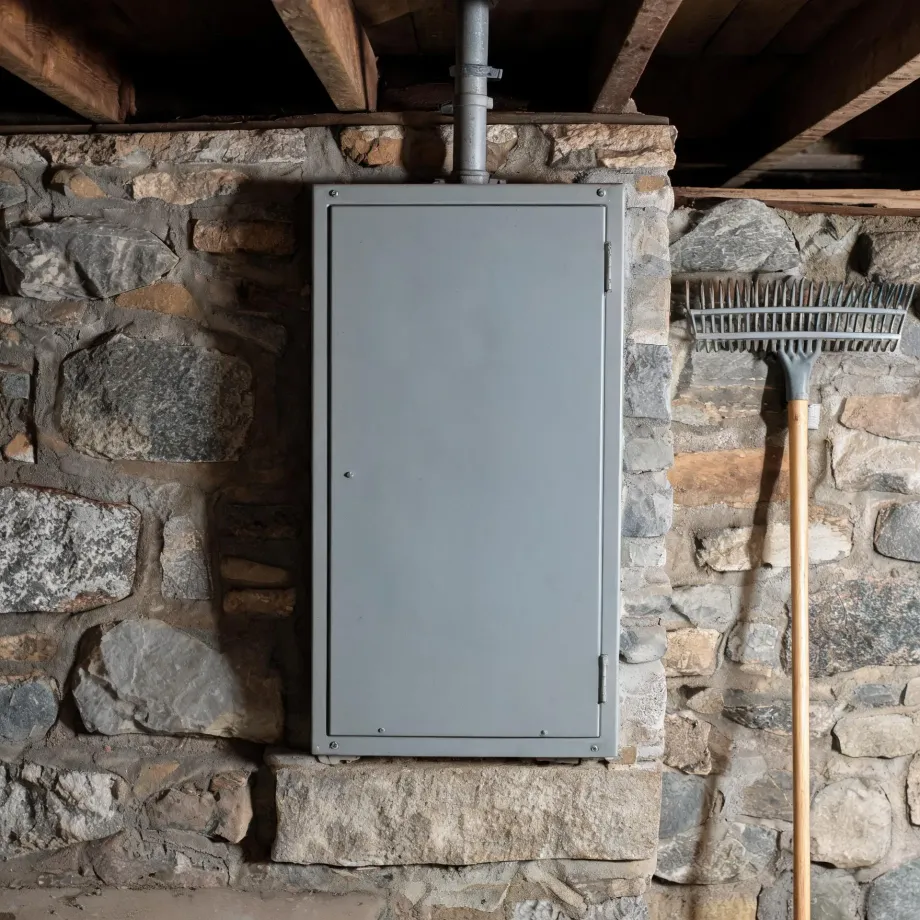
Ductwork in a house built for a different era of heating does not disappear when the furnace gets swapped. Half the homes in Seneca County, New York were built in 1959 or earlier (2020-2024 ACS 5-year). A contractor installing a new furnace in stock like this has to assess whether the existing trunk lines and branch runs can move the air volume a modern unit is designed to push, and where they cannot, the duct work becomes the job, not the equipment itself. Electrical service in houses of this vintage also bears looking at, since a new furnace draws on circuits that were laid in before those loads were anticipated.
What Gets Installed With a New Furnace
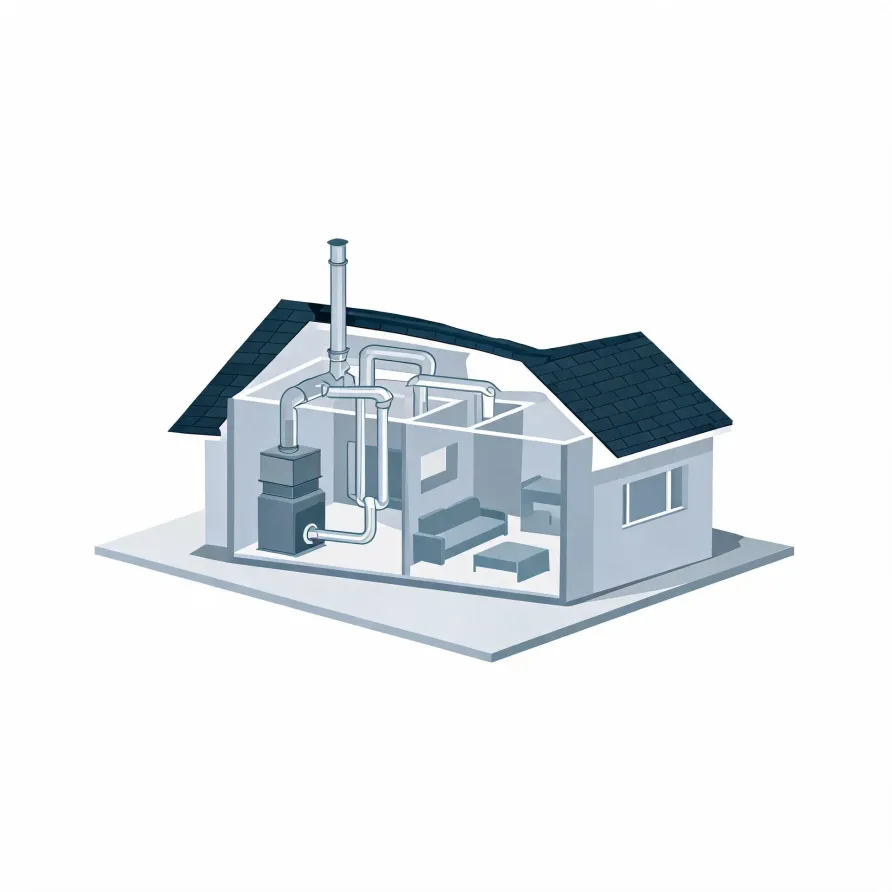
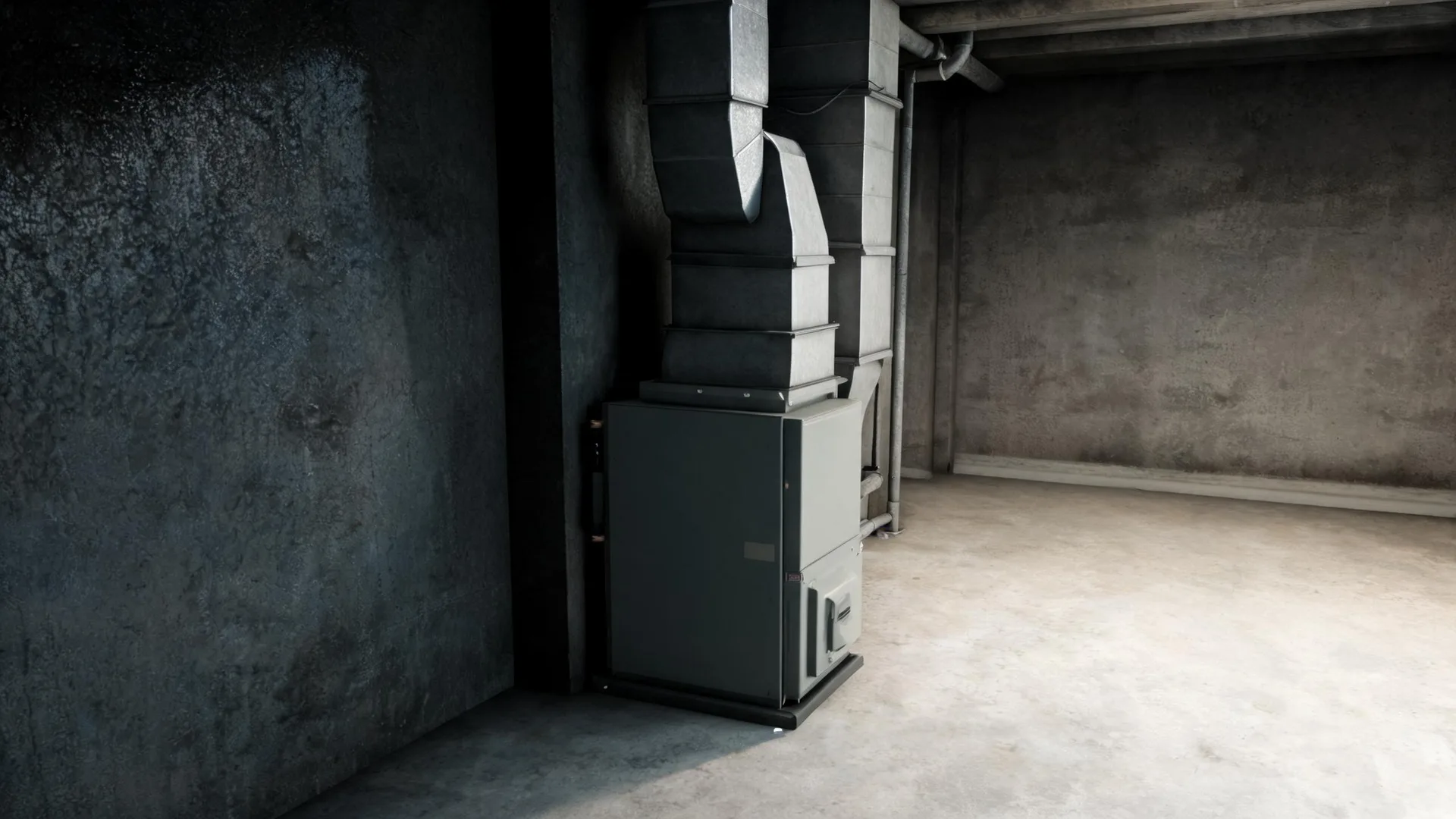
The furnace itself sits in the basement, utility room, or closet and is the unit that produces heat for the house. Attached to it is the flue or vent pipe, which runs up through the house and exits through the roof or an exterior wall to carry combustion gases out.
The air handler and blower assembly, housed inside the furnace cabinet, push conditioned air out through the supply plenum at the top of the unit. A thermostat mounts on an interior wall and serves as the control point, telling the furnace when to fire and when to shut off.
The drawing shows a representative layout, and a licensed contractor determines exactly what applies to your home.
Get matched in Seneca CountySeneca County, by the numbers
62 severe weather events were recorded in Seneca County, New York between 2015 and 2024.
NOAA National Centers for Environmental Information, Storm Events Database, bulk CSV export, events 2015-01-01 through 2024-12-31.Half the homes in Seneca County, New York were built in 1959 or earlier (2020-2024 ACS 5-year).
U.S. Census Bureau, 2020-2024 American Community Survey 5-Year EstimatesSeneca County, New York holds 16,194 housing units (2020-2024 ACS 5-year).
U.S. Census Bureau, 2020-2024 American Community Survey 5-Year EstimatesOwners occupy 71.0% of the occupied homes in Seneca County, New York (2020-2024 ACS 5-year).
U.S. Census Bureau, 2020-2024 American Community Survey 5-Year EstimatesFurnace Installation Rules for Seneca County, New York4 codes and standards
What the Installation Actually Looks Like
Non-weatherized gas furnaces manufactured on or after November 19, 2015 must reach 80.0 percent AFUE.
Non-weatherized oil-fired furnaces manufactured on or after November 19, 2015 must reach 83.0 percent AFUE.
Mobile home gas furnaces manufactured on or after November 19, 2015 must reach 80.0 percent AFUE.
Non-weatherized gas furnaces manufactured on or after December 18, 2028 must reach 95.0 percent AFUE, up from the 80.0 percent minimum that applies to units manufactured before that date.
Severe Weather Events in Seneca County
Weather puts real demands on heating equipment, and those demands are specific to where you live. A furnace sized and installed for local conditions holds up under that load better than one that was not.
62 severe weather events, 2015–2024. Source: NOAA National Centers for Environmental Information, Storm Events Database.