Tell us about the job
Takes about a minute. No obligation.
A furnace repair in Fulton County starts with the parts that carry the real load: the heat exchanger, the burner, and the ignition system. Homes in Fulton County, NY run heat about nine months a year, from September through May. That means a contractor arriving at a repair call here has to account for a system that has been cycling through cold weather for the bulk of the year. Cracks in a heat exchanger or carbon deposits on a burner do not announce themselves; they accumulate quietly across a long season and surface when the furnace is pushed hard. A contractor checks those components first, because that is where the wear lands.
Furnace repair in a house this old turns on what a contractor pulls out of the unit once it is open: the heat exchanger, the burner assembly, the limit switches. Half the homes in Fulton County, New York were built in 1954 or earlier (2020-2024 ACS 5-year). Equipment running in stock of this vintage was often installed well after the house was built, then serviced through successive part swaps over the years, and what remains inside may combine components from different production runs. A part that looks standard on the outside can turn out to be a variant the supply chain stopped stocking, which changes both the timeline and the cost of the repair before any work is quoted.
The Parts of a Furnace a Contractor Checks First
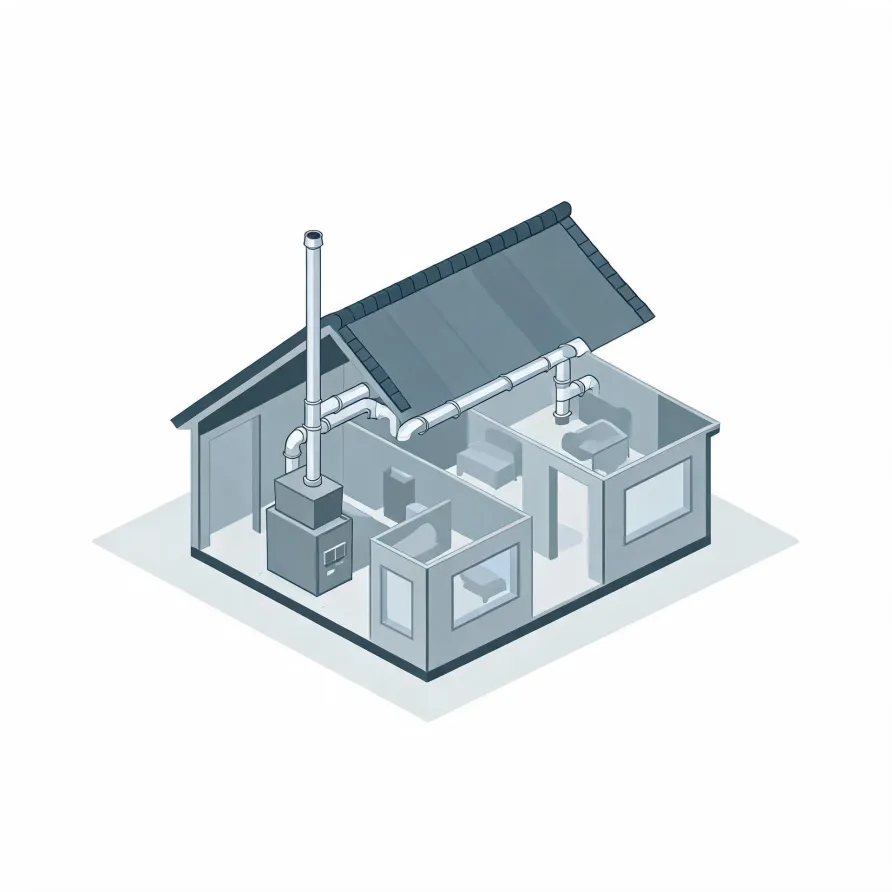
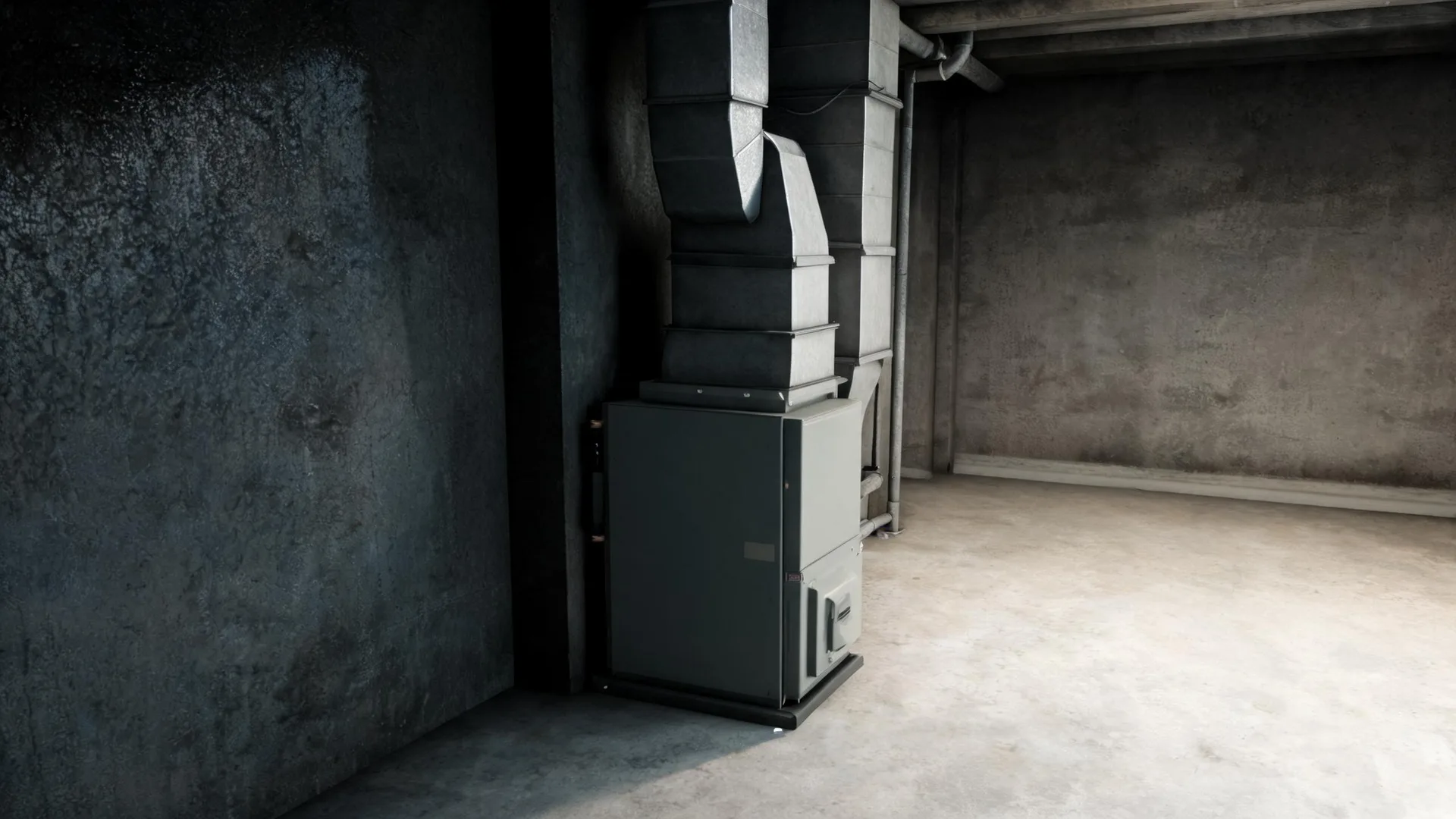
The furnace itself sits in the basement, utility room, or crawlspace and is the piece that generates heat. Inside it, the heat exchanger is the part a contractor looks at hard during a repair visit, because cracks or corrosion there explain a lot of symptoms. The burner assembly, which sits just below the exchanger, is another early suspect when a furnace fails to fire or fires unevenly.
The blower motor and its fan wheel sit in the lower cabinet and push conditioned air out into the house. The flue pipe runs from the top of the furnace to an exterior vent and carries combustion gases out. The control board, tucked inside the cabinet, is what the contractor reads for fault codes before opening anything else.
The drawing shows a representative layout, and a licensed contractor determines which components apply and what condition they are in for your specific system.
Get matched in Fulton CountyFulton County, by the numbers
220 severe weather events were recorded in Fulton County, New York between 2015 and 2024.
NOAA National Centers for Environmental Information, Storm Events Database, bulk CSV export, events 2015-01-01 through 2024-12-31.Half the homes in Fulton County, New York were built in 1954 or earlier (2020-2024 ACS 5-year).
U.S. Census Bureau, 2020-2024 American Community Survey 5-Year EstimatesFulton County, New York holds 28,199 housing units (2020-2024 ACS 5-year).
U.S. Census Bureau, 2020-2024 American Community Survey 5-Year EstimatesOwners occupy 71.4% of the occupied homes in Fulton County, New York (2020-2024 ACS 5-year).
U.S. Census Bureau, 2020-2024 American Community Survey 5-Year EstimatesFurnace Repair Rules & Standards for Fulton County, New York4 sourced codes and standards
What HVAC Repair Looks Like in Fulton County
Non-weatherized gas furnaces manufactured on or after November 19, 2015 must reach 80.0 percent AFUE.
Non-weatherized oil-fired furnaces manufactured on or after November 19, 2015 must reach 83.0 percent AFUE.
Mobile home gas furnaces manufactured on or after November 19, 2015 must reach 80.0 percent AFUE.
Non-weatherized gas furnaces manufactured on or after December 18, 2028 must reach 95.0 percent AFUE, up from the 80.0 percent minimum that applies to units manufactured before that date.
Severe Weather Events in Fulton County
Extreme weather puts real stress on heating equipment, from hard freezes that push furnaces to run long cycles to storms that knock out power and bring it back hard. How much of that stress a furnace in Fulton County absorbs is a local question, and it shapes what repairs come up and how often.
220 severe weather events, 2015–2024. Source: NOAA National Centers for Environmental Information, Storm Events Database.