Tell us about the job
Takes about a minute. No obligation.
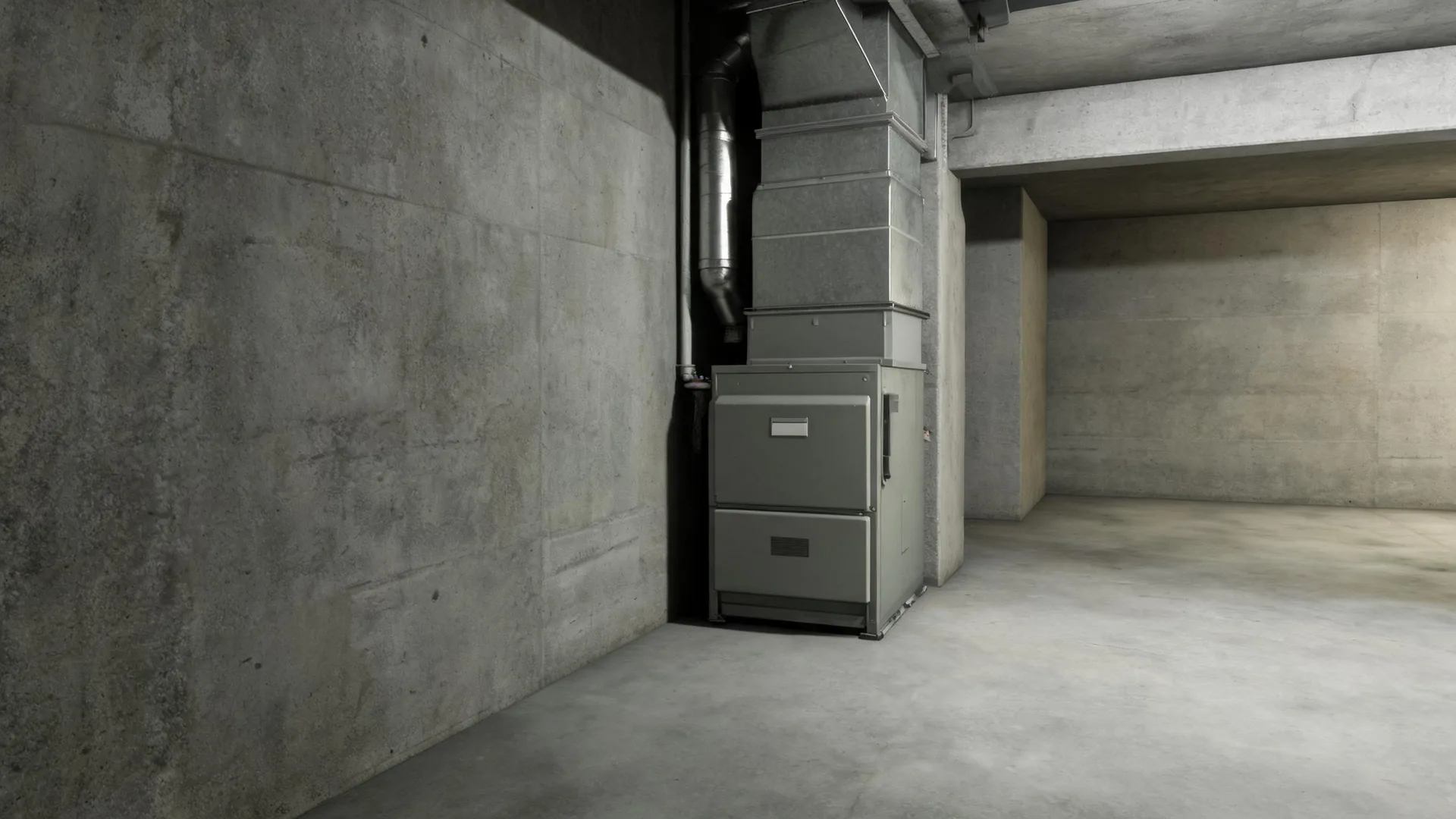
A contractor called out to a furnace repair in Suffolk County starts with the burner assembly and the ignition system, because those are the parts that have been cycling since October. Homes in Suffolk County, NY run heat about eight months a year, from October through May. The heat exchanger takes that same load: repeated expansion and contraction over that stretch finds cracks and fatigue that only show up once the furnace is opened and inspected under pressure. A failed igniter or a cracked heat exchanger is not a fluke on a furnace this age in this county; it is what the workload produces.
Ductwork and venting that have lived through multiple furnace replacements carry a record of every system that ran through them. Gaps in flue lining, mismatched plenum connections, and heat exchanger cracks that open slowly over years of cycling are what a contractor finds when the panels come off. Half the homes in Suffolk County, New York were built in 1970 or earlier (2020-2024 ACS 5-year). A furnace sitting in a house that old has often outlasted the original venting around it, and the repair call that looks like a burner problem can turn out to hinge on what the surrounding system has done to the unit over time.
The Parts of a Furnace a Contractor Checks First
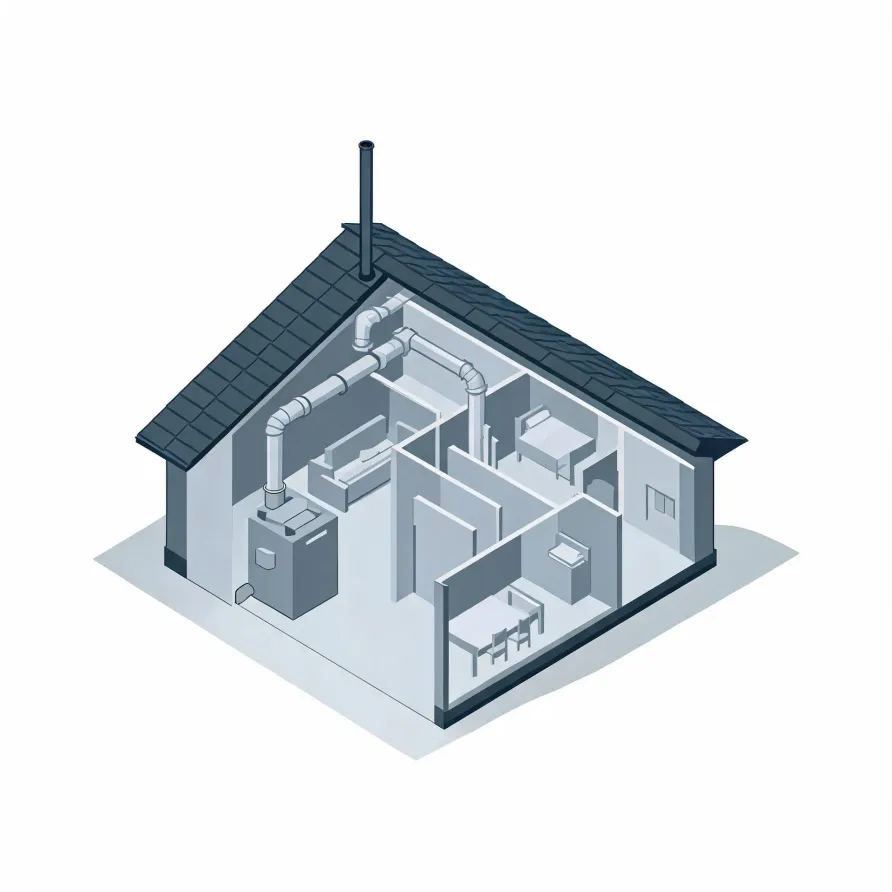
The heat exchanger sits at the core of the furnace cabinet and is the piece a contractor looks at closely when a furnace is producing no heat or is cycling off too fast. The burner assembly feeds it directly, and a fault in either one tends to show up as weak output or a unit that refuses to stay on.
The blower motor sits in the lower section of the cabinet and pushes conditioned air through the supply side of the house. The igniter and the flame sensor are small components that sit near the burner, and both are frequent stops when a furnace starts and then immediately shuts down. The flue and the venting attached to the top of the cabinet are checked when combustion gases are not clearing the way they should.
The drawing shows a general layout of a furnace system, and a licensed contractor determines which components apply to the specific equipment and setup in your home.
Get matched in Suffolk CountySuffolk County, by the numbers
566 severe weather events were recorded in Suffolk County, New York between 2015 and 2024.
NOAA National Centers for Environmental Information, Storm Events Database, bulk CSV export, events 2015-01-01 through 2024-12-31.Half the homes in Suffolk County, New York were built in 1970 or earlier (2020-2024 ACS 5-year).
U.S. Census Bureau, 2020-2024 American Community Survey 5-Year EstimatesSuffolk County, New York holds 580,772 housing units (2020-2024 ACS 5-year).
U.S. Census Bureau, 2020-2024 American Community Survey 5-Year EstimatesOwners occupy 82.2% of the occupied homes in Suffolk County, New York (2020-2024 ACS 5-year).
U.S. Census Bureau, 2020-2024 American Community Survey 5-Year EstimatesCodes & Standards Behind Furnace Repair in Suffolk County, New York4 sourced rules & standards
What happens when a contractor comes out to your home
Non-weatherized gas furnaces manufactured on or after November 19, 2015 must reach 80.0 percent AFUE.
Non-weatherized oil-fired furnaces manufactured on or after November 19, 2015 must reach 83.0 percent AFUE.
Mobile home gas furnaces manufactured on or after November 19, 2015 must reach 80.0 percent AFUE.
Non-weatherized gas furnaces manufactured on or after December 18, 2028 must reach 95.0 percent AFUE, up from the 80.0 percent minimum that applies to units manufactured before that date.
Weather Stress on HVAC Equipment in Suffolk County
Heating equipment in Suffolk County works against whatever the local climate puts out, and that load shapes how hard components run and how fast they wear. Repair demand here follows the weather, which is why the record below is relevant to anyone keeping a furnace running in this area.
566 severe weather events, 2015–2024. Source: NOAA National Centers for Environmental Information, Storm Events Database.