Tell us about the job
Takes about a minute. No obligation.
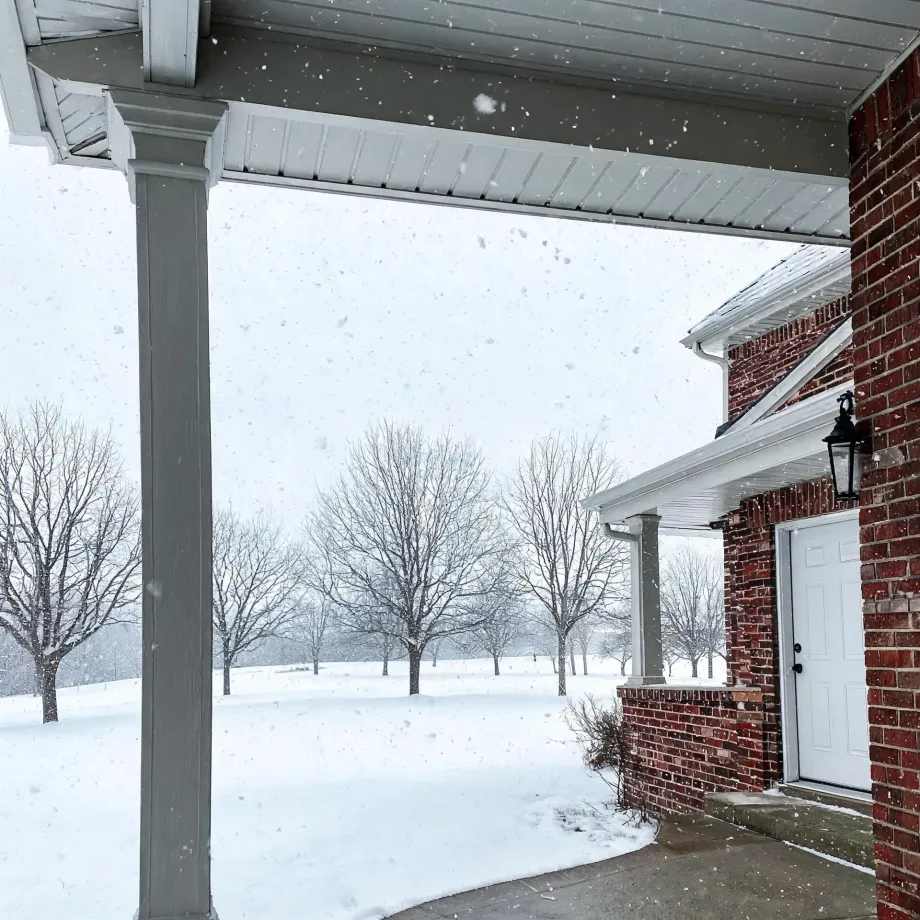
A contractor quoting a furnace repair in Wayne County checks the burner assembly and heat exchanger early, because those are the parts that absorb the work of every heating cycle the system has run. Homes in Wayne County, NY run heat about eight months a year, from October through May. The ignition system fires repeatedly through those months, and the heat exchanger expands and contracts with each cycle. Cracks, fatigue, and carbon buildup on the burner show up in proportion to how much the equipment has actually run, and a long heating season leaves little room for a marginal component to go unnoticed.
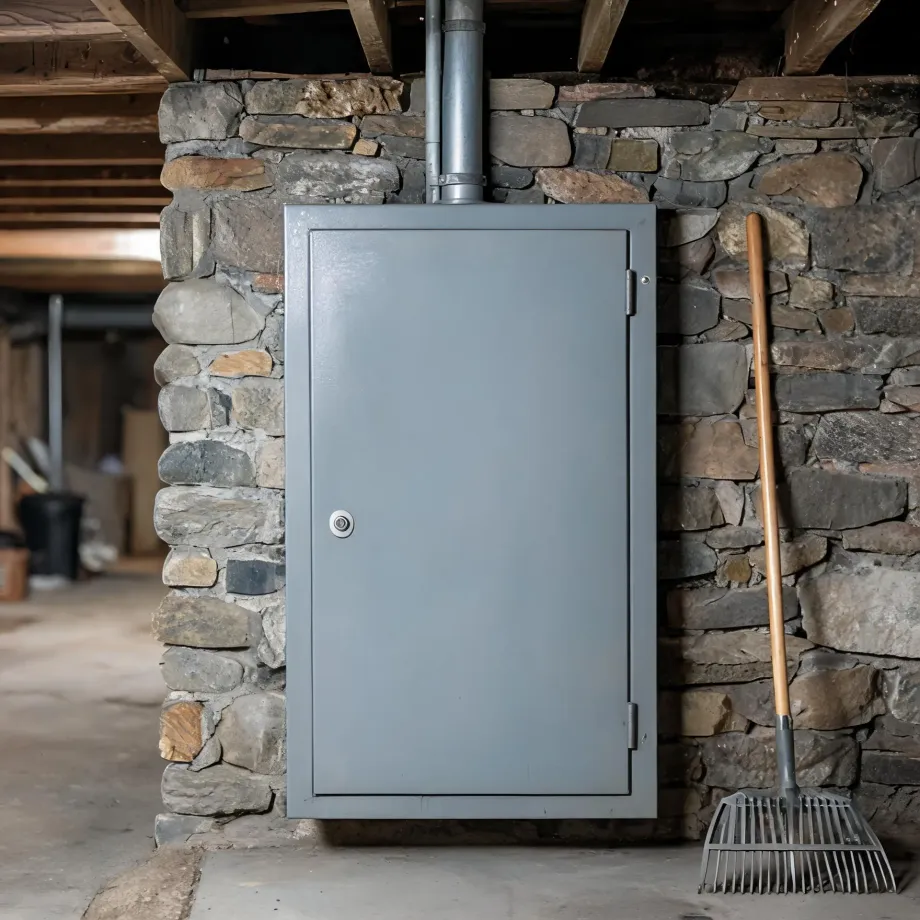
Furnaces in houses that have cycled through more than one fuel type or combustion setup carry the evidence of each change inside them. Half the homes in Wayne County, New York were built in 1968 or earlier (2020-2024 ACS 5-year). When a contractor opens a furnace in stock like this, what they find in the heat exchanger and burner assembly reflects adaptations layered over the original design, and whether a part is still manufactured for that configuration decides more about the repair than the failure symptom did. A crack in a heat exchanger that was retrofitted for a different fuel is a different job than one in a unit installed new.
The Parts of a Furnace a Contractor Checks First
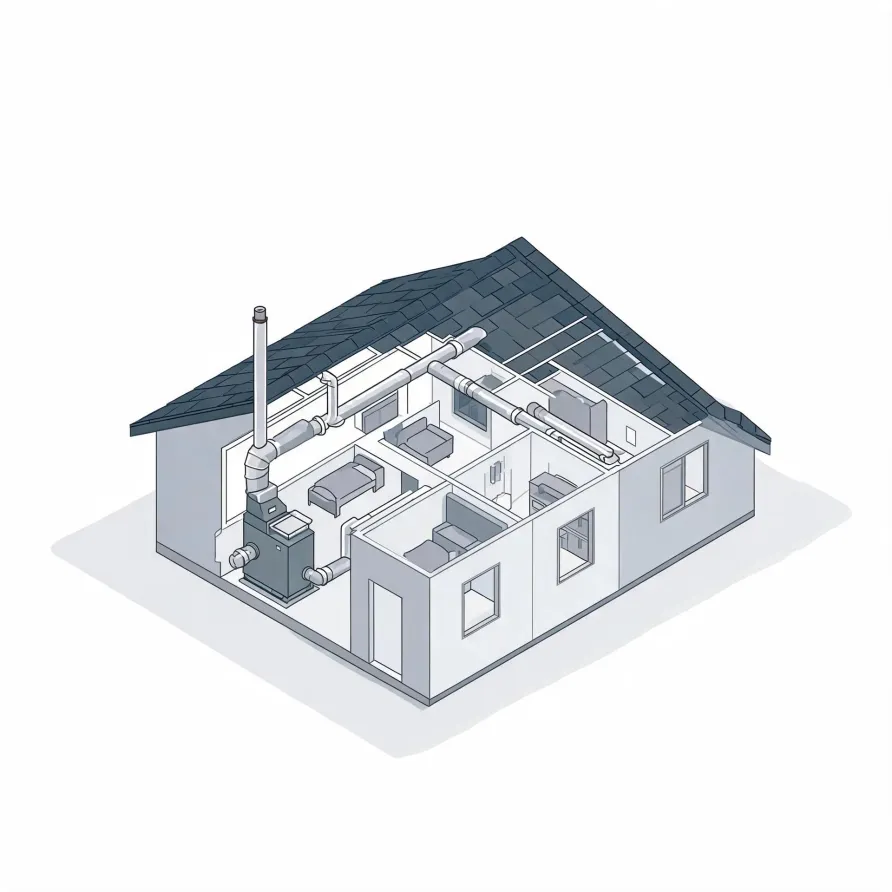
The heat exchanger sits at the core of the furnace cabinet in the basement or utility room and is the piece a contractor looks at closely when the system runs but fails to heat properly. The burner assembly fires beneath it, and a cracked exchanger or a dirty, misfiring burner will show up fast. The blower motor sits at the base of the cabinet and pushes conditioned air out through the supply side.
The flue and venting connections run from the top of the furnace up through the wall or ceiling and carry combustion gases out of the house. The control board and igniter sit inside the cabinet and govern every stage of a heating cycle. When the system short-cycles, fails to start, or throws an error code, those two components are usually where a contractor looks first.
The drawing shows the general layout of a furnace system, and a licensed contractor determines what applies to the specific equipment and conditions in your house.
Get matched in Wayne CountyWayne County, by the numbers
129 severe weather events were recorded in Wayne County, New York between 2015 and 2024.
NOAA National Centers for Environmental Information, Storm Events Database, bulk CSV export, events 2015-01-01 through 2024-12-31.Half the homes in Wayne County, New York were built in 1968 or earlier (2020-2024 ACS 5-year).
U.S. Census Bureau, 2020-2024 American Community Survey 5-Year EstimatesWayne County, New York holds 42,570 housing units (2020-2024 ACS 5-year).
U.S. Census Bureau, 2020-2024 American Community Survey 5-Year EstimatesOwners occupy 79.9% of the occupied homes in Wayne County, New York (2020-2024 ACS 5-year).
U.S. Census Bureau, 2020-2024 American Community Survey 5-Year EstimatesFurnace Repair Rules & Standards for Wayne County, New York4 sourced regulations and codes
What HVAC Repair Looks Like in Wayne County
Non-weatherized gas furnaces manufactured on or after November 19, 2015 must reach 80.0 percent AFUE.
Non-weatherized oil-fired furnaces manufactured on or after November 19, 2015 must reach 83.0 percent AFUE.
Mobile home gas furnaces manufactured on or after November 19, 2015 must reach 80.0 percent AFUE.
Non-weatherized gas furnaces manufactured on or after December 18, 2028 must reach 95.0 percent AFUE, up from the 80.0 percent minimum that applies to units manufactured before that date.
Severe Weather Events in Wayne County
Hard weather puts hours on a furnace fast, pushing components toward failure sooner than normal use would. That wear is local, and the repair needs that follow it are local too.
129 severe weather events, 2015–2024. Source: NOAA National Centers for Environmental Information, Storm Events Database.