Tell us about the job
Takes about a minute. No obligation.
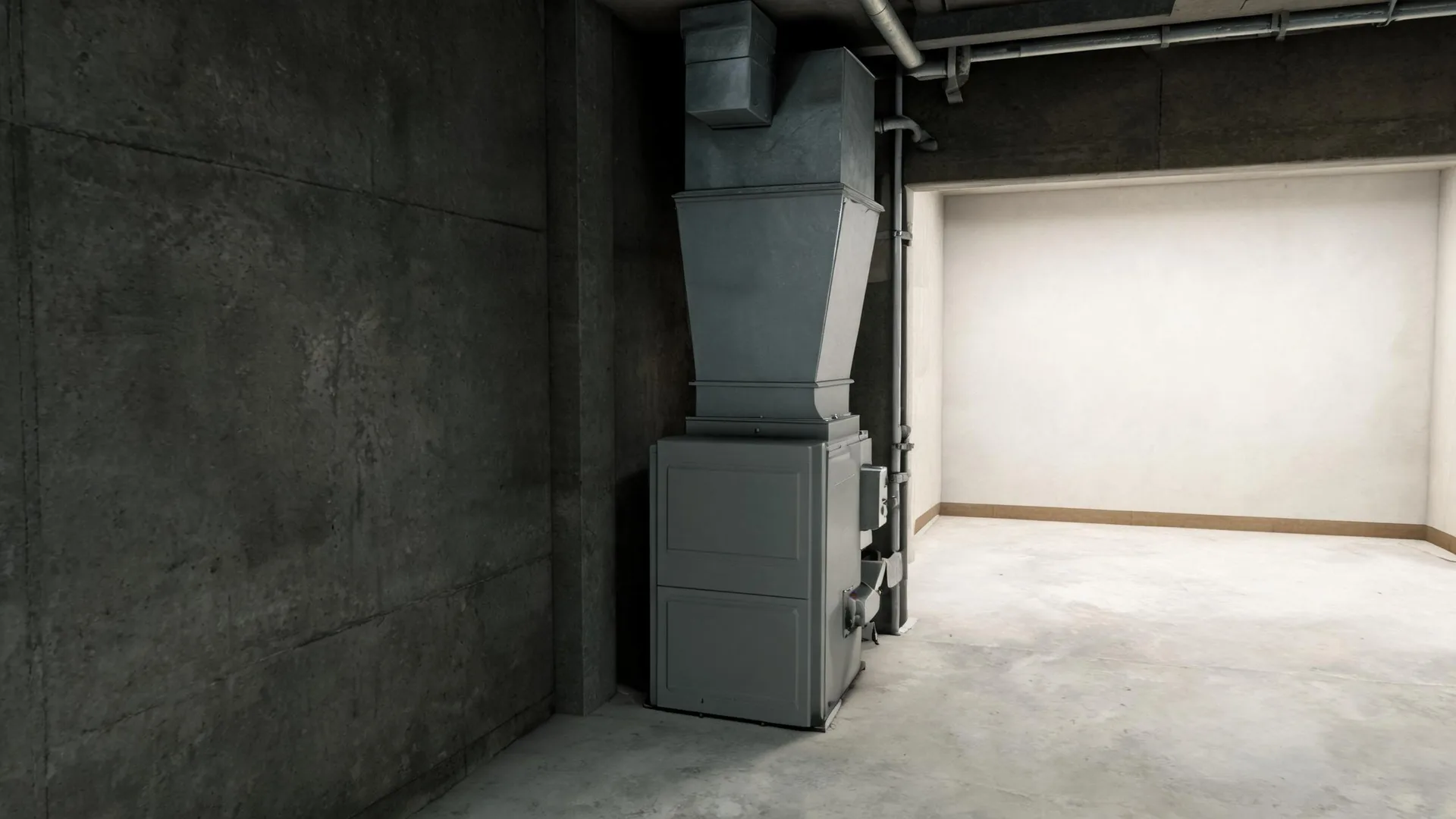
A furnace in Cattaraugus County gets almost no time off. Homes in Cattaraugus County, NY run heat about nine months a year, from September through May. The burner, the heat exchanger, and the ignition system cycle through fall, winter, and well into spring, and the wear that builds on those parts is compounding and continuous. When a contractor opens a furnace here for a repair, the heat exchanger is the first thing worth a close look: a unit that has cycled this heavily will show cracks, scaling, or fatigue at the seams before the rest of the system shows any obvious trouble.
Half the homes in Cattaraugus County, New York were built in 1960 or earlier (2020-2024 ACS 5-year). A furnace that was swapped in after the house was built inherits whatever the original installation left behind: flue liners sized for a different combustion load, ductwork that has been patched rather than replaced, and heat exchanger compartments that have seen decades of thermal cycling. When a contractor opens the unit, what they find in the surrounding structure often determines the scope as much as the part that failed. A cracked heat exchanger in a house like this is a different job than the same crack in a newer build, because the flue and plenum around it carry their own condition.
The Parts of a Furnace a Contractor Checks First
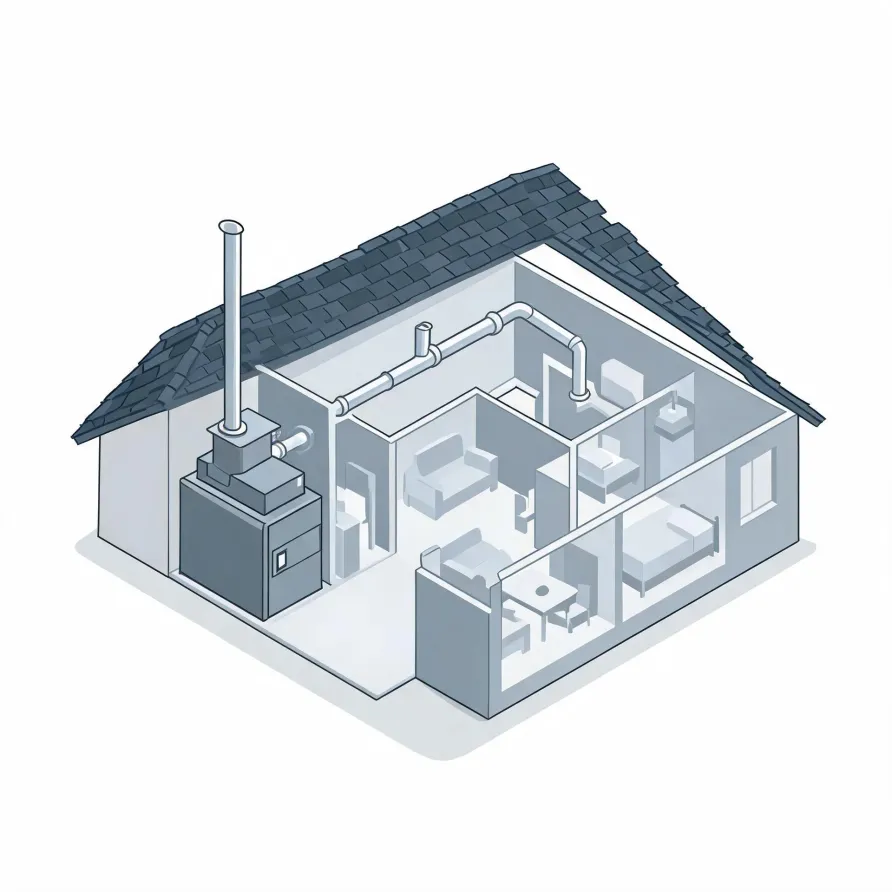
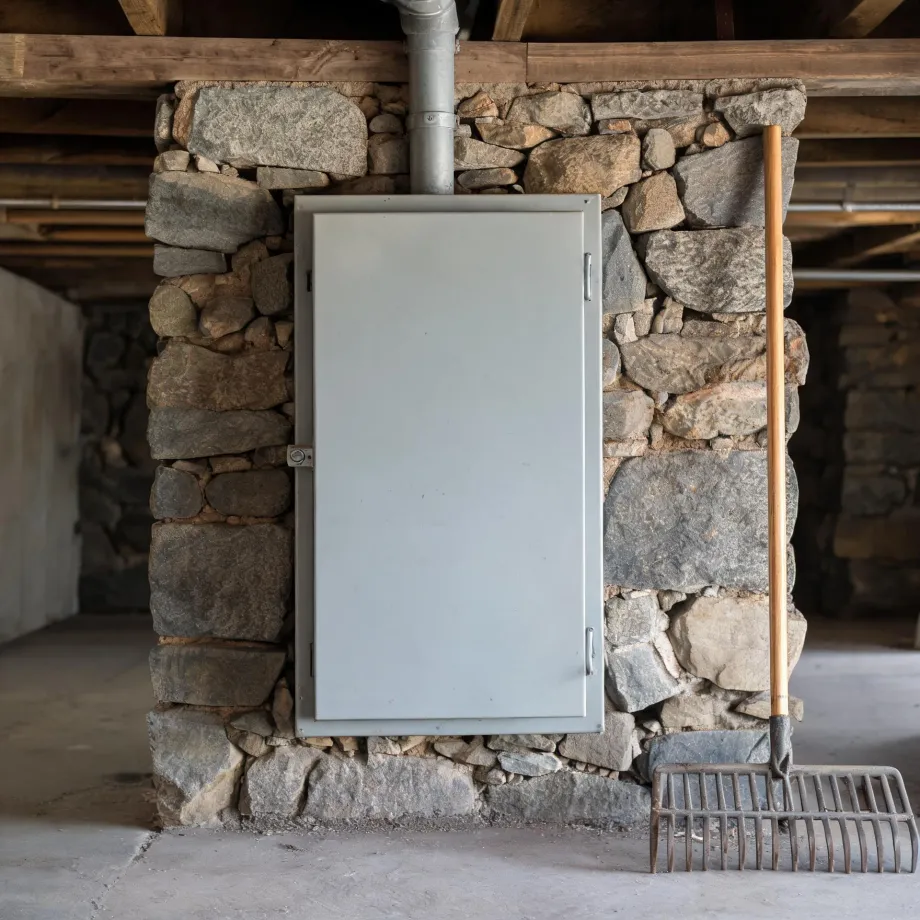
The heat exchanger sits at the core of the furnace cabinet, in the basement or utility room, and it is where combustion gases transfer warmth to the air moving through your home. When it cracks or corrodes, you may smell something off or see the system short-cycling. The burner assembly feeds it directly, and a misfiring burner is one of the first things a contractor opens the cabinet to look at.
The blower motor sits below the heat exchanger and drives conditioned air out through the supply side of your system. The inducer motor pulls combustion gases toward the flue before a heating cycle begins, and a failed inducer will keep the furnace from firing at all. The control board ties these components together, reading signals from the thermostat and running the ignition sequence, so a fault there can mimic the symptoms of several other failed parts.
The drawing shows a typical furnace layout, and a licensed contractor determines which components apply to the specific unit and installation in your home.
Get matched in Cattaraugus CountyCattaraugus County, by the numbers
247 severe weather events were recorded in Cattaraugus County, New York between 2015 and 2024.
NOAA National Centers for Environmental Information, Storm Events Database, bulk CSV export, events 2015-01-01 through 2024-12-31.Half the homes in Cattaraugus County, New York were built in 1960 or earlier (2020-2024 ACS 5-year).
U.S. Census Bureau, 2020-2024 American Community Survey 5-Year EstimatesCattaraugus County, New York holds 40,356 housing units (2020-2024 ACS 5-year).
U.S. Census Bureau, 2020-2024 American Community Survey 5-Year EstimatesOwners occupy 75.2% of the occupied homes in Cattaraugus County, New York (2020-2024 ACS 5-year).
U.S. Census Bureau, 2020-2024 American Community Survey 5-Year EstimatesCodes & Standards Behind Furnace Repair in Cattaraugus County, New York4 sourced rules and standards
What HVAC Repair Looks Like in Cattaraugus County
Non-weatherized gas furnaces manufactured on or after November 19, 2015 must reach 80.0 percent AFUE.
Non-weatherized oil-fired furnaces manufactured on or after November 19, 2015 must reach 83.0 percent AFUE.
Mobile home gas furnaces manufactured on or after November 19, 2015 must reach 80.0 percent AFUE.
Non-weatherized gas furnaces manufactured on or after December 18, 2028 must reach 95.0 percent AFUE, up from the 80.0 percent minimum that applies to units manufactured before that date.
Severe Weather Events in Cattaraugus County
Extreme weather puts real stress on heating equipment, and furnaces that work hardest during the worst conditions are the ones most likely to need repair. How often that pressure arrives in Cattaraugus County shapes how much local contractors see and what they stay prepared to handle.
247 severe weather events, 2015–2024. Source: NOAA National Centers for Environmental Information, Storm Events Database.