Tell us about the job
Takes about a minute. No obligation.
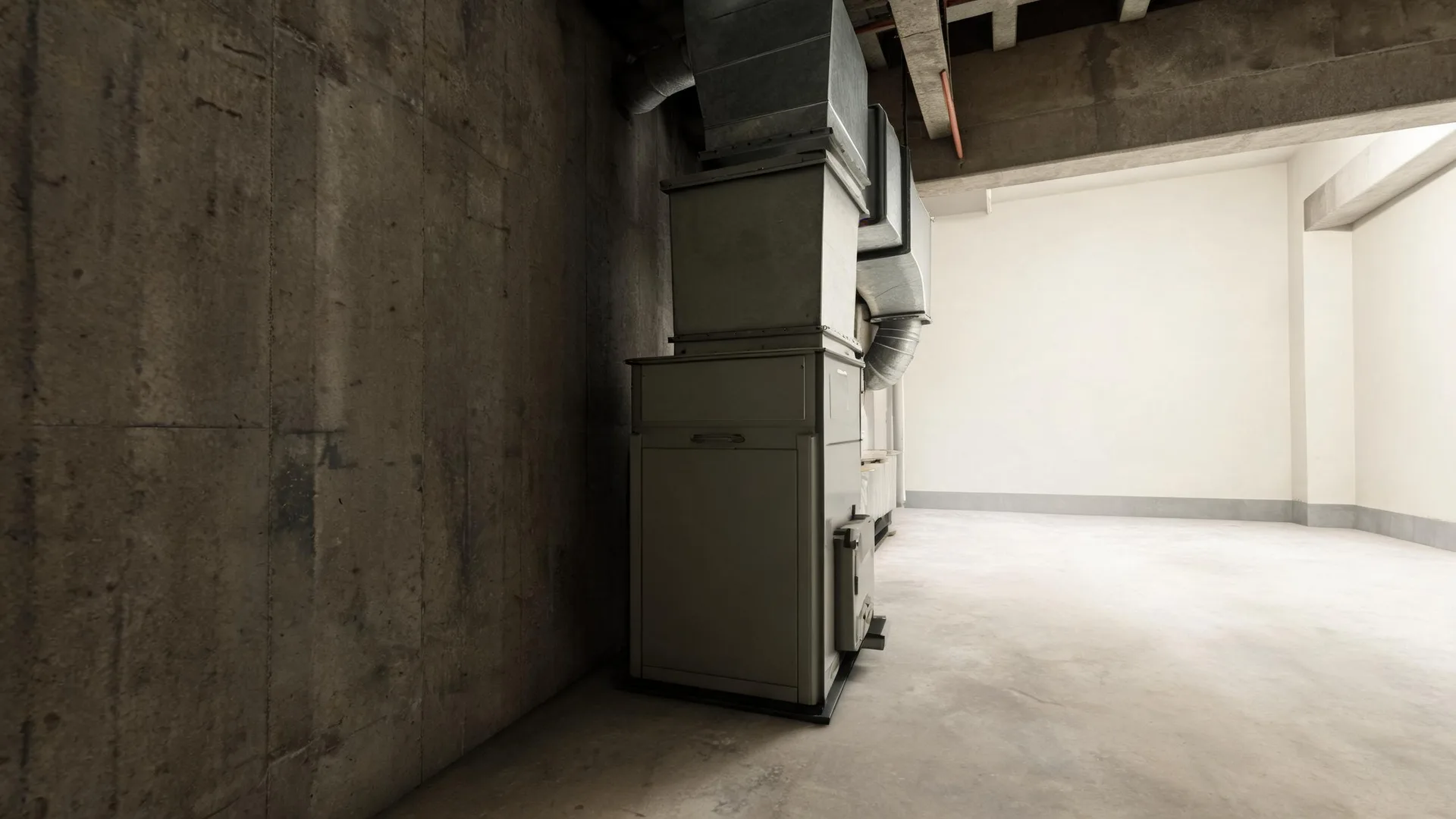
A furnace repair quote in Tioga County starts with the parts that cycle the most: the burner, the heat exchanger, and the ignition system. Homes in Tioga County, NY run heat about nine months a year, from September through May. Those components fire up and shut down repeatedly through a long stretch of cold months, and the wear shows up as cracked heat exchangers, fouled igniters, and burners that misfire under load. A contractor working a repair here checks combustion performance and heat exchanger integrity before pricing anything else, because those are the failure points that accumulate the most cycles.
Half the homes in Tioga County, New York were built in 1969 or earlier (2020-2024 ACS 5-year). A furnace that has outlasted one or two previous systems in the same house carries the record of those changes inside it: burner assemblies, heat exchangers, and controls that reflect what was available when each repair was done, not what the house was first built around. When a contractor opens the unit, the parts question comes next, and in stock this old that question does not always resolve quickly. Replacement components for equipment fitted into houses that have been updated in stages can be scarce, discontinued, or available only in configurations that require additional work to fit the existing flue and cabinet.
The Parts of a Furnace a Contractor Checks First
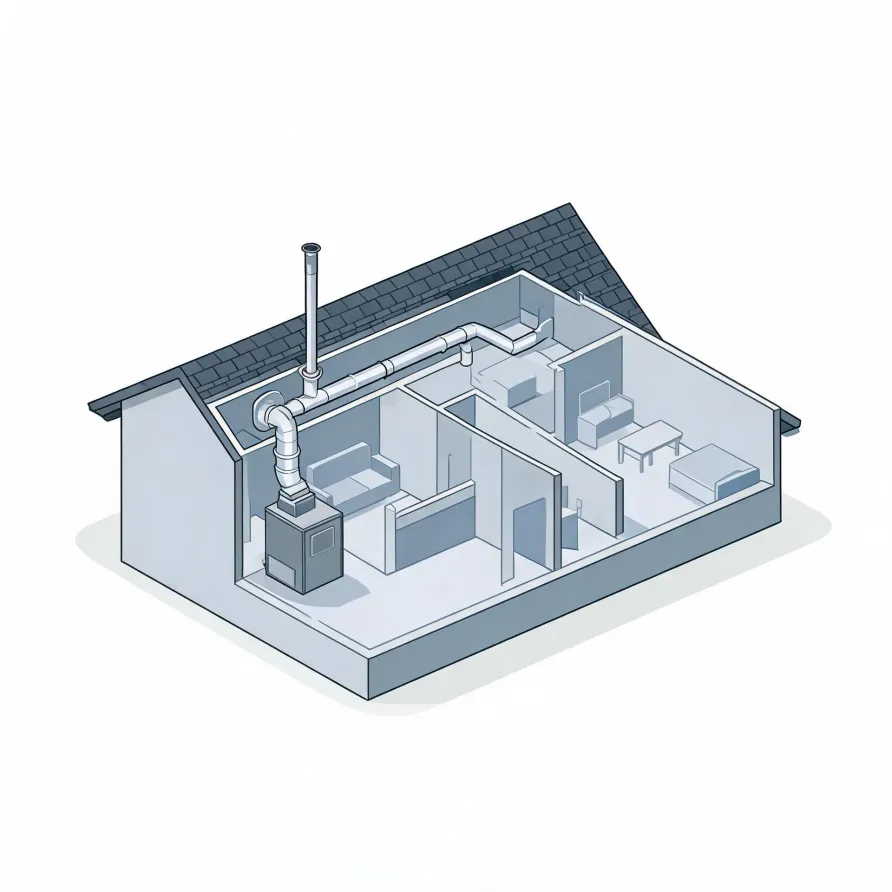
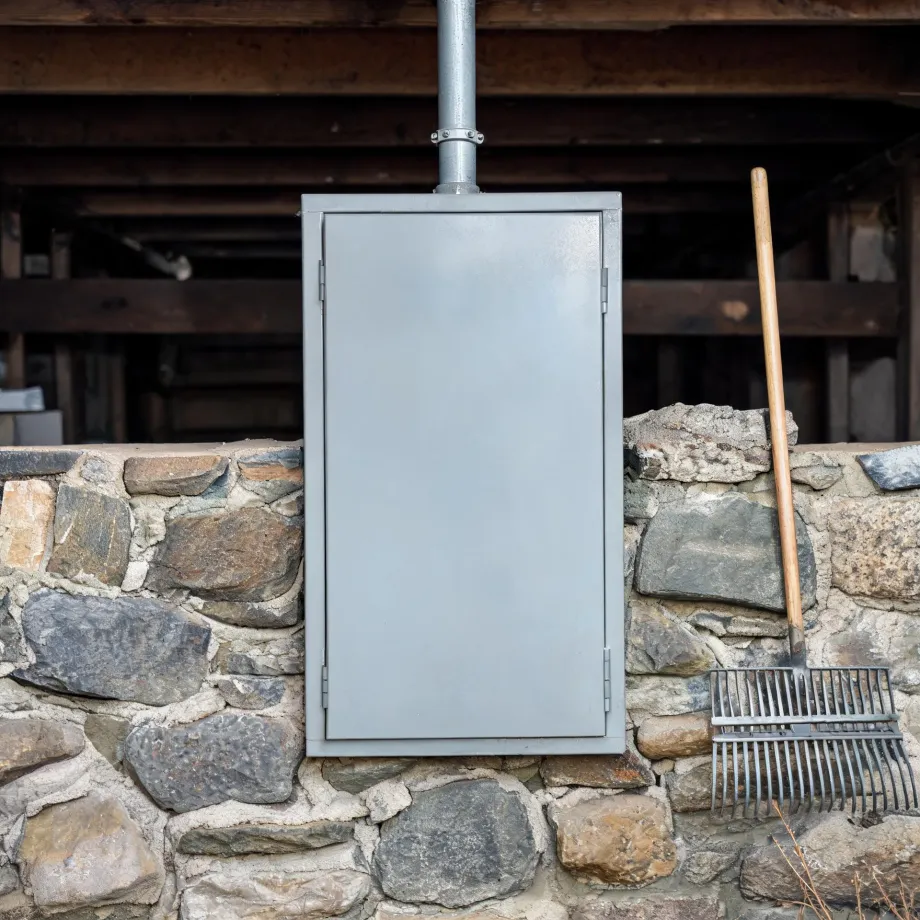
The furnace itself sits in a basement, utility room, or closet and is the piece a contractor goes to first. Inside it, the heat exchanger is the part most worth attention during a repair call: cracks there let combustion gases into the air supply, and a failed exchanger is why some jobs stop before they start. The burners, which fire inside that exchanger, are checked right alongside it.
The blower motor sits at the base of the furnace cabinet and pushes conditioned air through the house. The flue pipe runs from the top of the unit to an exterior wall or through the roof, carrying exhaust gases out. Near the burners, the igniter and flame sensor work as a pair, and when a furnace fails to start or shuts off too soon, those two small components are where a contractor looks first.
The drawing shows a typical furnace layout, and a licensed contractor will determine which components apply to the specific system and setup in your home.
Get matched in Tioga CountyTioga County, by the numbers
123 severe weather events were recorded in Tioga County, New York between 2015 and 2024.
NOAA National Centers for Environmental Information, Storm Events Database, bulk CSV export, events 2015-01-01 through 2024-12-31.Half the homes in Tioga County, New York were built in 1969 or earlier (2020-2024 ACS 5-year).
U.S. Census Bureau, 2020-2024 American Community Survey 5-Year EstimatesTioga County, New York holds 22,104 housing units (2020-2024 ACS 5-year).
U.S. Census Bureau, 2020-2024 American Community Survey 5-Year EstimatesOwners occupy 79.1% of the occupied homes in Tioga County, New York (2020-2024 ACS 5-year).
U.S. Census Bureau, 2020-2024 American Community Survey 5-Year EstimatesCodes & Standards Covering Furnace Repair in Tioga County, New York4 sourced rules & standards
What HVAC Repair Looks Like in Tioga County
Non-weatherized gas furnaces manufactured on or after November 19, 2015 must reach 80.0 percent AFUE.
Non-weatherized oil-fired furnaces manufactured on or after November 19, 2015 must reach 83.0 percent AFUE.
Mobile home gas furnaces manufactured on or after November 19, 2015 must reach 80.0 percent AFUE.
Non-weatherized gas furnaces manufactured on or after December 18, 2028 must reach 95.0 percent AFUE, up from the 80.0 percent minimum that applies to units manufactured before that date.
Severe Weather Events in Tioga County
Extreme weather puts stress on furnace systems, and the pattern in any given county shapes how hard that equipment has to work over time. Repair needs here reflect local conditions, which is why local service matters.
123 severe weather events, 2015–2024. Source: NOAA National Centers for Environmental Information, Storm Events Database.