Tell us about the job
Takes about a minute. No obligation.
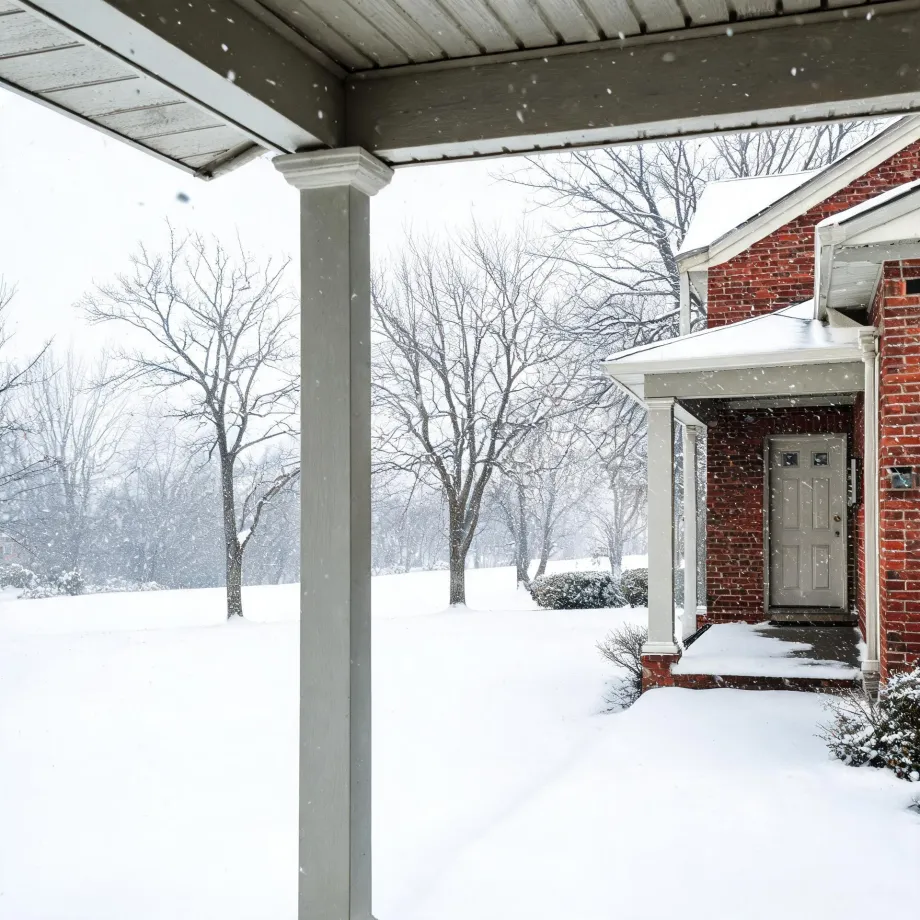
Homes in Rockland County, NY run heat about eight months a year, from October through May. The burner cycles through ignition and shutdown across that span, and the heat exchanger flexes with every cycle, expanding and contracting as the furnace fires and rests. Cracks, scale buildup, and igniter wear show up in proportion to how hard those parts have been worked. A contractor repairing a furnace here looks at the combustion side first, because that is where the load lands.
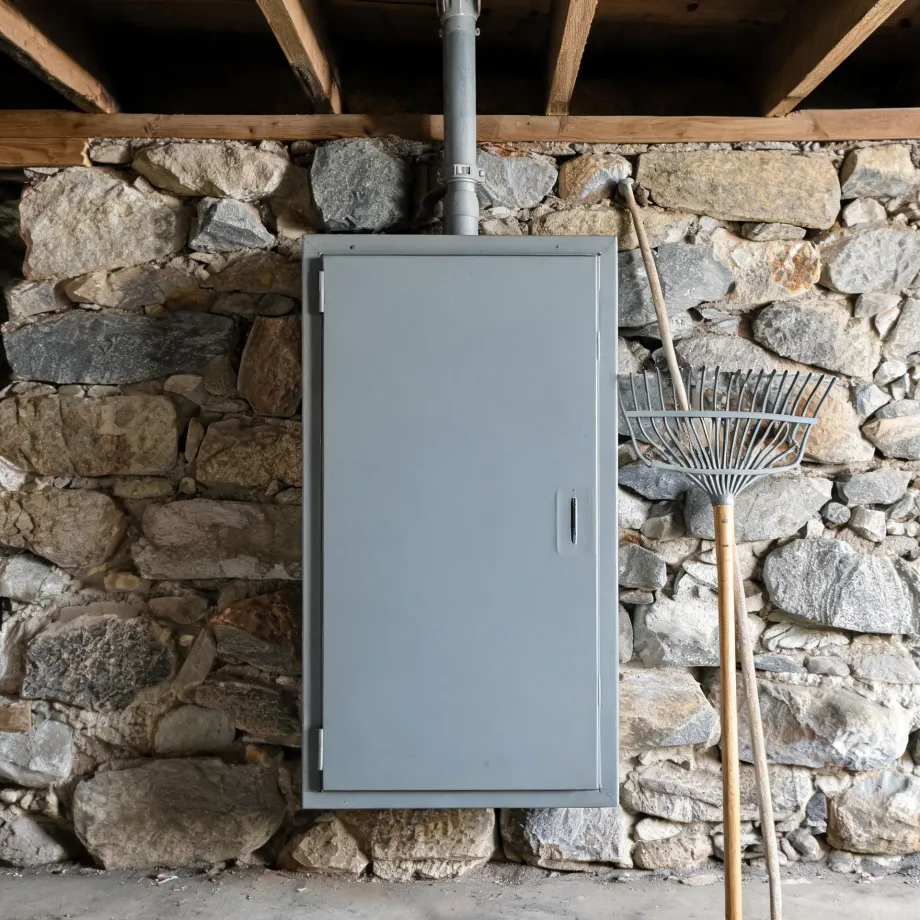
Ductwork in a house built for the original occupant's furnace carries decades of patch repairs, resized vents, and sealant that has long since dried out. Half the homes in Rockland County, New York were built in 1971 or earlier (2020-2024 ACS 5-year). When a technician opens a furnace in stock like this, what they find inside the cabinet frequently diverges from what the model number suggests: heat exchangers that have run past their original design life, burner assemblies where replacement parts are now special-order, and flue connections that were adapted rather than replaced. That gap between the cabinet and what surrounds it is where the repair scope gets settled.
The Parts of a Furnace a Contractor Checks First
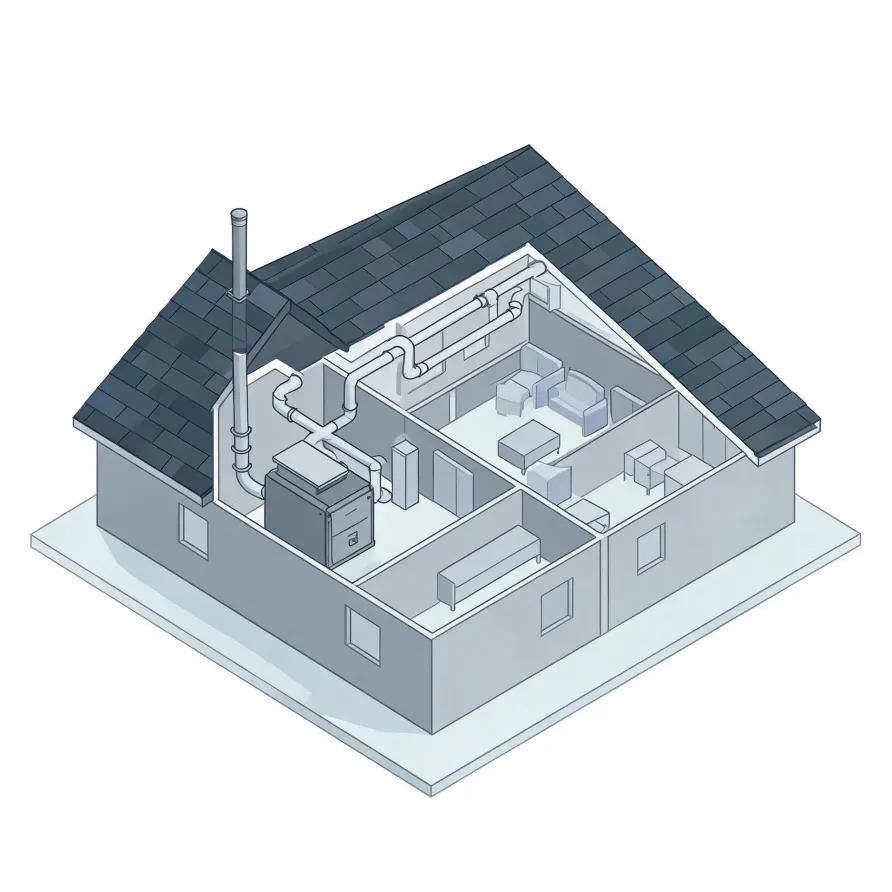
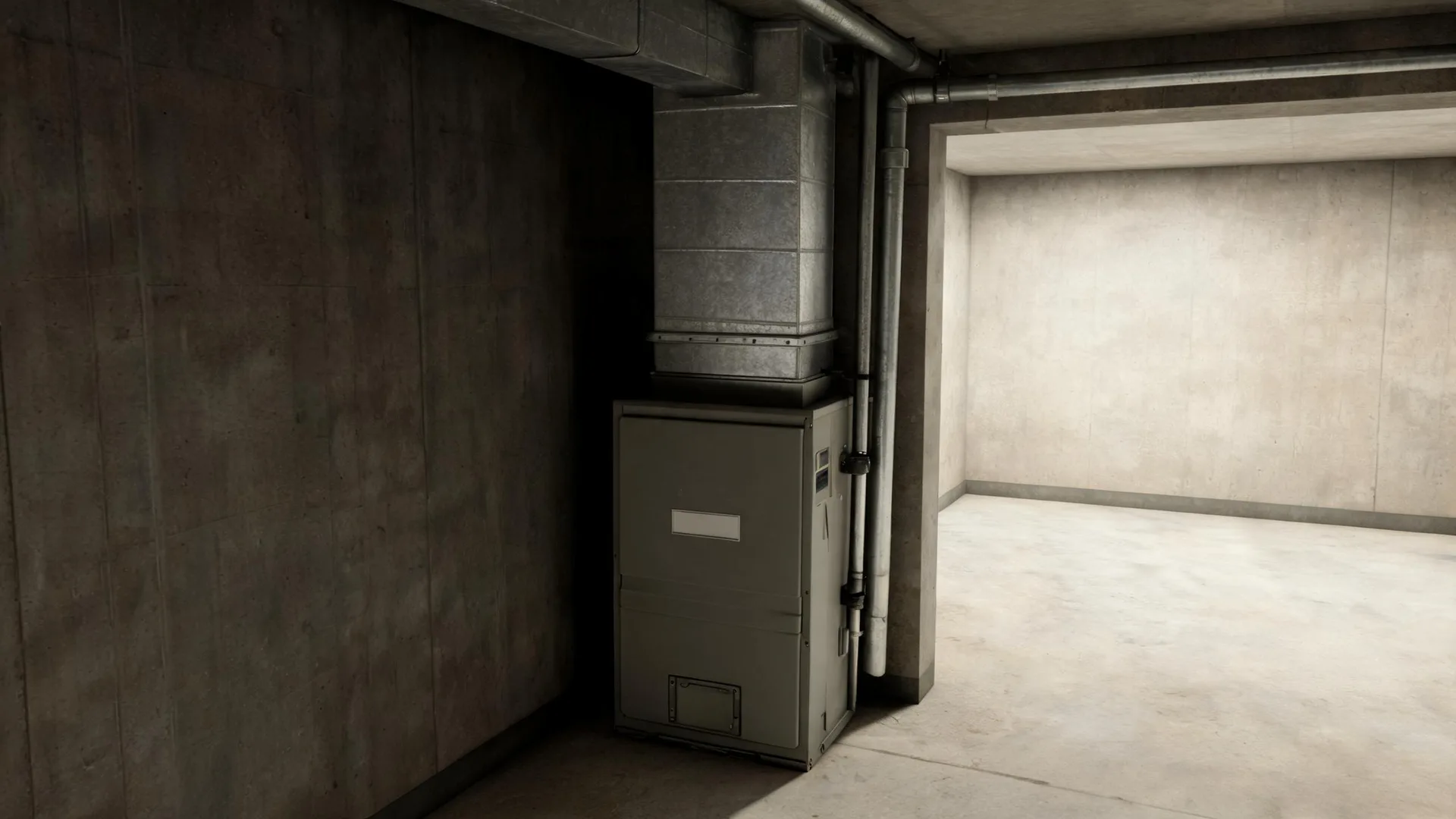
The furnace cabinet sits in the basement, utility room, or closet and is the heart of the system. Inside it, the heat exchanger does the work of warming the air that moves through your home. When heat is uneven, the blower motor is a common starting point. When the system won't fire at all, the burners and the igniter are where a contractor looks first.
The flue pipe runs from the cabinet up through the roof, carrying combustion gases out of the house. The thermostat sits on a wall in the living space and is what tells the furnace to run. A faulty thermostat can look exactly like a furnace problem, so contractors test it early.
The drawing shows a typical furnace layout, and a licensed contractor determines which components apply to your specific system.
Get matched in Rockland CountyRockland County, by the numbers
72 severe weather events were recorded in Rockland County, New York between 2015 and 2024.
NOAA National Centers for Environmental Information, Storm Events Database, bulk CSV export, events 2015-01-01 through 2024-12-31.Half the homes in Rockland County, New York were built in 1971 or earlier (2020-2024 ACS 5-year).
U.S. Census Bureau, 2020-2024 American Community Survey 5-Year EstimatesRockland County, New York holds 108,945 housing units (2020-2024 ACS 5-year).
U.S. Census Bureau, 2020-2024 American Community Survey 5-Year EstimatesOwners occupy 67.9% of the occupied homes in Rockland County, New York (2020-2024 ACS 5-year).
U.S. Census Bureau, 2020-2024 American Community Survey 5-Year EstimatesCodes & Standards Behind Furnace Repair in Rockland County, New York4 sourced rules and standards
What HVAC Repair Looks Like in Rockland County
Non-weatherized gas furnaces manufactured on or after November 19, 2015 must reach 80.0 percent AFUE.
Non-weatherized oil-fired furnaces manufactured on or after November 19, 2015 must reach 83.0 percent AFUE.
Mobile home gas furnaces manufactured on or after November 19, 2015 must reach 80.0 percent AFUE.
Non-weatherized gas furnaces manufactured on or after December 18, 2028 must reach 95.0 percent AFUE, up from the 80.0 percent minimum that applies to units manufactured before that date.
Severe Weather Events in Rockland County
Rockland County weather puts real stress on furnaces: hard cold snaps, power fluctuations, and sudden temperature swings all push heating systems harder and shorten the window before something fails. How often that kind of weather hits locally shapes how much repair work furnaces here actually face.
72 severe weather events, 2015–2024. Source: NOAA National Centers for Environmental Information, Storm Events Database.