Tell us about the job
Takes about a minute. No obligation.
The burner, heat exchanger, and ignition system in a furnace here work hard and cycle repeatedly from the first cold snap through late spring. Homes in Onondaga County, NY run heat about eight months a year, from October through May. A contractor diagnosing a furnace repair in Onondaga County starts at those components because that is where accumulated wear shows up first: cracked heat exchangers, worn igniters, and burners that have simply logged too many cycles. A furnace that has been undersized or improperly serviced will show those faults sooner, because there is little idle time to mask them.
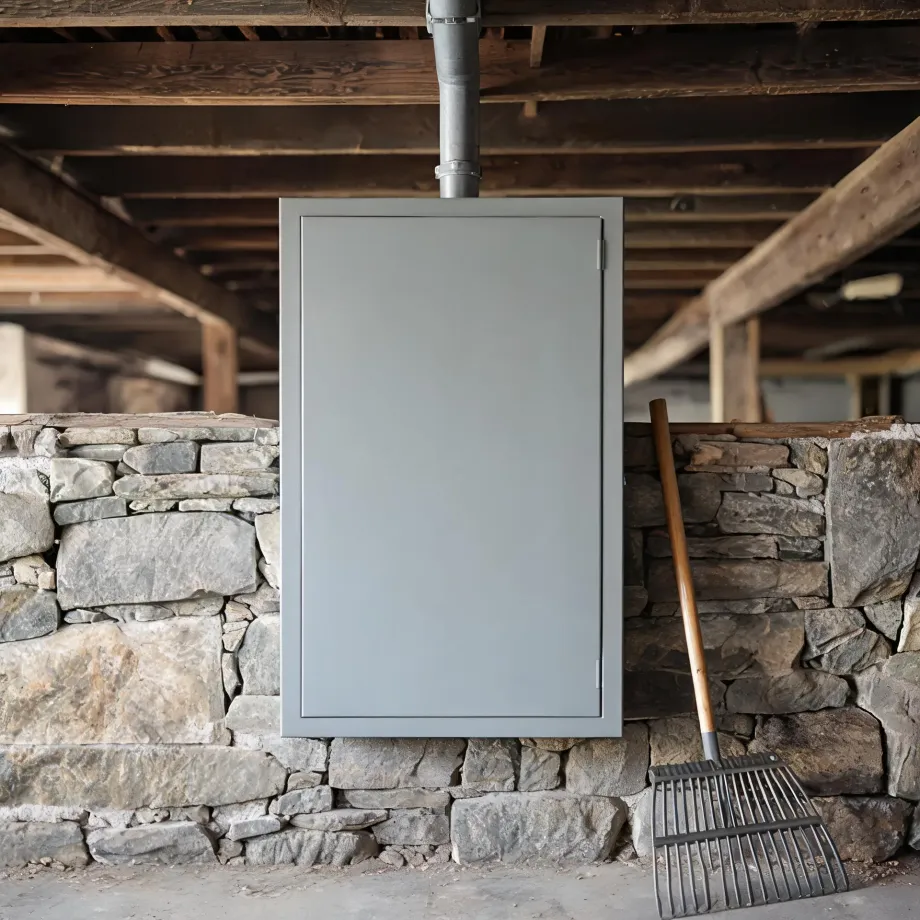
Furnace parts sourced through a distributor are straightforward when the unit is a recent model. For a system running in housing stock as old as Onondaga County's, what the opened furnace actually contains is the variable that decides whether a repair closes in a day or stretches while a contractor tracks down a heat exchanger section or burner assembly the original manufacturer stopped producing years back. Half the homes in Onondaga County, New York were built in 1964 or earlier (2020-2024 ACS 5-year). That age of housing was fitted with equipment generations that have since turned over more than once, and the furnace a contractor opens today is often not the one the house was built around. When a part is obsolete, the repair either waits on a specialty supplier or shifts into a replacement conversation.
The Parts of a Furnace a Contractor Checks First
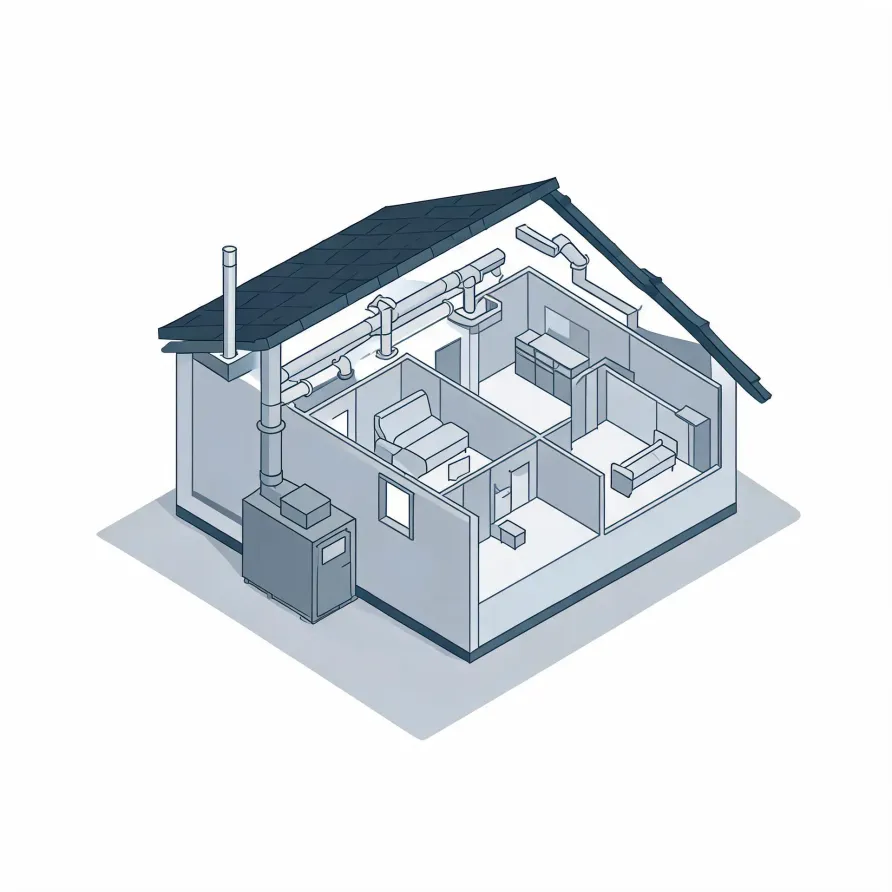
The furnace itself sits in the basement, utility room, or closet and is the piece a contractor goes to first. Inside it, the heat exchanger is what most repairs come back to: it takes the combustion heat and transfers it to the air circulating through your home, and a crack or failure there stops the whole system. The burners, which fire inside the heat exchanger, are checked right alongside it.
The blower motor sits at the base of the furnace cabinet and pushes conditioned air out into the house. The flue or exhaust vent runs from the top of the unit through the wall or roof and carries combustion gases out. The thermostat on your wall is the control point, and when a system behaves erratically rather than failing outright, a contractor often traces the problem back there.
The drawing shows a general layout of these components, and a licensed contractor determines which parts apply and what condition they are in for your specific home.
Get matched in Onondaga CountyOnondaga County by the Numbers
223 severe weather events were recorded in Onondaga County, New York between 2015 and 2024.
NOAA National Centers for Environmental Information, Storm Events Database, bulk CSV export, events 2015-01-01 through 2024-12-31.Half the homes in Onondaga County, New York were built in 1964 or earlier (2020-2024 ACS 5-year).
U.S. Census Bureau, 2020-2024 American Community Survey 5-Year EstimatesOnondaga County, New York holds 212,002 housing units (2020-2024 ACS 5-year).
U.S. Census Bureau, 2020-2024 American Community Survey 5-Year EstimatesOwners occupy 65.9% of the occupied homes in Onondaga County, New York (2020-2024 ACS 5-year).
U.S. Census Bureau, 2020-2024 American Community Survey 5-Year EstimatesFurnace & HVAC Repair Rules on the Books for Onondaga County, New York4 sourced standards & codes
What the repair visit looks like
Non-weatherized gas furnaces manufactured on or after November 19, 2015 must reach 80.0 percent AFUE.
Non-weatherized oil-fired furnaces manufactured on or after November 19, 2015 must reach 83.0 percent AFUE.
Mobile home gas furnaces manufactured on or after November 19, 2015 must reach 80.0 percent AFUE.
Non-weatherized gas furnaces manufactured on or after December 18, 2028 must reach 95.0 percent AFUE, up from the 80.0 percent minimum that applies to units manufactured before that date.
Severe Weather Events in Onondaga County
Harsh weather puts real hours on heating equipment. Furnaces that cycle hard through demanding conditions wear faster, and repair needs in Onondaga County reflect the climate those systems are working against.
223 severe weather events, 2015–2024. Source: NOAA National Centers for Environmental Information, Storm Events Database.