Tell us about the job
Takes about a minute. No obligation.
A contractor diagnosing a furnace in Rensselaer County starts by looking at the parts that cycle every time the burner fires: the heat exchanger, the igniter, and the flame sensor. Homes in Rensselaer County, NY run heat about eight months a year, from October through May. That load falls on the same components season after season, and by the time a furnace shows a fault, the heat exchanger and ignition system have already absorbed years of thermal stress. Cracks, carbon deposits, and igniter degradation are what a technician finds first here, and they set the direction of the repair.
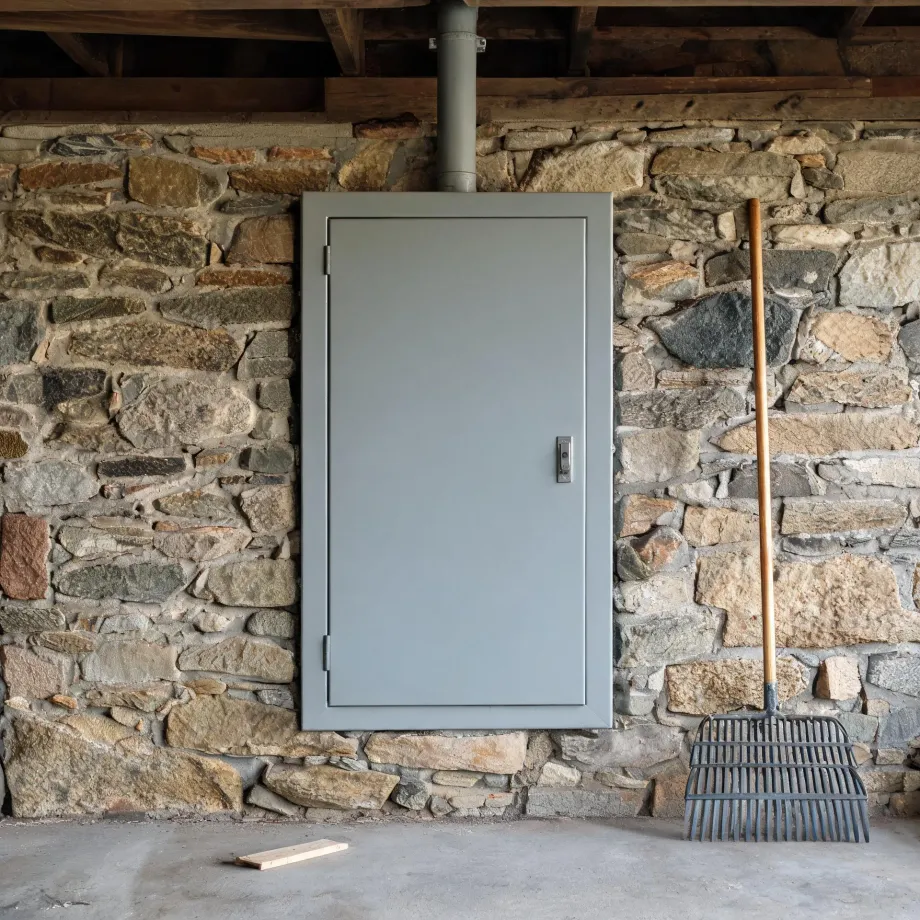
Furnace parts that were common when this county's heating systems were installed are harder to source now, and a repair job can pivot on whether what the opened unit needs is still made. Half the homes in Rensselaer County, New York were built in 1962 or earlier (2020-2024 ACS 5-year). That span between when these houses were built and what runs in them today is where a contractor earns the diagnosis: a cracked heat exchanger, a failed inducer motor, a control board nobody stocks anymore. The age of the equipment decides the scope far more than the call description does.
The Parts of a Furnace a Contractor Checks First
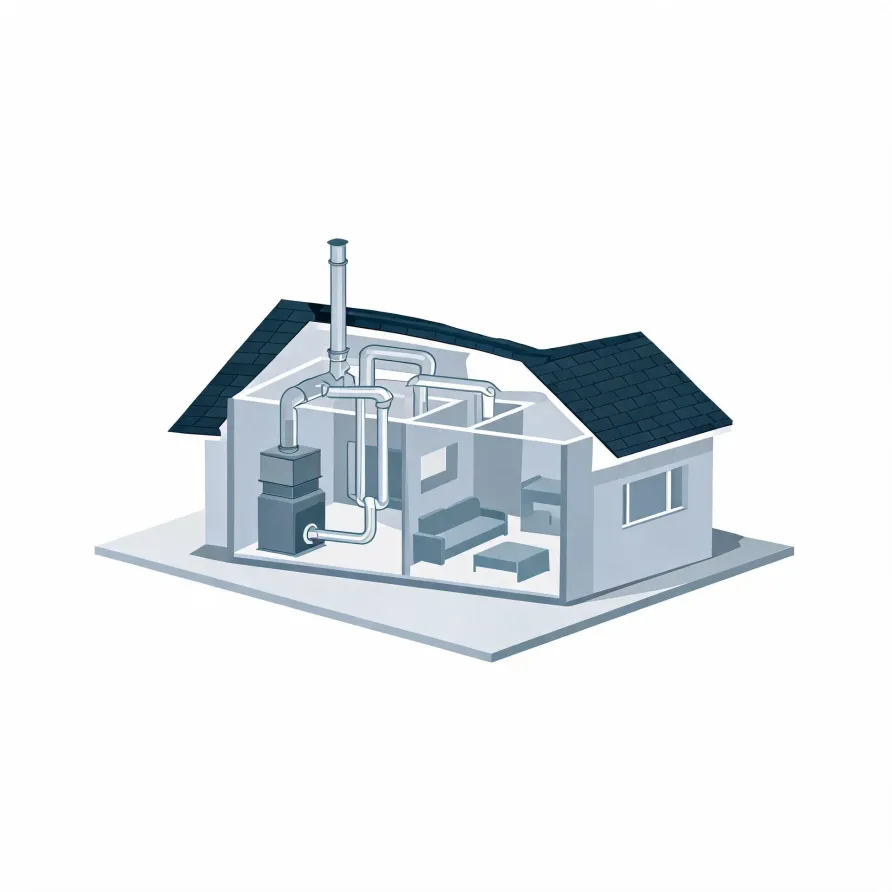
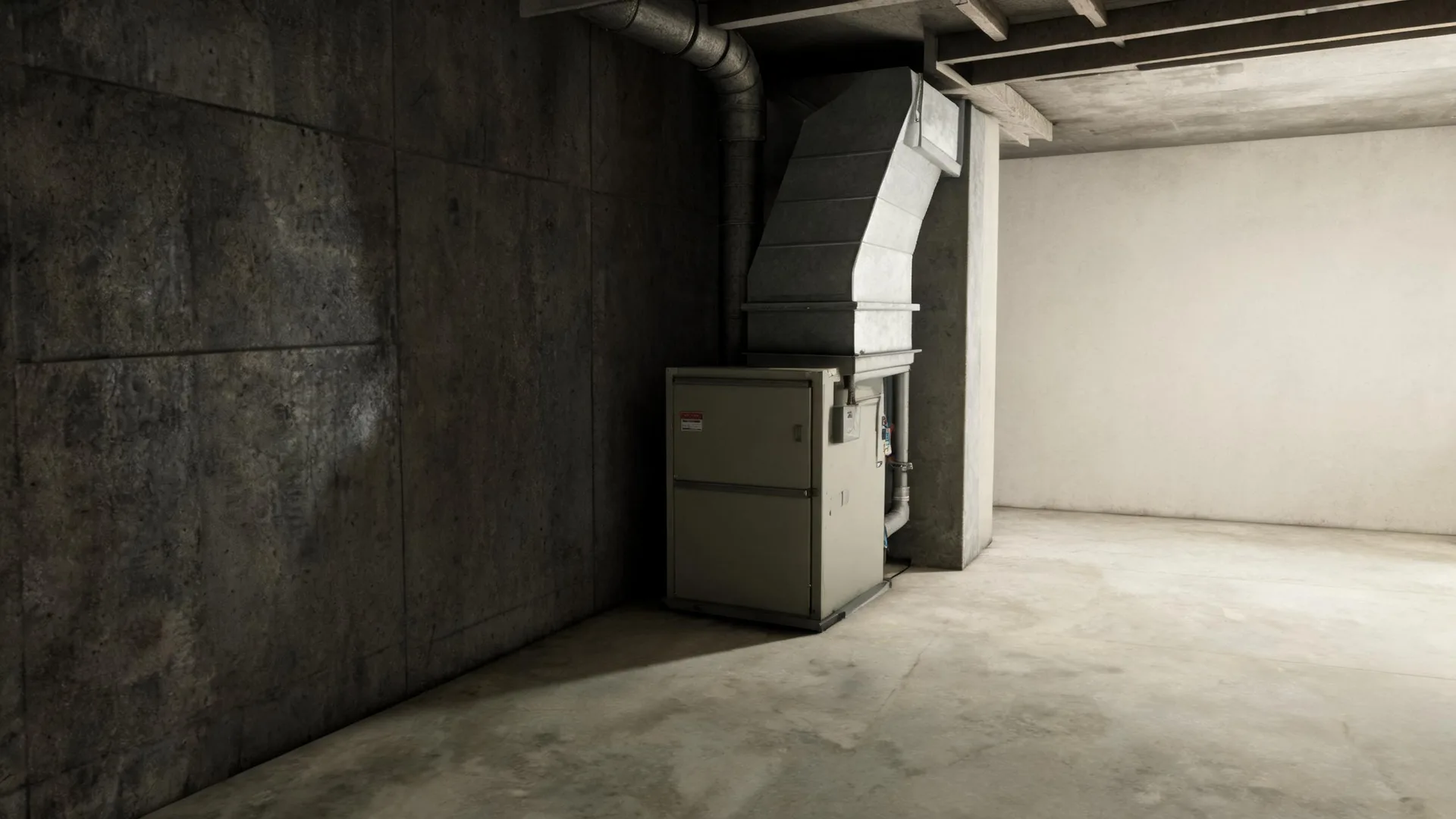
The furnace itself sits in the basement, utility room, or closet and is the system's heat source. Inside it, the heat exchanger is the piece a contractor looks at closely during a repair call. Cracks or failures there let combustion gases into the air supply, so it is often where the diagnosis starts.
The burner assembly and igniter sit at the base of the heat exchanger and are common sources of failure when a furnace stops lighting or cycles off early. The blower motor pushes conditioned air out through the supply side and sits just below the heat exchanger. The flue pipe runs from the furnace up and out of the house, carrying exhaust away.
The drawing shows the general layout of a furnace system, and a licensed contractor determines which components apply to the specific setup in your home.
Get matched in Rensselaer CountyRensselaer County, by the numbers
358 severe weather events were recorded in Rensselaer County, New York between 2015 and 2024.
NOAA National Centers for Environmental Information, Storm Events Database, bulk CSV export, events 2015-01-01 through 2024-12-31.Half the homes in Rensselaer County, New York were built in 1962 or earlier (2020-2024 ACS 5-year).
U.S. Census Bureau, 2020-2024 American Community Survey 5-Year EstimatesRensselaer County, New York holds 74,543 housing units (2020-2024 ACS 5-year).
U.S. Census Bureau, 2020-2024 American Community Survey 5-Year EstimatesOwners occupy 64.8% of the occupied homes in Rensselaer County, New York (2020-2024 ACS 5-year).
U.S. Census Bureau, 2020-2024 American Community Survey 5-Year EstimatesFurnace & HVAC Repair Rules Sourced for Rensselaer County, New York4 codes, standards & statutes
What HVAC Repair Looks Like in Rensselaer County
Non-weatherized gas furnaces manufactured on or after November 19, 2015 must reach 80.0 percent AFUE.
Non-weatherized oil-fired furnaces manufactured on or after November 19, 2015 must reach 83.0 percent AFUE.
Mobile home gas furnaces manufactured on or after November 19, 2015 must reach 80.0 percent AFUE.
Non-weatherized gas furnaces manufactured on or after December 18, 2028 must reach 95.0 percent AFUE, up from the 80.0 percent minimum that applies to units manufactured before that date.
Severe Weather Events in Rensselaer County
Extreme weather puts real strain on furnace systems, and that strain compounds over time. How hard local conditions push the equipment shapes how often repair work comes due, which makes this county's weather record a practical part of the picture for any homeowner here.
358 severe weather events, 2015–2024. Source: NOAA National Centers for Environmental Information, Storm Events Database.