Tell us about the job
Takes about a minute. No obligation.
A furnace in Seneca County runs its burner and ignition system hard and for a long stretch before it ever gets a rest. Homes in Seneca County, NY run heat about eight months a year, from October through May. That load accumulates on the parts that cycle most: the heat exchanger cracks, the igniter wears, and the flame sensor drifts. A contractor arriving at a repair call here checks those components first, because the runtime history makes them the likeliest point of failure. The idle months that follow do not undo that wear.
Ductwork in houses this old was built around equipment that no longer exists. Half the homes in Seneca County, New York were built in 1959 or earlier (2020-2024 ACS 5-year). What a furnace contractor opens here is adapted infrastructure: runs that were rerouted, joints that were patched, and sections that have shed their sealing over decades of heating seasons. Whether the furnace itself is the source of the problem, or whether failing distribution is making a working furnace look broken, determines the scope and the bill. A contractor who skips the ductwork on a repair call in stock like this will quote the wrong fix.
The Parts of a Furnace a Contractor Checks First
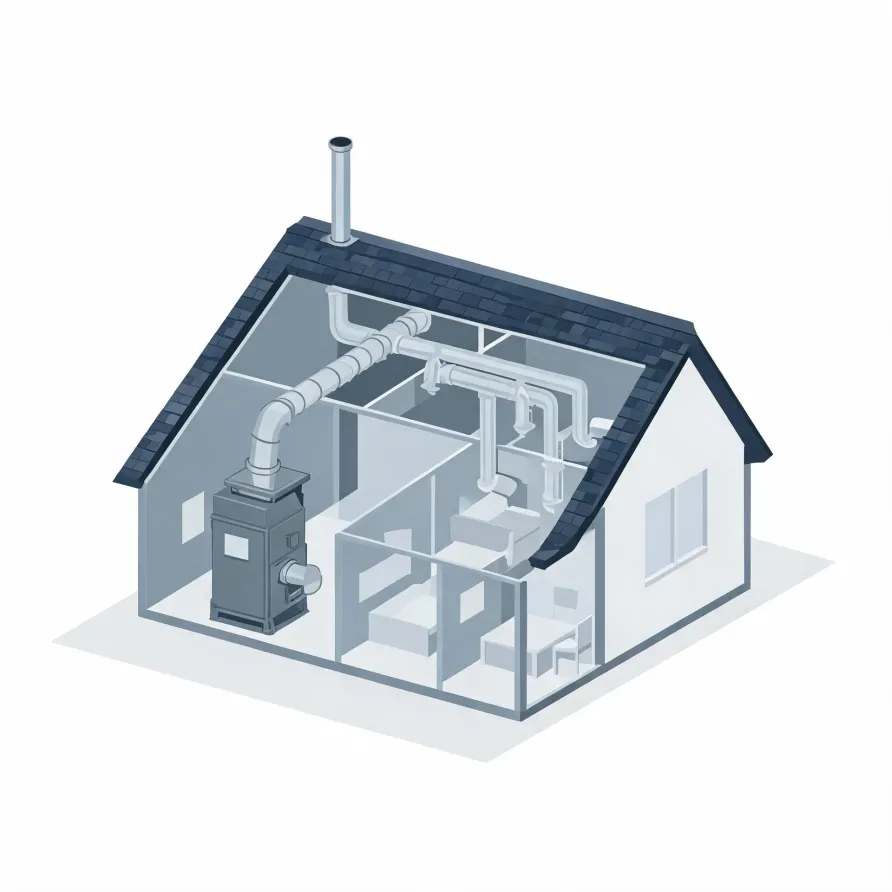
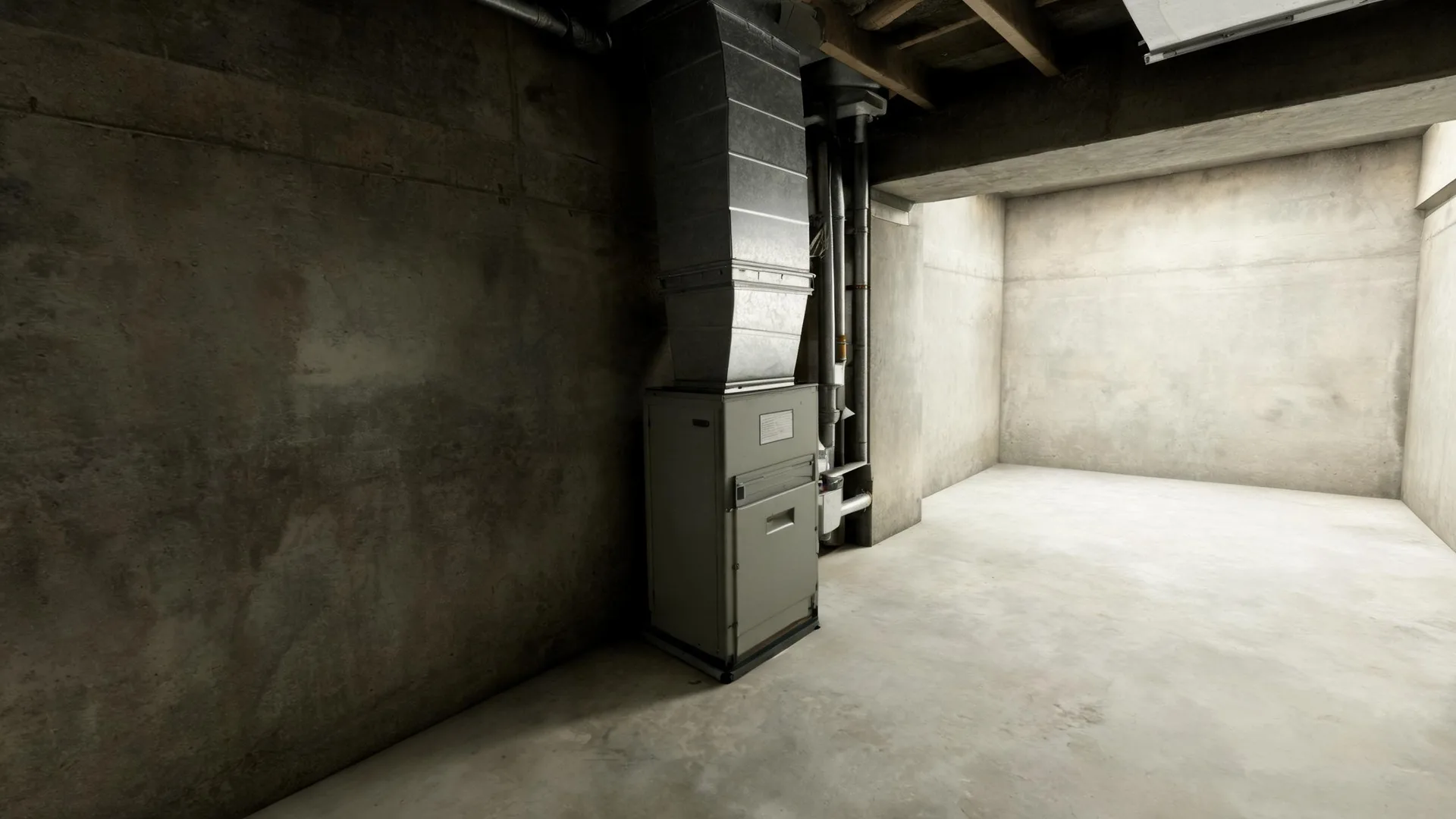
The furnace itself sits in a mechanical room, basement, or utility closet and is the core of the system. Inside it, the heat exchanger is the piece a contractor looks at early: it carries combustion gases away from the living space, and a crack there is the kind of fault that drives the whole unit to shut down or run unsafely. The burner assembly, which fires directly beneath the heat exchanger, is another first stop when a furnace is failing to heat or refusing to start.
The blower motor and its fan wheel sit in the lower cabinet and push conditioned air out through the supply side of the duct system. The flue pipe runs from the top or back of the unit to an exterior vent and carries exhaust gases out of the house. The control board ties these pieces together, and when symptoms are vague or intermittent, it is often where a contractor looks after ruling out the mechanical parts.
The drawing shows a typical furnace layout, and a licensed contractor determines which components apply and what condition they are in for your specific system.
Get matched in Seneca CountySeneca County by the numbers
62 severe weather events were recorded in Seneca County, New York between 2015 and 2024.
NOAA National Centers for Environmental Information, Storm Events Database, bulk CSV export, events 2015-01-01 through 2024-12-31.Half the homes in Seneca County, New York were built in 1959 or earlier (2020-2024 ACS 5-year).
U.S. Census Bureau, 2020-2024 American Community Survey 5-Year EstimatesSeneca County, New York holds 16,194 housing units (2020-2024 ACS 5-year).
U.S. Census Bureau, 2020-2024 American Community Survey 5-Year EstimatesOwners occupy 71.0% of the occupied homes in Seneca County, New York (2020-2024 ACS 5-year).
U.S. Census Bureau, 2020-2024 American Community Survey 5-Year EstimatesCodes & Standards Covering Furnace Repair in Seneca County, New York4 sourced rules and standards
What HVAC Repair Looks Like in Seneca County
Non-weatherized gas furnaces manufactured on or after November 19, 2015 must reach 80.0 percent AFUE.
Non-weatherized oil-fired furnaces manufactured on or after November 19, 2015 must reach 83.0 percent AFUE.
Mobile home gas furnaces manufactured on or after November 19, 2015 must reach 80.0 percent AFUE.
Non-weatherized gas furnaces manufactured on or after December 18, 2028 must reach 95.0 percent AFUE, up from the 80.0 percent minimum that applies to units manufactured before that date.
Severe Weather Events in Seneca County
Extreme weather puts real stress on furnace components, and how hard a system works over time reflects the conditions it runs in. Repair needs in Seneca County are shaped by the local climate, which is why that record belongs on this page.
62 severe weather events, 2015–2024. Source: NOAA National Centers for Environmental Information, Storm Events Database.