Profile view of a bearded man wearing a dark green baseball cap and a dark gray T-shirt against a plain light background.

Is a high-efficiency gas furnace worth it in New York

Step 1 of 3: Equipment

For most homes in New York, yes. You're heating from October well into April, and a high-efficiency furnace burns less gas to put out the same heat, because it pulls more of the warmth out of the exhaust before venting it outside instead of sending it up the flue. A standard furnace runs around 80 percent efficient. A high-efficiency model runs 90 percent or higher. Over a New York winter that gap shows up on the gas bill every month you run the heat. Most homes here already heat with gas, so the furnace is doing real work for half the year, not sitting idle. The upfront cost is higher, and the venting is different, it runs through PVC pipe instead of a metal flue, which matters if your current setup doesn't already have that in place. For a house you plan to keep heating winter after winter, the furnace pays you back in lower bills for as long as you own it.

A gas furnace with a louvered upper panel stands on a concrete pad in a basement, flanked by sheet-metal ductwork, white PVC and metal pipes, and insulated columns.
Before you get your furnace installation
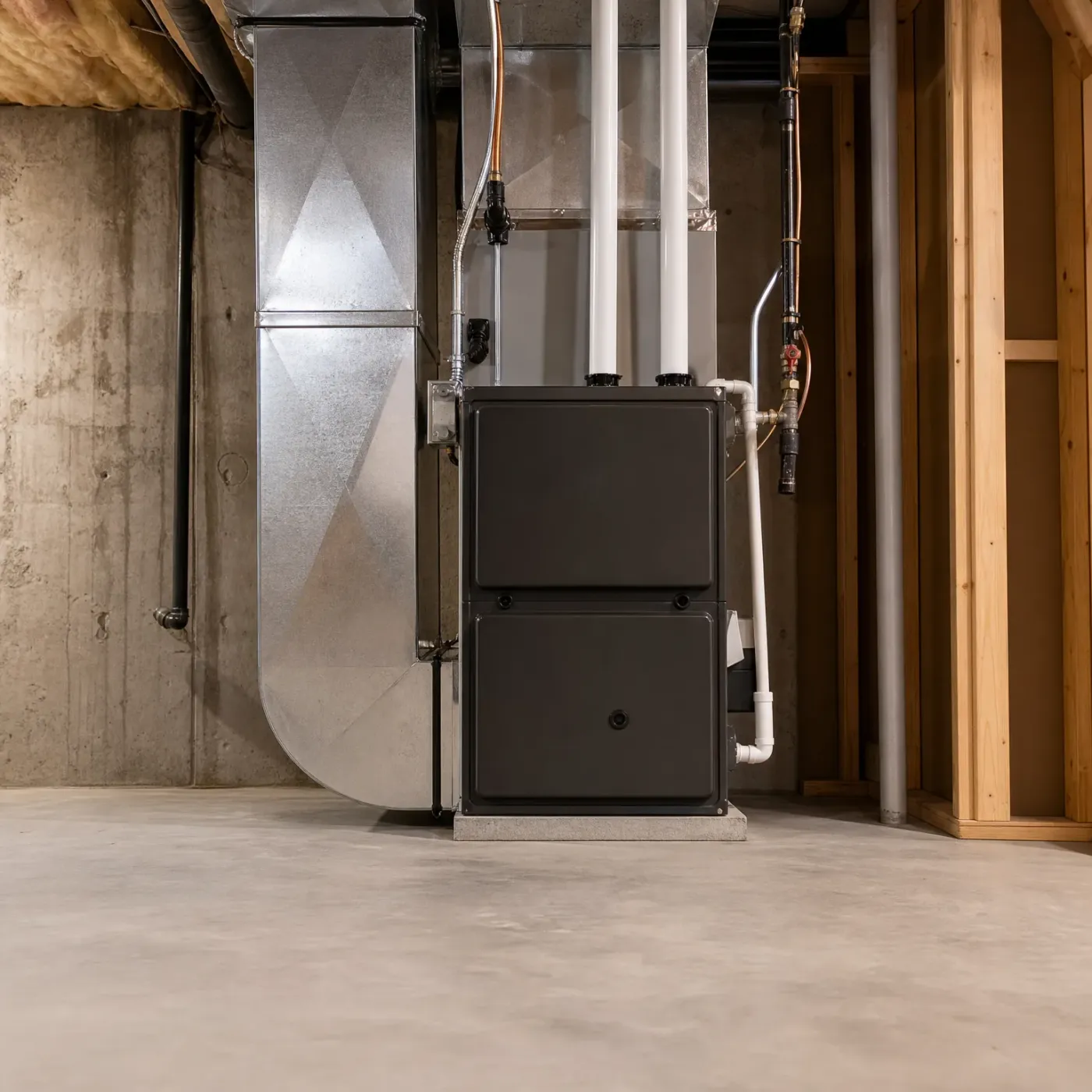
A dark high-efficiency furnace on a concrete pad in a basement, connected to galvanized ductwork, white PVC vent pipes, and copper and black gas piping, with concrete walls and wood framing nearby.
After you get your furnace installation

Where the gas savings come from

A standard furnace sends a lot of heat straight out the flue. A high-efficiency furnace runs that exhaust through a second heat exchanger first, so it pulls more warmth out before venting what's left, often through a PVC pipe in the wall instead of a metal flue. That second step is why it burns less gas for the same heat in your house. It matters more in New York than in milder states, because the furnace is running for six months straight, not just on the coldest nights.


Why venting is different

A standard furnace vents through a metal flue that relies on hot exhaust rising on its own. A high-efficiency furnace cools the exhaust enough that it has to be pushed out through PVC pipe by an inducer fan, and that pipe exits through a wall or the roof rather than tying into a chimney. That changes what the installer has to run to your furnace location, and it's also why a condensate line is part of the job: the exhaust is cool enough to leave water behind that has to drain somewhere.

A woman wrapped in a thick beige fleece blanket sits on a sofa with an open book on her lap, beside a lit table lamp, with a frost-covered window behind her.
A gray-haired woman in a cream knit sweater stands in a dimly lit kitchen at night, looking to her right, with a round loaf of bread in the foreground and a dark window and potted plant behind her.

What changes in your house

You'll notice it at the thermostat first. A high-efficiency furnace tends to run longer at a lower flame instead of blasting hot air in short bursts, so the rooms stay more even and the furnace cycles less often. Outside, you'll see a PVC pipe venting instead of the old metal flue, and that pipe sits low on the wall, so keep it clear of snow drifts when you're shoveling. If your furnace vented through a chimney before, that chimney is no longer doing that job, which matters if anything else in the house, like a water heater, was sharing it.

What it puts at risk if skipped

An older standard furnace that's still working isn't a risk by itself. The risk is in waiting until it fails in January and making a rushed choice instead of a planned one. A furnace installed under New York's own cold stretch gets sized and set up with more care than one swapped in during an emergency. And every winter you heat your house on the old furnace is a winter of paying New York gas rates for heat that's going out the flue instead of into your rooms, at a time when your electric bill is already high enough without adding to it.

A gray-haired bearded man in a dark coat and scarf dusted with snow stands smiling in a dimly lit entryway with a white front door, a side table with a lit lamp, an oval mirror, and a patterned rug.
An older bearded man in a dark snow-dusted coat and gray scarf stands just inside a dimly lit home entry, with a framed picture, lit table lamp, and an adjoining room with a fireplace behind him, and snow visible through the open door.
A gray-haired, bearded man in a dark snow-dusted coat stands smiling in a dimly lit entry hall with a staircase, a lit table lamp, a framed picture, and a living room visible through a doorway.
An older man with gray hair and a beard, wearing a dark jacket dusted with snow, stands smiling in a dimly lit hallway with lamps and a living room visible behind him.
  1. Gas valve opens and the igniter heats up to light the burners.

  2. Burners warm the primary heat exchanger as a draft inducer pulls exhaust through it.

  3. Exhaust still carrying heat passes into a second heat exchanger instead of venting yet.

  4. Cooled exhaust and condensed water drain out through PVC pipe instead of a metal flue.

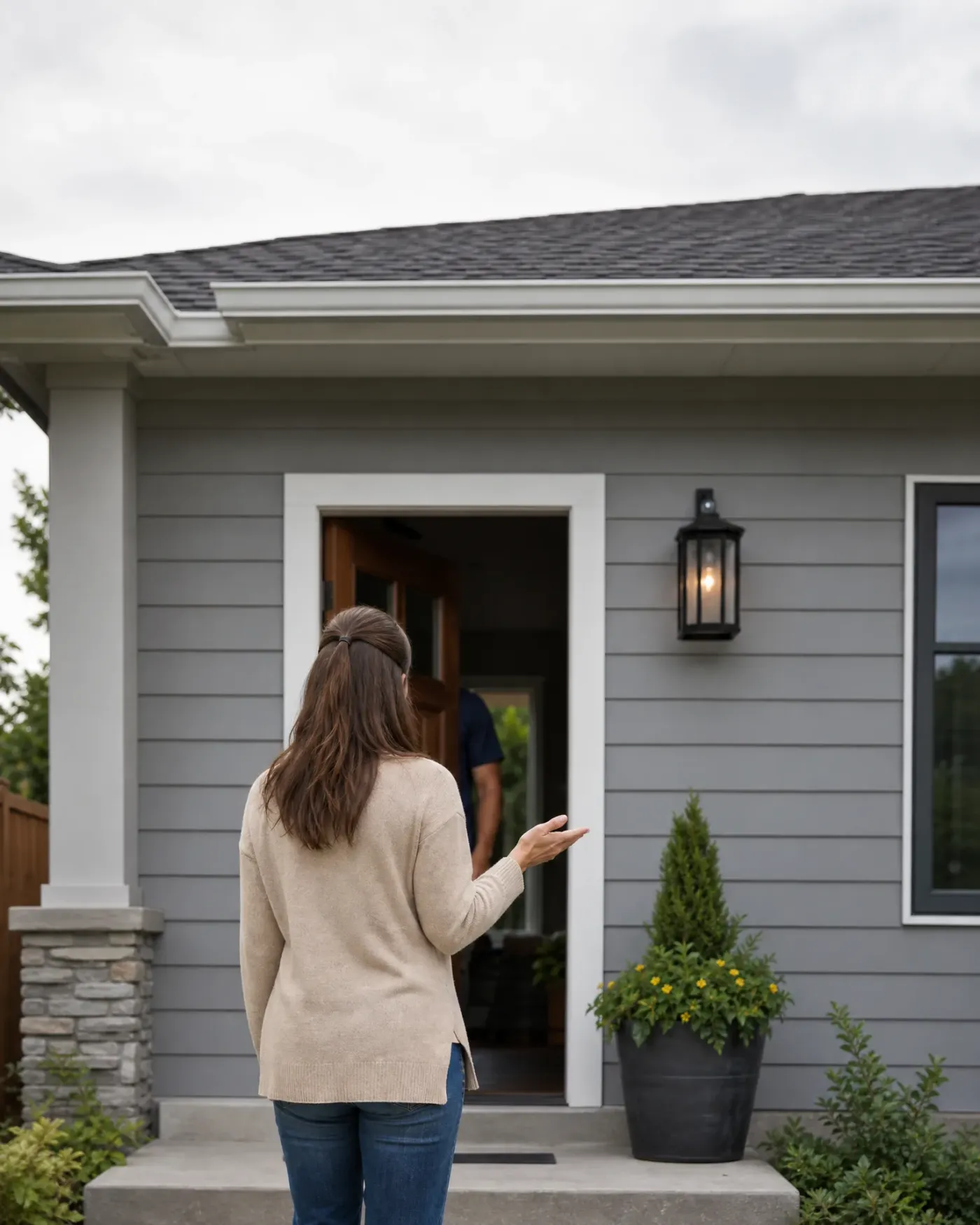
A woman in a cream cardigan and jeans stands with one hand raised facing an open front door of a gray horizontal-siding house, with a black lantern wall light, a potted shrub with yellow flowers, and a stone-faced porch column.

What an old furnace is costing you right now

If the furnace in your basement or closet is original to the house, you're paying for heat you never get to use. That difference shows up every month from October through April on a power bill that's already one of the higher ones in the country. A cracked heat exchanger, a cycling blower, a pilot that won't stay lit, any of those mean the furnace is working harder to do less, and New York winters don't give it an easy season to coast through.

A contractor who installs furnaces in your area week after week can look at your current system and your house and tell you what's actually worth replacing versus patching. That's a different conversation than a general estimate. Once you request a match, you hear from one licensed local contractor, not a handful competing for your attention, and they'll already know what tends to go wrong in homes like yours before they walk in the door.

Interior corner of a room with a window and sheer curtain at left, a gray upholstered sofa with a cushion at right, and a round wooden table holding stacked books and a round vase with an olive branch.
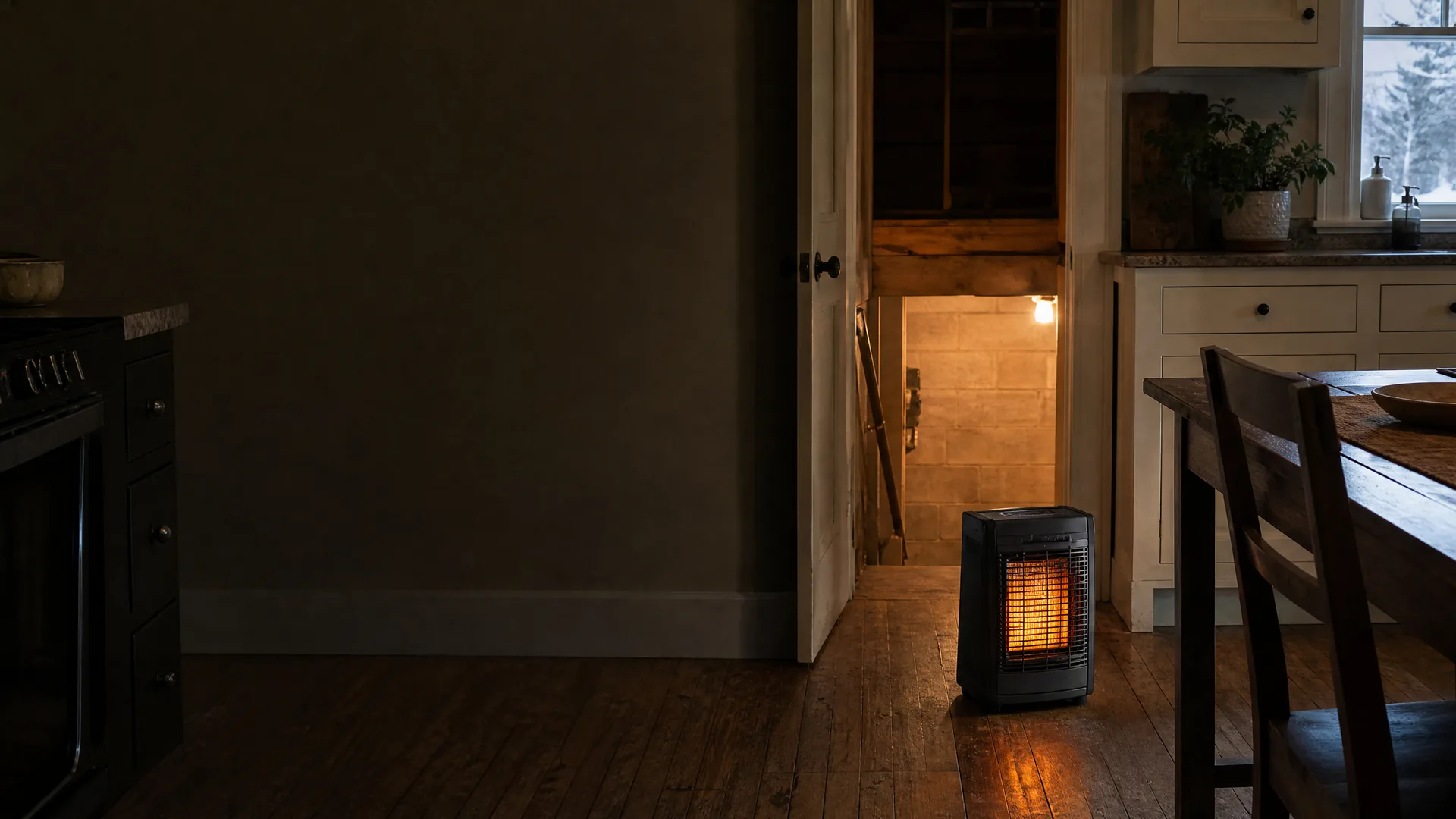
A dimly lit interior with wood plank flooring where a small portable heater with a glowing orange element sits near an open doorway, with a stove at left, kitchen cabinets and a potted plant at right, and a wooden table and chair in the foreground.

The space heater by the table is doing the job the furnace used to do alone. It's March, still cold enough at six in the morning that you plugged it in before the coffee finished. The basement door is open behind you because you went down twice already, once to check the pilot and once just to listen to it try. It catches, runs a minute, quits. You've stopped trusting it to carry the kitchen through breakfast on its own. A furnace that short-cycles like that in New York, this late in the season, is usually done more than it's broken. The kind of contractor who replaces furnaces in your area all winter would know which from a look at it, and whether it's worth one more repair or not.

Get the right pro for your furnace

Your request stays with one local pro.

You only hire the pro if you want to.

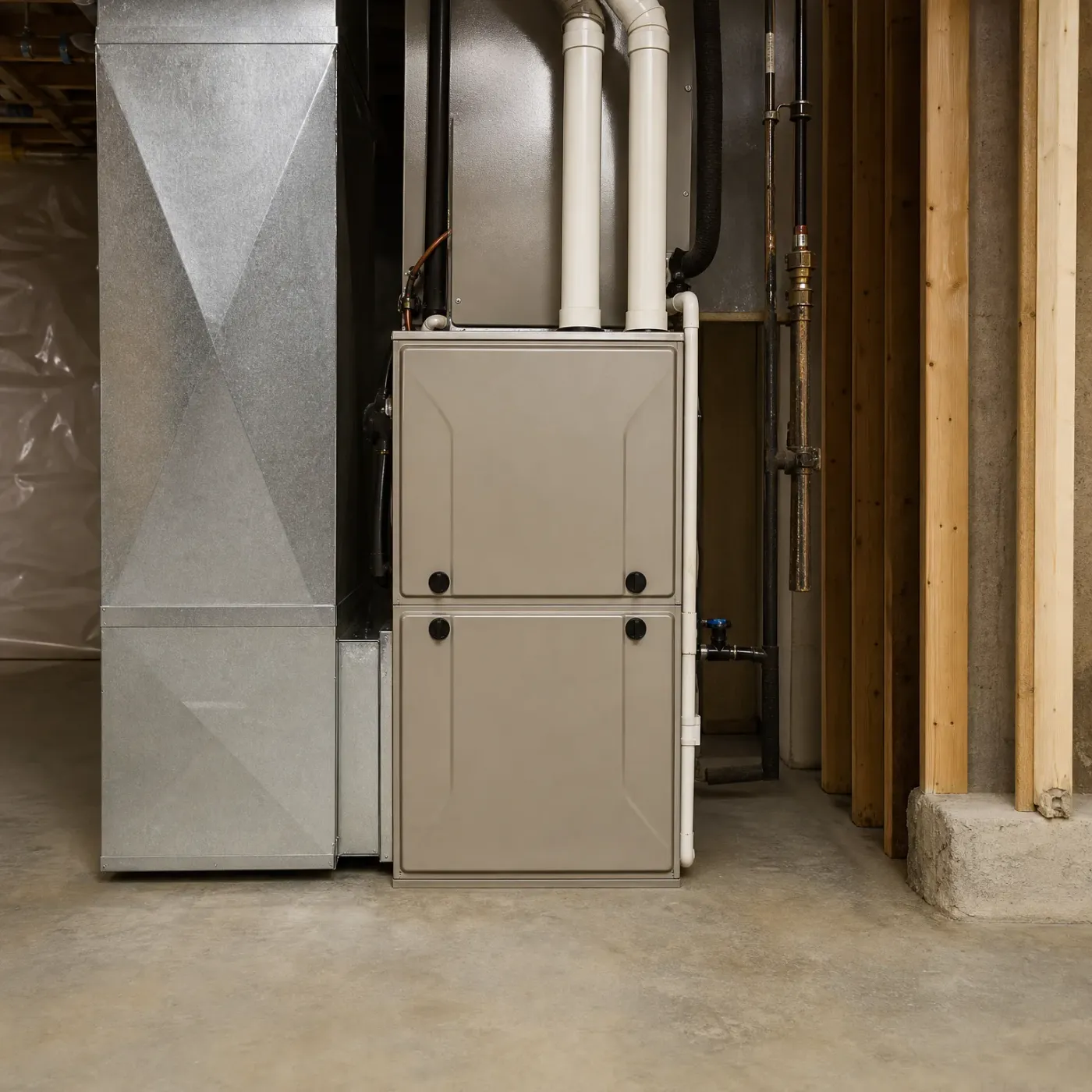
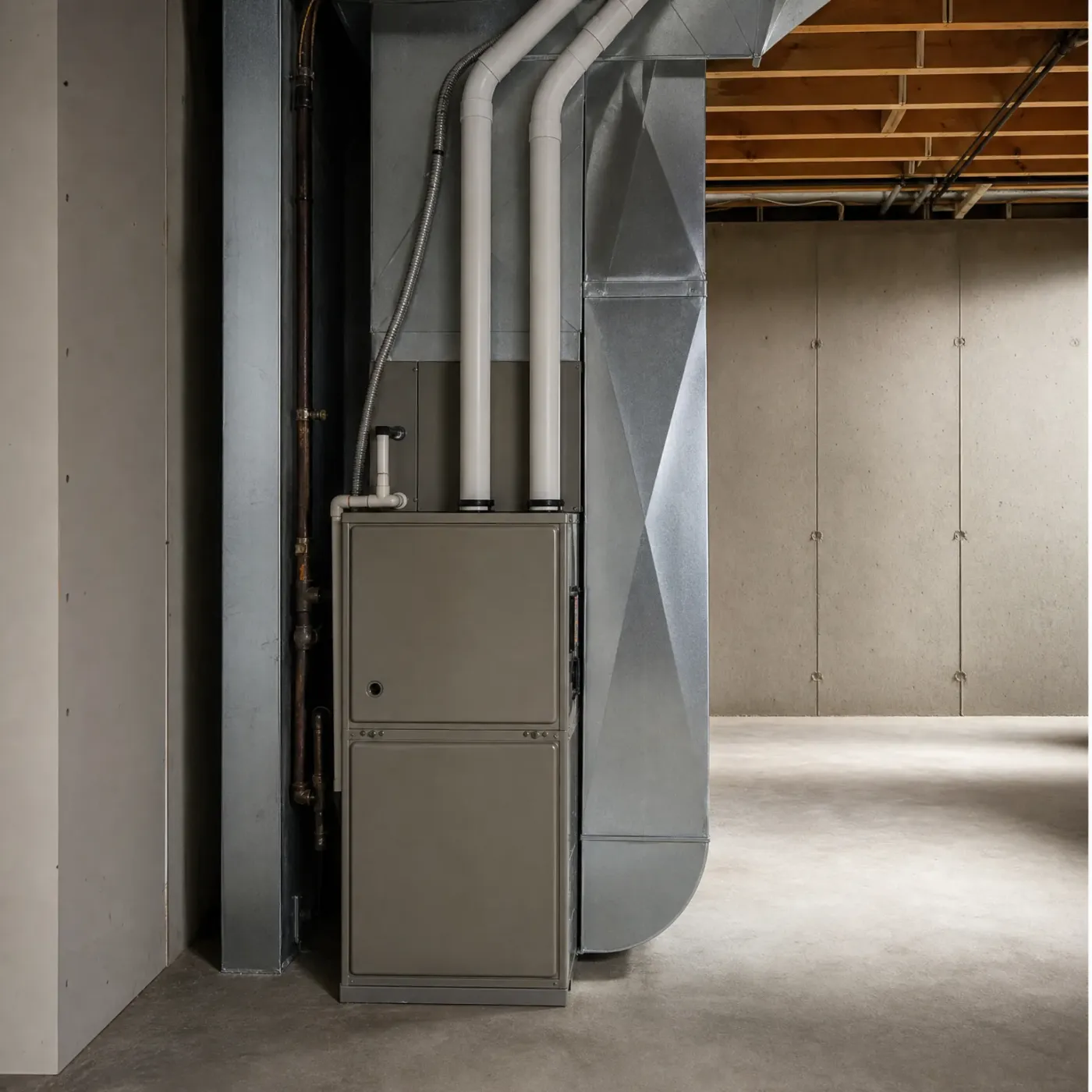
A beige high-efficiency furnace with white PVC vent pipes stands beside galvanized sheet-metal ductwork in a basement with a concrete floor, exposed wood studs, and metal piping along the wall.

High-efficiency, vented through PVC

PVC pipe for intake and exhaust means the furnace draws combustion air from outside and vents through the wall, not the chimney. That second heat exchanger is why the plenum and ducts above it are doing the real work of carrying heat through the house, not losing it up a flue.

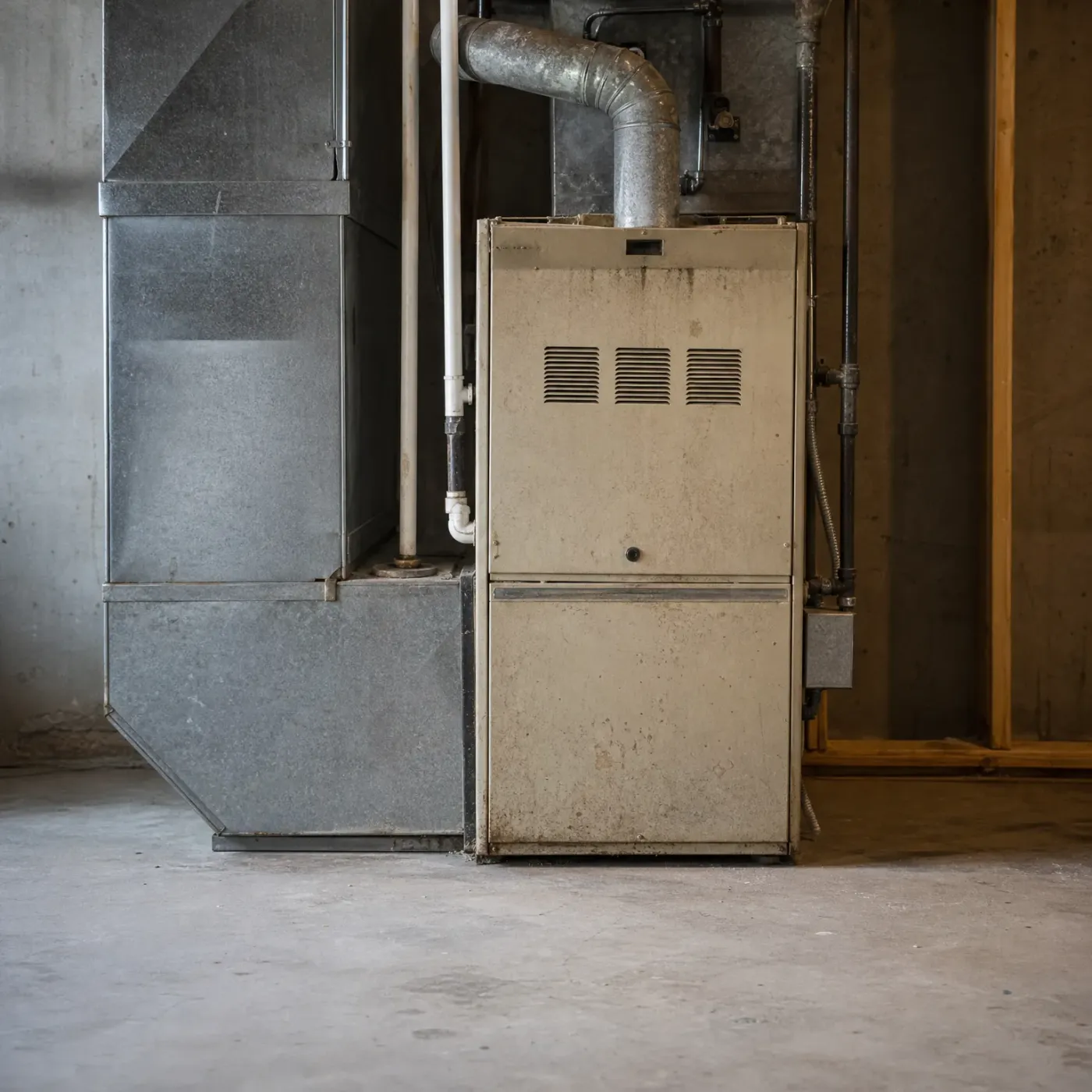
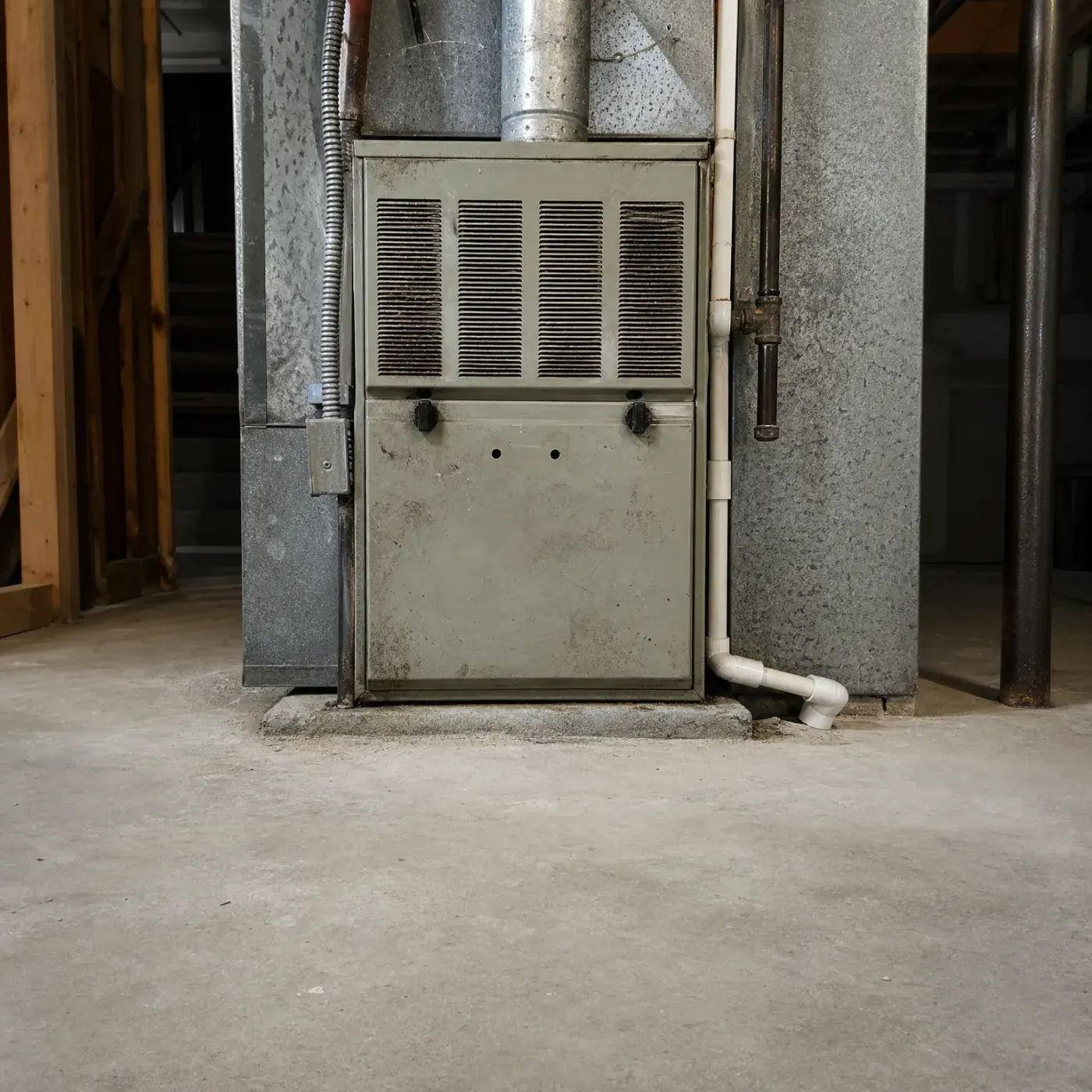
An older beige furnace with a louvered vent panel stands on a concrete basement floor beside galvanized sheet-metal ductwork, a metal flue pipe and vertical pipes along a concrete wall.

Standard furnace, flue to the wall

That flexible metal flue running up and out through the block wall is venting exhaust while it's still hot, heat this furnace paid gas for and never got to use. A furnace this age is also more likely to need parts that aren't made for it anymore.

Standard vs. High-Efficiency Furnace

Standard furnace

  • Costs less to install than a high-efficiency model with the same output.
  • Vents through a metal flue or the chimney, so there's no PVC pipe to route through an exterior wall.
  • Sends a good share of the heat it makes straight out the flue instead of into your ducts.
  • Simpler to service since there's one heat exchanger and no condensate to drain.
  • On a gas bill that's already one of the higher ones in the country, that lost heat adds up every month from October through April.

High-efficiency furnace

  • Costs more upfront, and the install usually takes longer because of the new venting.
  • Needs a PVC intake and exhaust run through an exterior wall, plus a spot to drain condensate.
  • Pulls more heat out of the exhaust before it vents, so less gas is burned for the same warmth in the house.
  • Runs longer at a lower flame rather than short, hot bursts, which keeps rooms more even.
  • Over a winter that runs October into April, the lower gas use works against New York's gas prices instead of with them.
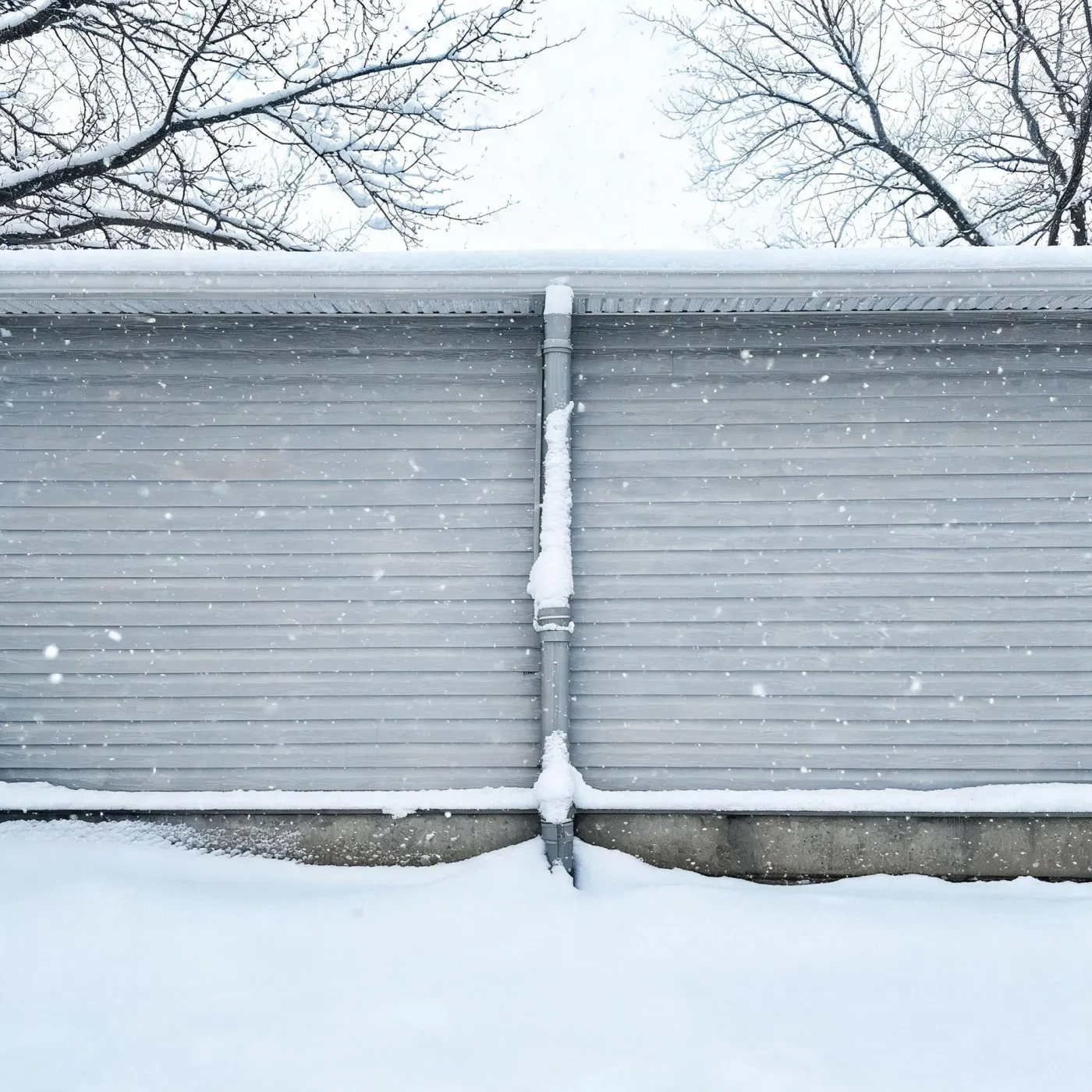
Exterior of a gray horizontal-lap-sided building with a snow-covered roof edge and a central downspout, seen during falling snow with deep snow on the ground and bare tree branches above.

Statewide, winter nights average 24°F, according to NOAA. That's well below freezing for hours at a stretch, which means your furnace isn't just kicking on in the morning and evening. It's running through the night to keep the house from losing ground. A standard furnace answers that by firing hotter and sending more heat straight out the flue to keep up. A high-efficiency furnace pulls more of that heat back out of the exhaust before it vents, so it can hold the house steady through a 24°F night without burning as much gas to do it.

NOAA nClimDiv 1991-2020 county normals weighted by homes

Why does one room stay cold no matter what you set the thermostat to

You turn the thermostat up and the living room still feels off. The back bedroom never quite catches up. You hear the furnace kick on and run a long time, then shut off, then start again twenty minutes later. Down in the basement the burners sound louder than they used to, and there's a smell when it first fires, gone in a minute but there every time. The gas bill keeps climbing even though you haven't changed the thermostat setting. None of this means the furnace is about to quit on you tonight. It means it's working harder than it should to do the same job, and every winter you run it like that costs you more than the last.

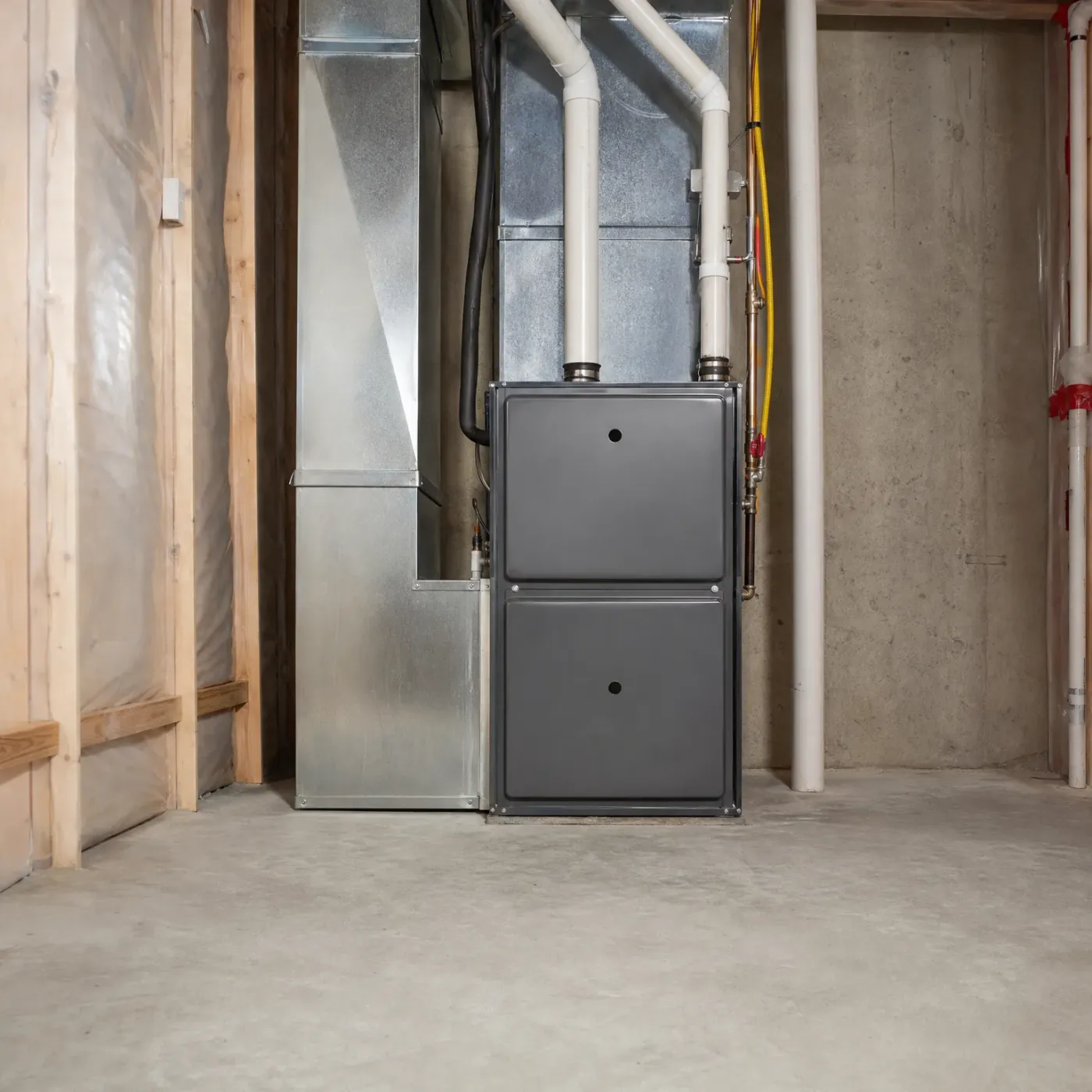
A gray high-efficiency furnace with two PVC vent pipes stands in an unfinished basement beside sheet-metal ductwork, a framed and plastic-covered wall, and a bare concrete wall with vertical pipes.
A furnace venting through PVC into a dry, properly pitched line is doing what it's supposed to: pulling the last heat out before letting the exhaust go.
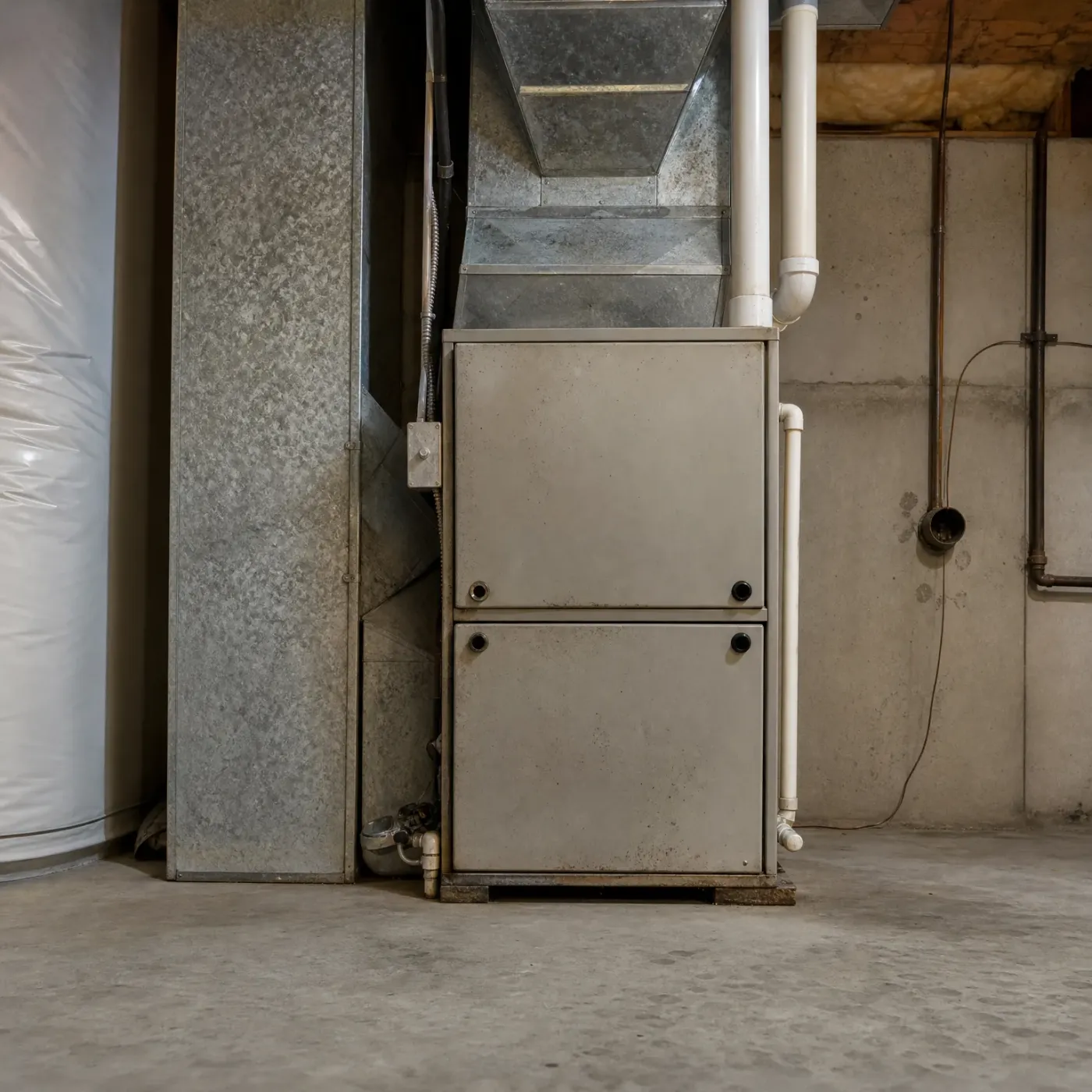
A gray furnace cabinet in a basement, connected to galvanized sheet-metal ductwork and white PVC pipes, against a concrete wall with exposed metal piping and insulation overhead.
A furnace sitting on a pallet next to bare block and exposed joists, with no finished venting run, is one a contractor still has to look at before it can run right.

Winter nights average 24°F statewide

At 24°F, a furnace that cycles off too soon leaves the house losing ground before it kicks back on. A high-efficiency model holds a longer, lower flame through those hours, so it's keeping pace with the cold instead of chasing it.

NOAA nClimDiv 1991-2020 county normals weighted by homes

Where This Leaves You

  • A high-efficiency furnace costs more upfront but burns less gas every month from October through April.
  • The second heat exchanger is the real difference, and it keeps paying off for as long as you own the furnace.
  • A furnace installed wrong, with bad venting or a poor PVC run, won't deliver the savings the equipment is built for.
  • Matching you with one licensed local contractor means you deal with a single company, not a string of calls to field.
  • A contractor who installs these furnaces every winter in New York knows the venting and sizing mistakes to avoid before they happen.
  • Where your house lands between a standard and a high-efficiency model comes down to your furnace, your ductwork, and how long you plan to stay.

For most New York homes heating from October into April, a high-efficiency furnace earns back its higher cost through lower gas bills, and it keeps doing that every winter you own it. The second heat exchanger is what makes that possible, pulling heat out of the exhaust that a standard furnace would send straight out the flue. None of that shows up if the install is off. A PVC run that's pitched wrong or sized wrong for the furnace can mean the equipment never performs the way it's built to, no matter what's printed on the label.

That's where getting matched with the right contractor matters as much as the furnace you pick. A furnace installed by someone who works on these systems all winter, in houses with the same venting and sizing questions yours has, tends to avoid the mistakes that cost you the savings you're paying for. You'll be connected with one licensed local contractor, not a handful of companies all calling the same week. That contractor can look at your furnace, your ductwork and your venting and tell you where your house actually lands between a standard model and a high-efficiency one. Some houses are a clear case for one or the other. Others depend on how long you plan to stay and what your ducts can handle. Either way, the answer isn't guesswork once someone's looked at what you have.

A gray high-efficiency furnace in an unfinished basement, connected to sheet-metal ductwork and two white PVC vent pipes, with copper piping and exposed wood floor joists nearby.

A pro who works on furnaces

Reach a local pro

Your request goes to one pro, not a list of companies.

Asking costs nothing, and the choice to hire stays yours.