A local pro who knows furnaces gets your details and gets in touch.
A cracked heat exchanger is not something you can see for yourself. It sits inside the furnace cabinet, and the signs you can actually catch are things like soot around the burner, a smell that shows up when the furnace runs, a strange odor that is different from normal dust burning off, or a yellow flame instead of blue. Some people notice headaches or feeling off in the room where the furnace is. None of those on their own prove a crack, but any of them is reason to have the furnace checked before you run it again.
This matters more in a New York winter because a gas furnace here runs for months, not days. If there is a crack, it gets worse the longer the furnace keeps firing, and you are heating the house through a system that should be shut down, not run through February.
Figuring out whether a heat exchanger is actually cracked takes a combustion analyzer and someone who opens the cabinet and looks, not a guess based on symptoms. That is a job for a local technician who deals with furnaces like yours all winter and knows what a cracked exchanger in this climate tends to look like before it fails outright.
When you ask for help through this page, you are not handed a call center or a list of five companies bidding for your number. You get matched with one licensed contractor working in your area, and that contractor reaches out to you directly. One company, one call, someone who already knows the kind of furnace common in New York homes and what usually goes wrong with it after a few winters of heavy use.
Fill in a few details about your furnace and your address, and the next step is theirs to take. You will not need to chase a contractor down or explain your situation twice.
A cracked heat exchanger usually shows up as a change in how your furnace runs, not a visible crack. Watch for soot around the burner compartment, a flame that flickers or changes color when the blower kicks on, or a smell that only appears once the furnace has been running a while. Some people notice headaches or feel sick in rooms near the furnace, which can point to carbon monoxide leaking through the crack. Your furnace heats most of the winter here, so a damaged heat exchanger gets a lot of chances to push exhaust into the air you breathe instead of up the flue. The metal cracks from repeated heating and cooling cycles over years of use. Because the exchanger sits inside the cabinet, confirming a crack takes a camera inspection or a combustion analyzer, not a flashlight. If you're seeing any of these signs, the furnace needs to be shut off and looked at before you run it again.
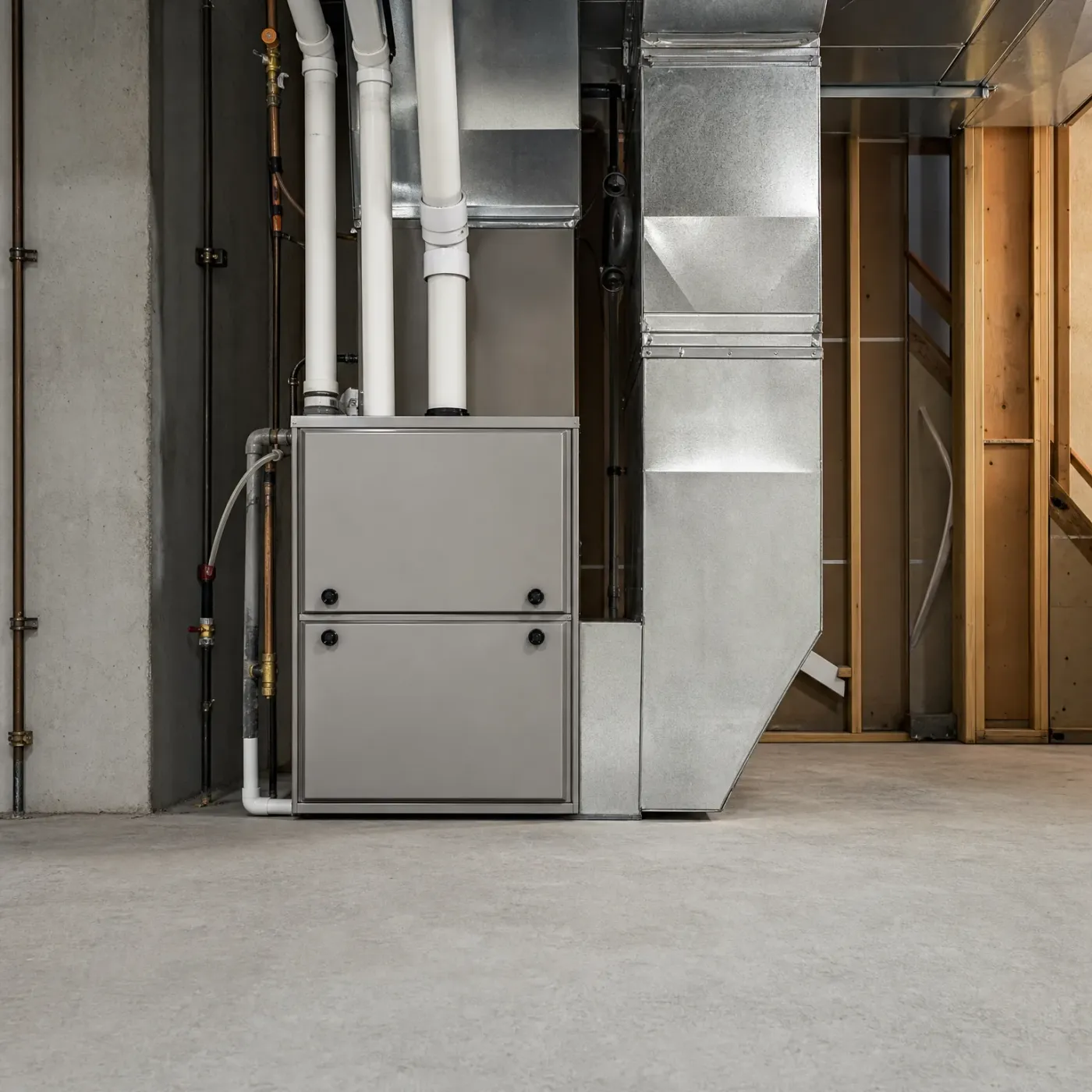
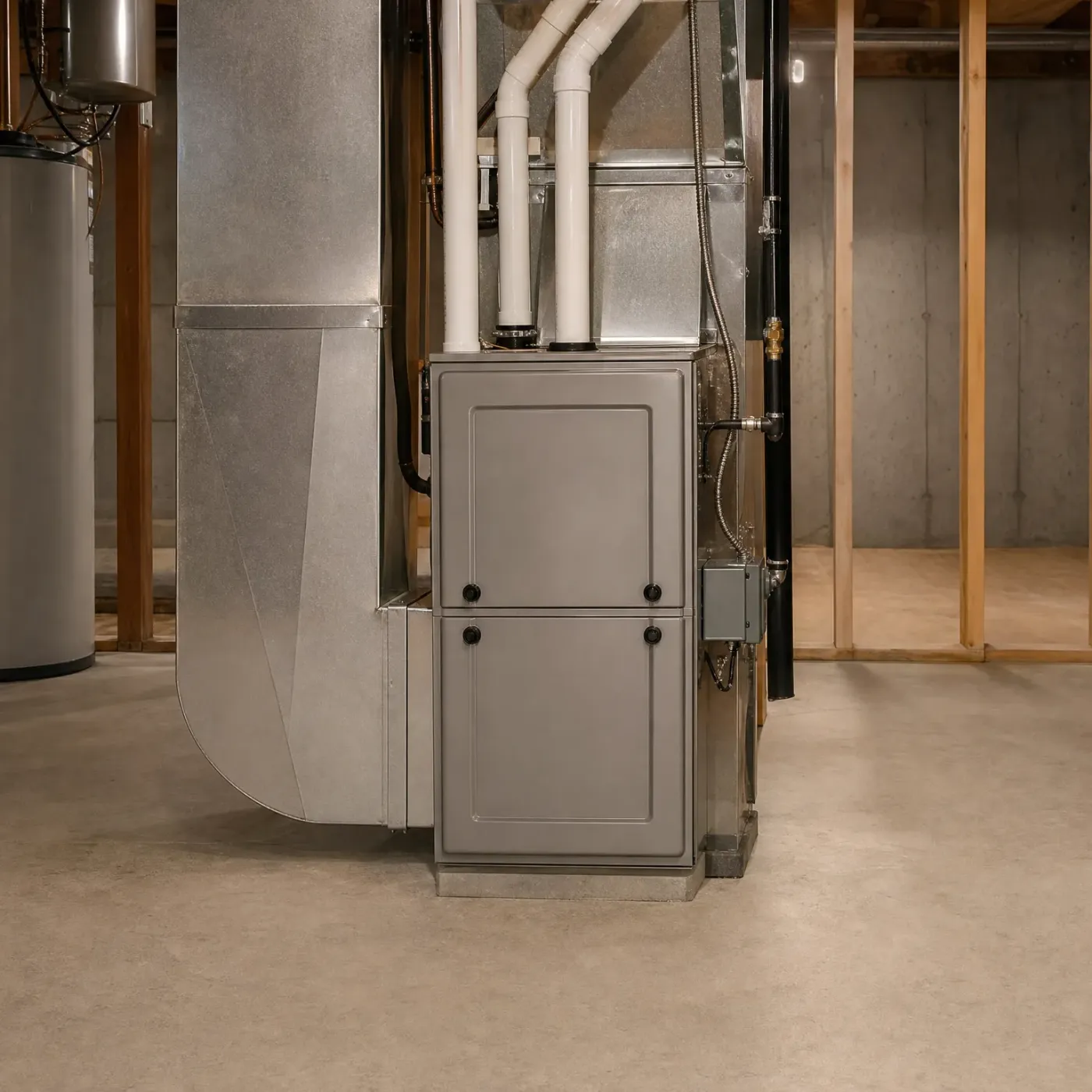
A furnace running right has a steady blue flame and no soot staining the burner compartment or the panel above it.
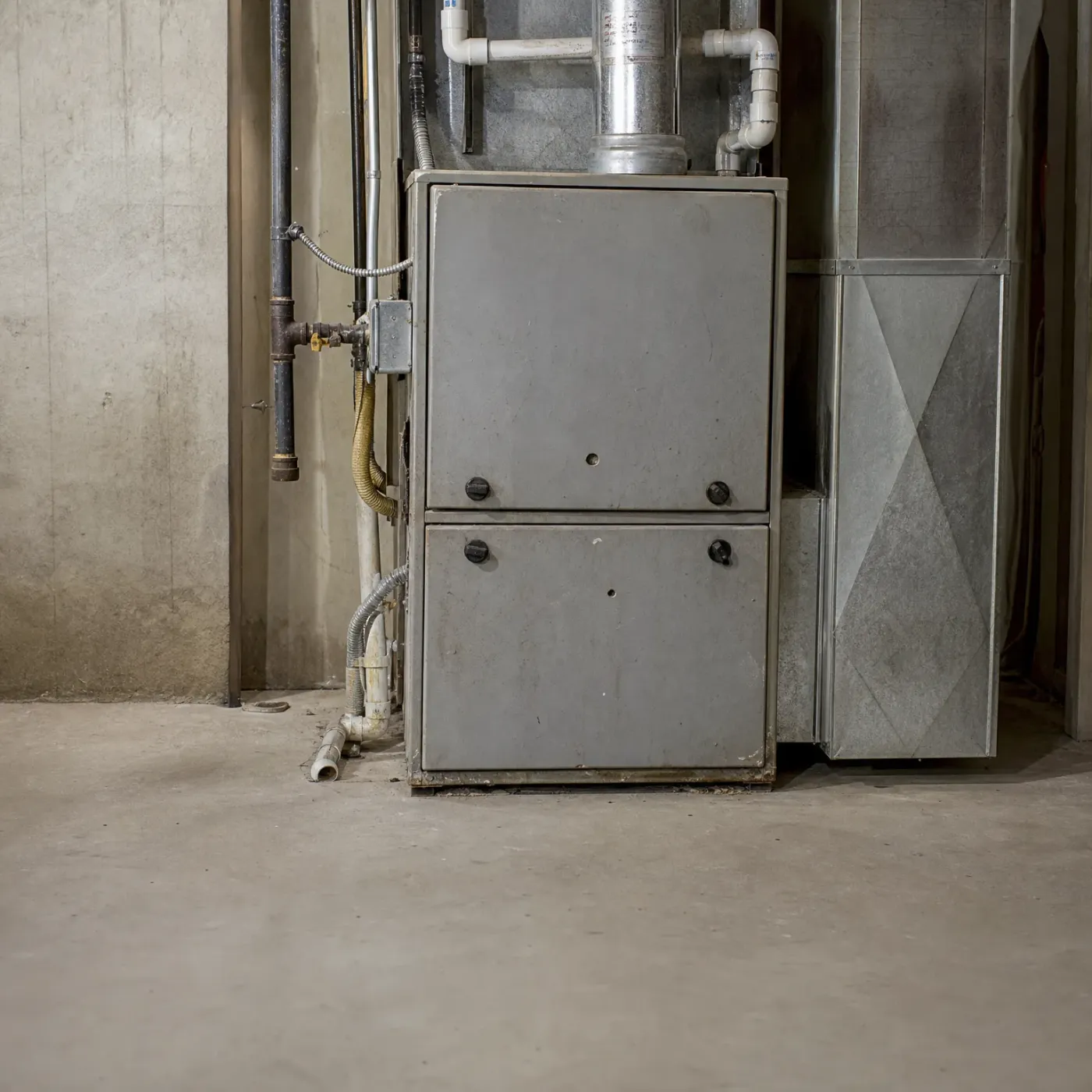
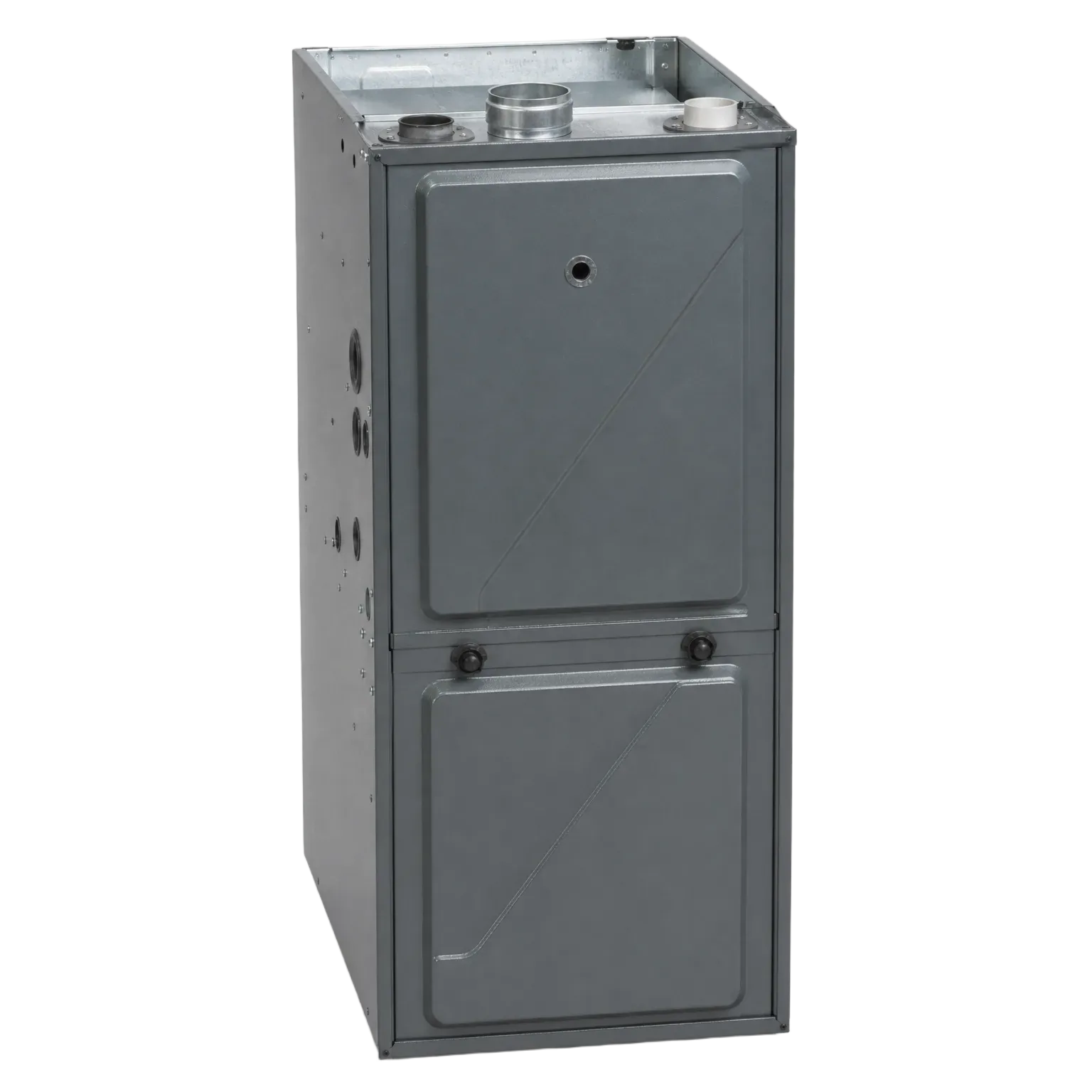
A cracked furnace cabinet still looks ordinary from the outside, which is why the symptoms matter more than the sight of it.
Only one pro gets your request, so you hear from one company.
There's no charge for the request.
Why the crack moves the flame
A heat exchanger pushes heated air past the burner flame without letting the two mix. A crack opens a path between them, and the blower pulls air through that gap every time it kicks on. That draft pushes the flame sideways or makes it waver instead of standing straight. It is the air movement doing it, not the gas itself, which is why the flame often settles back down once the blower cycles off and the pull on it stops.
Why gas furnaces carry this risk
Most homes in New York heat with gas, and a gas furnace burns fuel inside that exchanger every time it fires. That constant heating and cooling, cycle after cycle through a New York winter, is what eventually stresses the metal enough to crack. An electric furnace has no exchanger and no flame, so this particular failure only applies if gas is what is running through your system. It is worth knowing which one you have before you start looking for these signs.
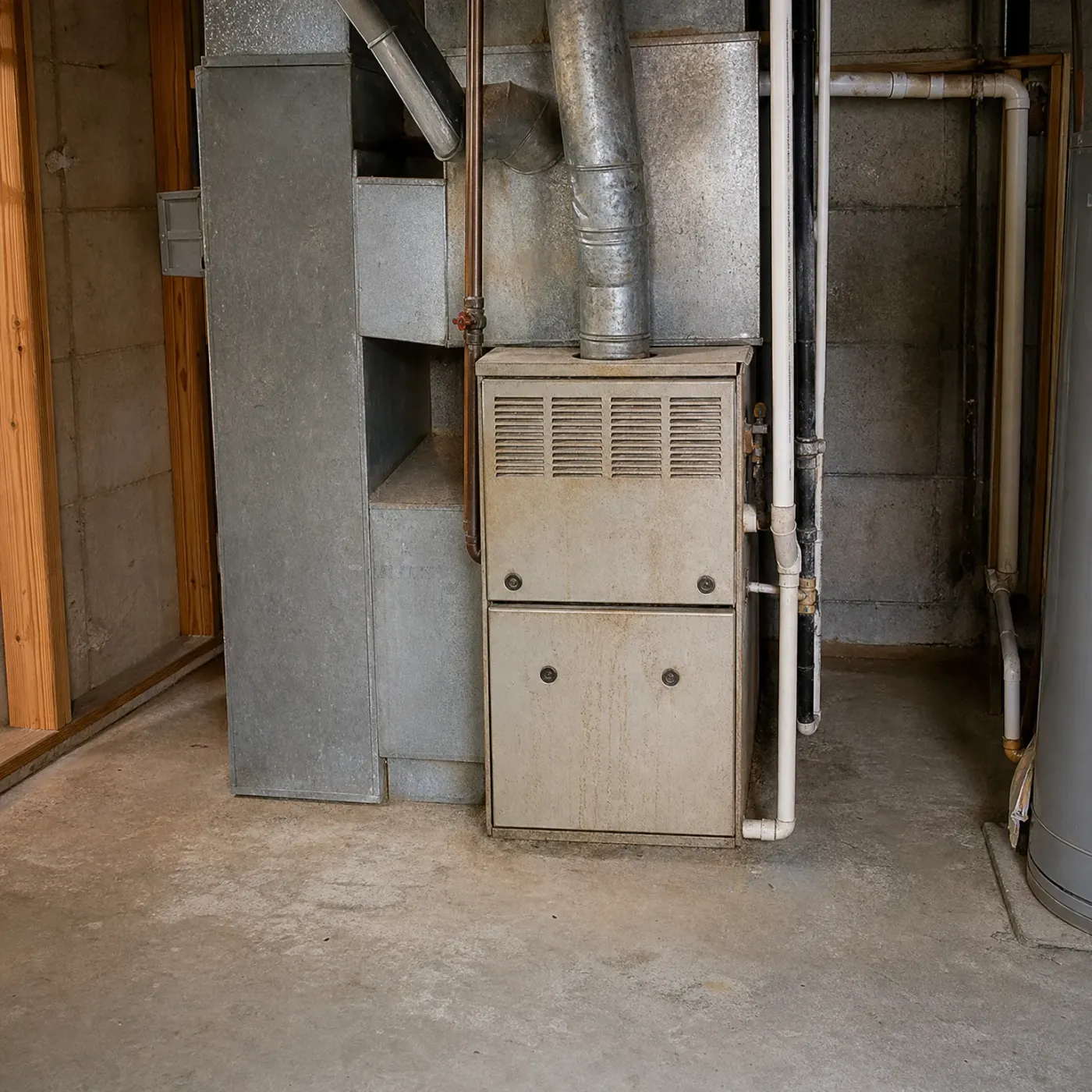
Before you get your furnace repairAfter you get your furnace repair
A heat exchanger lives through thousands of heating cycles over its life, and each one flexes the metal a little. It heats, expands, cools, contracts, heats again. That movement concentrates at the weld seams and bends, which is why cracks tend to start there rather than on a flat section. Older steel exchangers give in to this faster than the aluminized steel used in furnaces built since the early 1990s, so if your furnace came with the house and you don't know its age, that's worth finding out. Before a crack opens, the metal usually shows rust or pitting first, which is the first thing a contractor looks for during a check. Once a crack does open, the furnace has to work harder to hold the same temperature, so a blower running longer than it used to is worth paying attention to. Short-cycling, where the furnace shuts off minutes after starting, can also trace back to a flame sensor reacting to the disrupted flame a crack causes rather than the flame itself.
Why the metal fails
Gas furnaces made before the early 1990s were more likely to use steel heat exchangers that corrode faster than the aluminized steel common today.
A crack usually starts at a weld seam or bend, the spots where metal fatigues fastest from repeated heating and cooling.
Every time the furnace cycles off, the exchanger cools and contracts, and that constant expansion and contraction is what eventually splits the metal.
A blower that runs longer than usual to reach the same temperature can mean heat is escaping through a crack instead of staying in the airstream.
Rust or pitting on the exchanger's surface almost always shows up before a crack does, so a contractor checks for that first.
A furnace that short-cycles, turning off within a few minutes of starting, can mean a flame sensor is reacting to the disrupted flame a crack causes.
Winter nights average 24°F statewide
At 24°F overnight, your furnace is firing on and off most of the night to keep up. That's a lot of heat cycles, and a cracked exchanger flexes a little more each time it heats up and cools down.
NOAA nClimDiv 1991-2020 county normals weighted by homes
A change in the flame or the smell is reason enough to get it checked
You don't need to see a crack to act on one. Soot by the burner, a flame that shifts when the blower starts, or a smell that only shows up while the furnace runs are enough reason to have someone look at it. Waiting for certainty isn't worth it with a part that sits between the flame and the air moving through your house.
A furnace tech who works in New York furnaces all winter has seen this exact pattern before, on gas systems firing on and off through cold nights, and knows what a cracked exchanger looks like next to a dozen things that just mimic it. When you put in a request, it goes to one licensed local contractor matched to your furnace and what you've described, not a handful of companies competing for your callback. That's one visit, from someone who already has a sense of what they're walking into before they open the cabinet.