Profile view of a bearded man wearing a black baseball cap and a dark gray T-shirt against a plain light background.

Why your furnace is blowing cold air in New York

Step 1 of 3: Equipment

Why is my furnace blowing cold air?

Cold air coming out of the vents when the furnace kicks on is unsettling, especially on a January night in New York when you're counting on it. Before you worry the whole system is failing, it helps to know that a furnace blows cold air for a few minutes most times it starts, and that's normal. The question is whether what you're feeling is that brief startup draft or a sign something is actually wrong.

Usually it's just the startup draft, unless it never warms up

A gas furnace runs air through the vents before the burners heat up, so the first blast feels cool. That's the blower clearing the ducts, and it should turn warm within a few minutes. If it stays cold the whole cycle, the problem is usually a burner that isn't igniting, a thermostat set wrong, or a clogged filter choking airflow so the heat exchanger overheats and shuts the burners off as a safety measure. With gas heat as common as it is across New York homes, and electric heat costing what it does here, a furnace stuck blowing cold air all winter isn't something to leave alone. It means you're paying to run the blower without getting any heat for it.

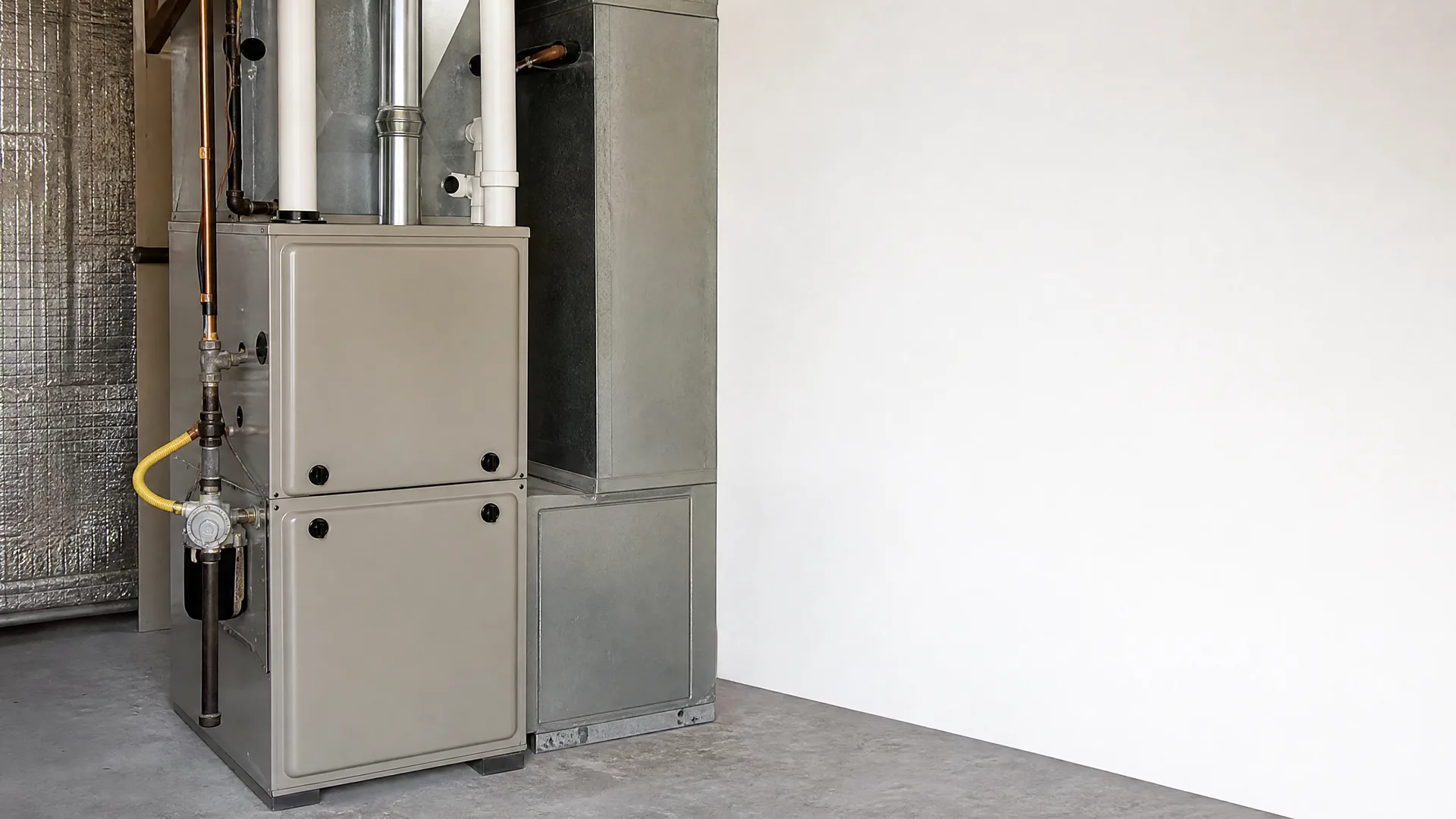
A beige residential gas furnace with white PVC vent pipes, copper and yellow gas lines, and adjacent sheet-metal ductwork stands on a concrete floor beside a plain white wall.

The igniter has to heat first

Gas furnaces run a short delay between the blower starting and the burners lighting. The igniter has to glow hot enough to prove it can light the gas, and that takes a few seconds. If the blower switches on before the flame does, you get a cold draft out of the vents first. That's normal. The trouble is when it never warms up, when the blower runs the whole cycle and the air never turns warm behind it.

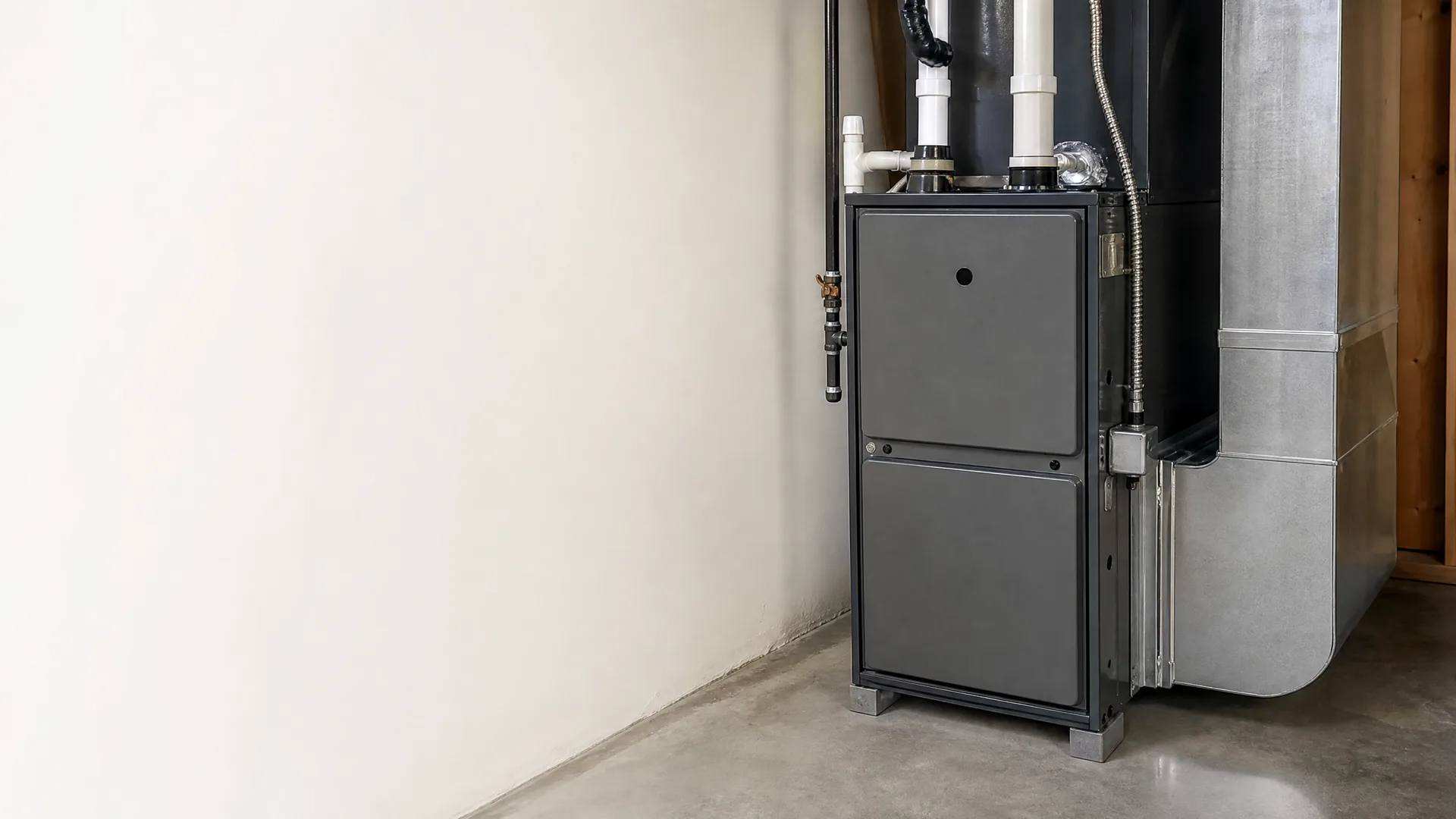
A gray high-efficiency furnace with white PVC vent pipes and metal ductwork stands on a concrete floor beside a plain off-white wall in a basement.

The limit switch cuts gas first

If the furnace overheats, a safety switch shuts off the gas burners right away but leaves the blower running to clear the heat already in the system. That protects the heat exchanger from cracking. So you'll feel room-temperature or cool air pushing through the ducts for a few minutes after the burners stop, even though the furnace is still on. A dirty filter or blocked vent is often what triggers that switch to trip in the first place.

Is this just the startup delay, or something worse

You're probably standing by the vent trying to decide if you should worry. If the cold air runs for a few seconds and then turns warm, that's the igniter doing its job before the burners catch. If it keeps blowing cold for minutes, or never turns warm at all, something else is wrong, and you'll likely notice the house isn't holding heat the way it should on a cold New York night. Check the thermostat setting next, then listen for the burners actually lighting. A furnace that runs without heating still runs up the electric bill on the blower motor, and if it's a gas smell or repeated short cycling, that's not something to leave alone through the winter.

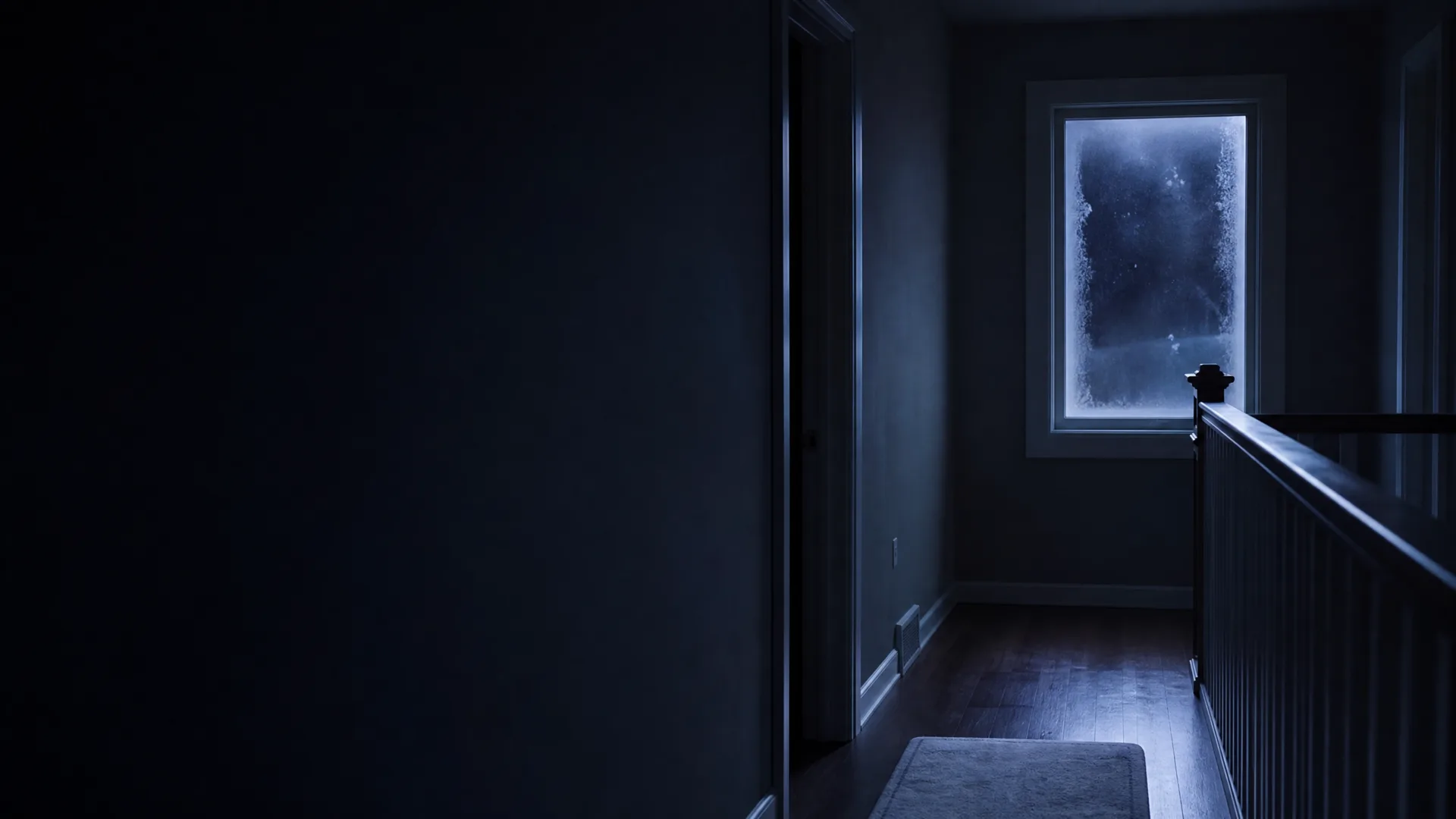
A dark interior hallway with a dim window at the end, a wooden floor, a stair railing on the right, and a bench or rug in the foreground.

You wake up at two in the morning because the house feels wrong. The hallway floor is cold under your feet, and when you stop by the vent outside your bedroom, you hear the blower running but feel nothing warm coming out of it. Frost has crept up the edges of the window at the end of the hall. The light out there is thin and blue, just enough to see your breath. You stand there a minute, waiting for the air to turn, the way it usually does. It doesn't. Somewhere below you the furnace keeps running, moving cold air through a house in New York that needs it to be doing anything but that. A local contractor who deals with this furnace model every winter would know in a minute what it's waiting on.

A local pro for your furnace repair

A furnace that's blowing cold air past the first few seconds usually points to a specific failure: a flame sensor coated enough that it can't detect the burners lit, a clogged filter choking airflow, or a pilot or ignition control that's lost its signal. Figuring out which one it is means watching the furnace cycle, pulling the sensor, checking the pressure switch, the kind of work that takes a service call, not a guess. A contractor who handles furnaces all over New York every winter has seen this exact complaint on nights this cold, and knows which part tends to go first on which systems. Submitting your address and a word about what you're seeing connects you with one licensed New York contractor who takes on your case directly, not a handful of companies competing for the job. Given how hard your system is working this time of year, and what gas and electric cost here if it runs inefficiently while this goes unfixed, getting someone local who knows this equipment looking at it soon is worth doing before the next cold snap.

Furnace still runs most of the way

If the burners are lighting and the blower is pushing out warm air once that startup delay passes, the furnace is still doing its job most of the time. A dirty flame sensor or a filter overdue for a change can cause short cold spells without taking the system down. You might notice the cold air shows up now and then, or only on longer cycles, but the house still holds its temperature overall. This is worth getting looked at before it gets worse, especially with how cold New York winters get, but it's not an emergency tonight.


No heat at all is coming through

If the blower runs constantly and the air stays cold no matter how long you wait, the burners likely aren't lighting at all. That points to a failed ignition control, a gas valve that isn't opening, or a pilot that won't stay lit. The house will start losing heat fast, and on a cold New York night that matters. This situation calls for someone out sooner rather than later. A local contractor who works on furnaces all winter will know which of these failures is most likely given what you're seeing.

A man with grey hair and stubble in a dark sweater sits on a grey sofa indoors, looking off to the side, with a potted plant and a sunlit window behind him.
A man with gray hair, a beard and glasses, wearing a dark green sweater, sits on a gray sofa in a sunlit living room with a potted plant, table lamp and wooden sideboard behind him.
A middle-aged man with graying hair and a short beard sits on a blue sofa in a living room, looking toward a window, with a bookshelf, lamp and framed picture in the background.
A man with graying curly hair and a dark green sweater sits on a gray sofa in a sunlit living room, looking off to the side, with a framed picture, shelving, an armchair and a window with sheer curtains behind him.

Furnace runs, but air stays cold

The burners won't stay lit, or won't light at all, and the blower keeps pushing room-temperature air through the ducts. A contractor who works on furnaces all winter here can usually narrow this down fast.

Get a local pro

No heat and a blower that won't quit

Some nights it's not a short delay. It's a furnace stuck in a loop, or a blower that runs with nothing to warm the air. That's worth a local technician's eyes before it gets colder.

Get a local pro
A woman with shoulder-length brown hair wearing a beige knit cardigan sits in a gray upholstered armchair near a window, looking off to the side with a slight smile, with bookshelves blurred in the background.
A woman and a sleeping child wrapped together in a cream knitted blanket on a couch, with a potted plant, framed photo and lit lamp in the background.

You wait it out and hope it clears on its own. Some short cycling does stop once a filter gets changed or a sensor gets wiped, and the furnace goes back to running the way it should.

You wait too long and the furnace shuts itself off for good, or the cold snap outside turns the house into a real problem overnight. A contractor who knows these units can usually tell you which one you're dealing with before it gets that far.

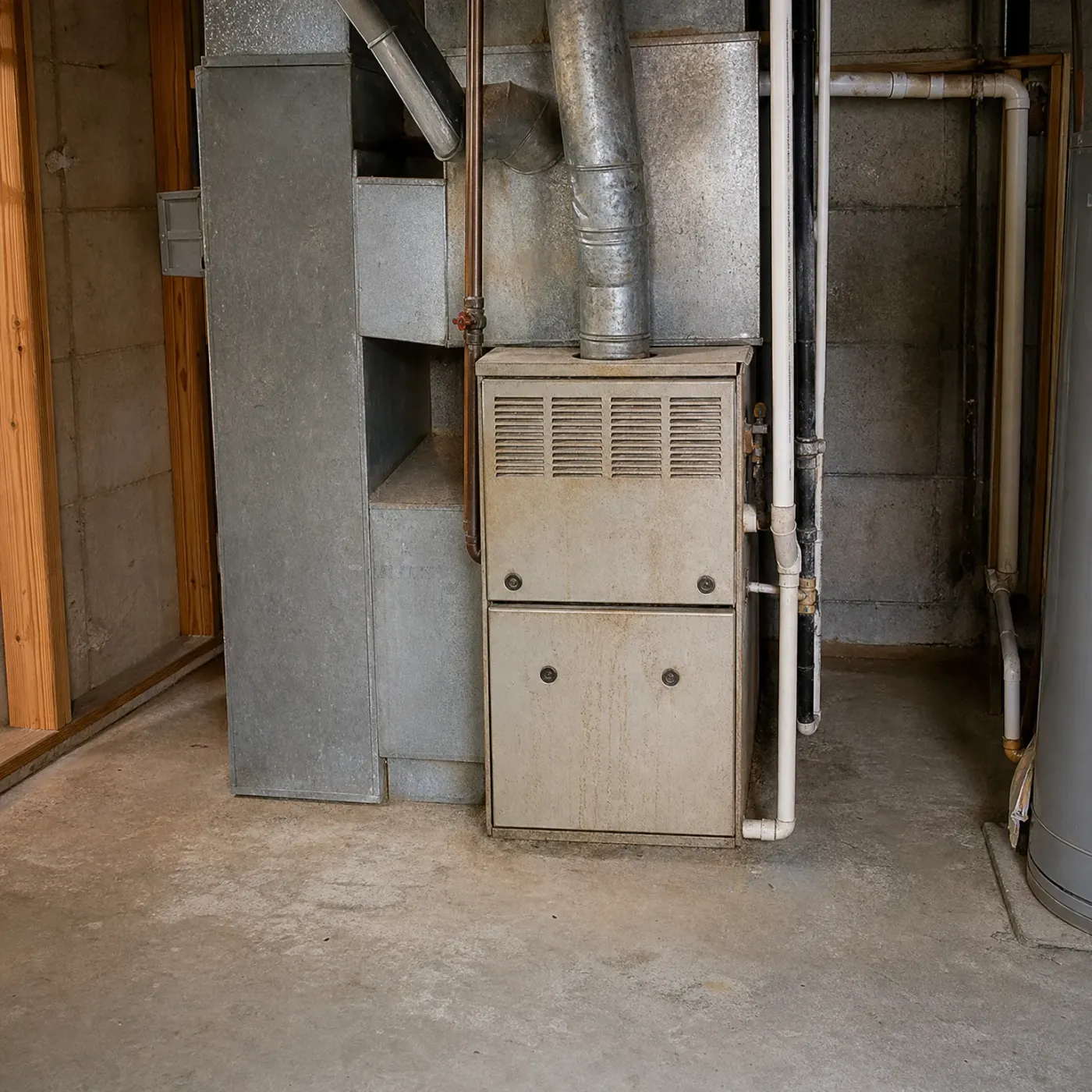
A beige gas furnace with a metal flue pipe stands in a basement against concrete block walls, beside sheet-metal ductwork, copper and white plastic pipes, and a water heater at right.
Before you get your furnace repair
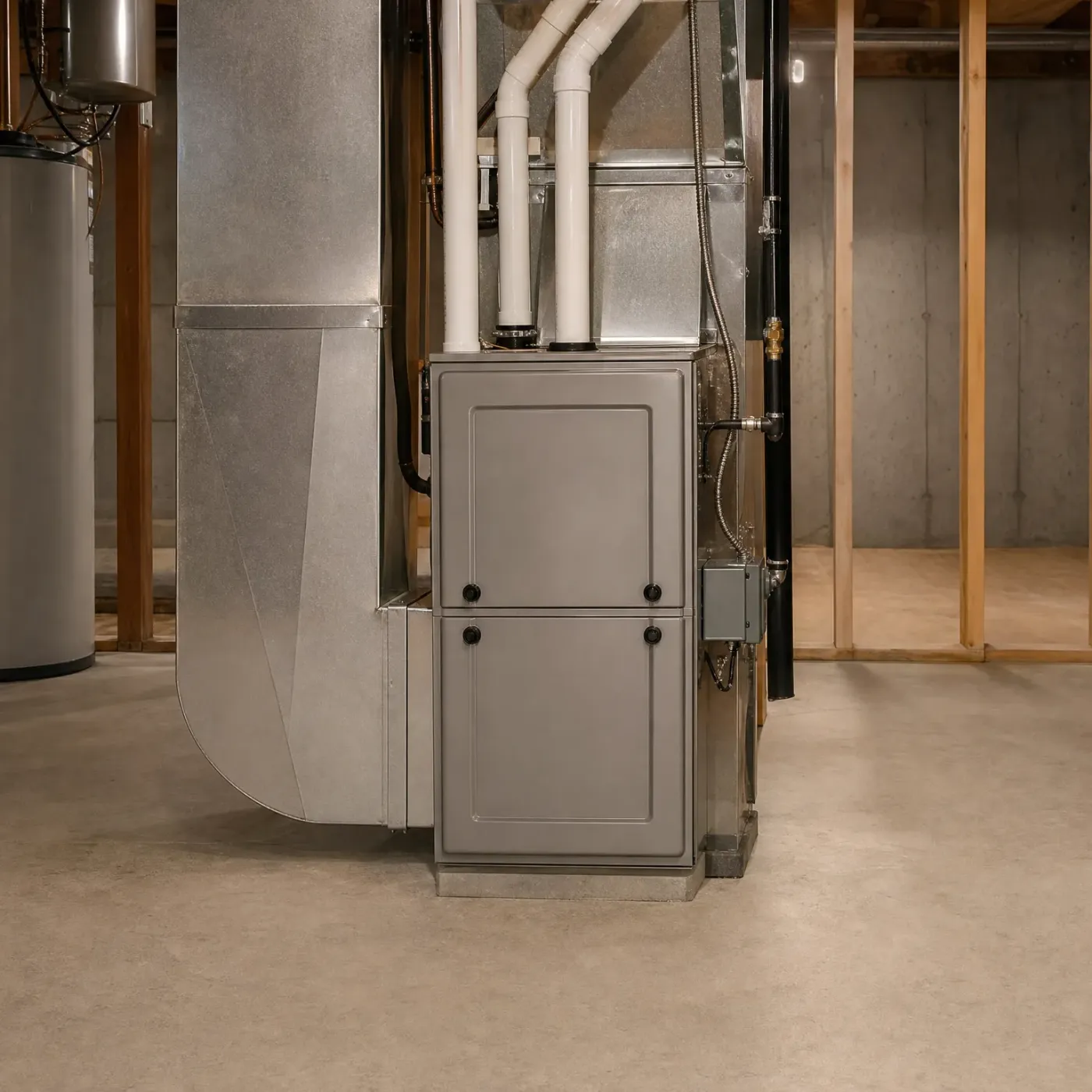
A gray high-efficiency furnace with white PVC vent pipes stands beside sheet-metal ductwork and a water heater in an unfinished basement with concrete walls and wood framing.
After you get your furnace repair
  1. Thermostat calls for heat and the blower motor starts.

  2. Gas valve opens and the igniter begins heating up.

  3. Igniter glows hot enough to prove it can light the gas.

  4. Burners ignite and the flame sensor confirms they're lit.

Winter nights average 24°F statewide

Winter nights average 24°F across New York, which is why your furnace runs long stretches to keep up. A system working that hard every night has less room to limp along on a dirty sensor or a weak igniter before you notice cold air instead of warm.

NOAA nClimDiv 1991-2020 county normals weighted by homes

A furnace blowing cold air is almost always one part failing to do its job, not the whole system giving out: a dirty flame sensor, a clogged filter, an igniter that's lost its spark, or a gas valve that won't open the way it should. Once you know which one it is, the fix is usually straightforward. What matters now is getting someone in front of the furnace who can tell the difference, because guessing at it in a New York winter isn't worth the risk to your heat. A local contractor who services furnaces through every cold month here has seen these same failures over and over and knows where to look first. You'll be matched with one contractor, not several, so you're not fielding a round of calls from companies competing for the job, just one qualified technician who knows this equipment and can tell you plainly what's wrong and what it takes to get warm air moving through your vents again.

Kitchen corner with cream upper cabinets, oak lower cabinets, white marble-look countertop, beige tile backsplash, a ceramic vase of greenery, a wooden cutting board and bowl, and a black-framed window at right.
Interior corner of a room with a white-framed window and wide sill, beige walls with panel molding, a wooden cabinet holding a ceramic vase with a green leafy plant, and blurred shrubs and trees outside.
A wood-framed armchair with beige cushions and a woven lumbar pillow sits in a corner beside a large window overlooking green trees, with a tall ceramic vase holding leafy branches on the left and plaster walls and wood flooring.
Interior corner with a white-framed window above a sill, beige walls with baseboard molding, a greige shaker-style cabinet with brass knobs and a potted plant on top, light wood flooring and a woven jute rug.
A dark-framed six-pane window with white trim and sill set in gray horizontal lap siding, with hydrangea shrubs below and a white column and shingled roof section at left.

A pro who works on furnaces

Your request stays with one local pro.

Match me with a pro

Asking costs nothing, and the choice to hire stays yours.