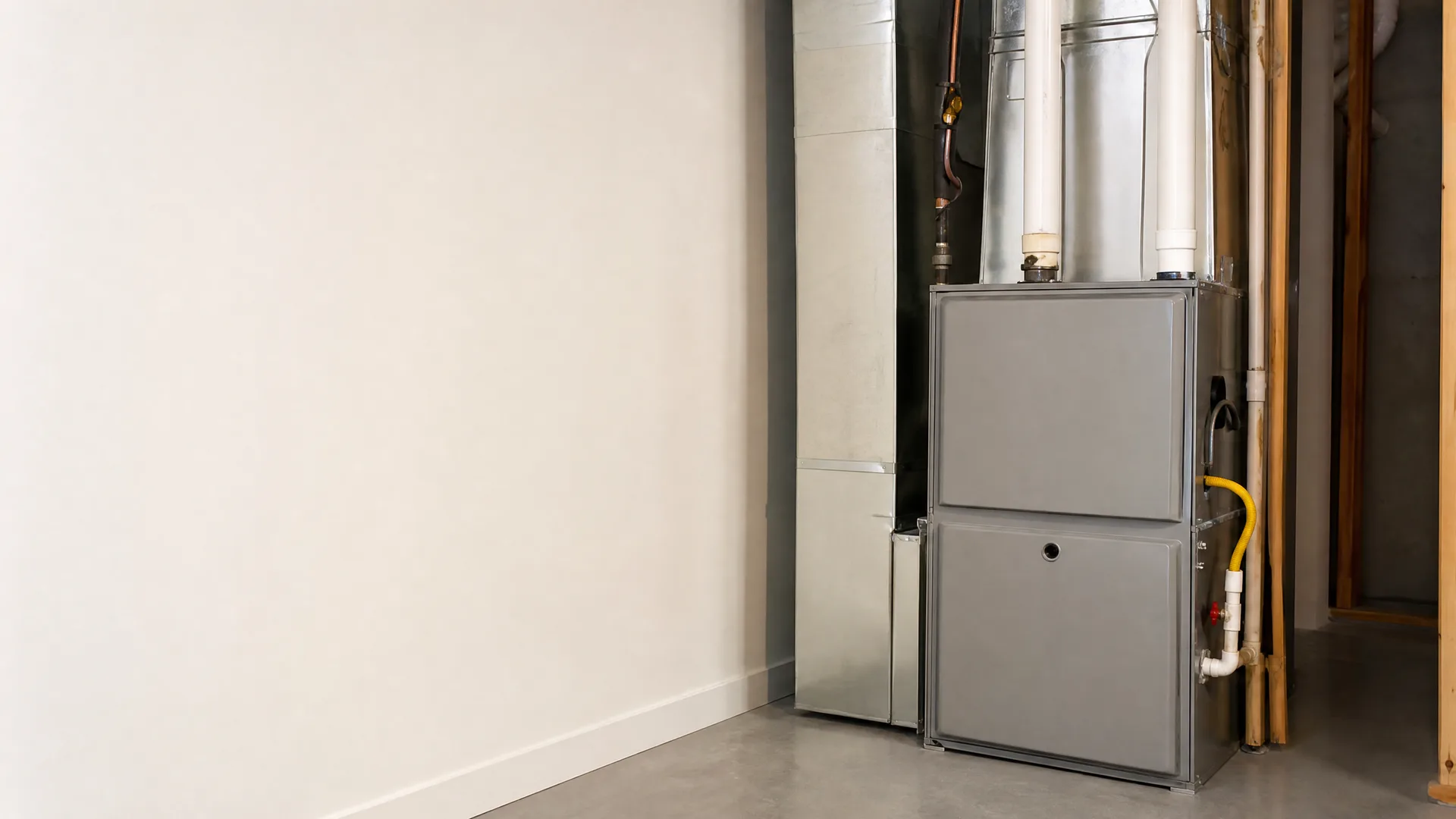
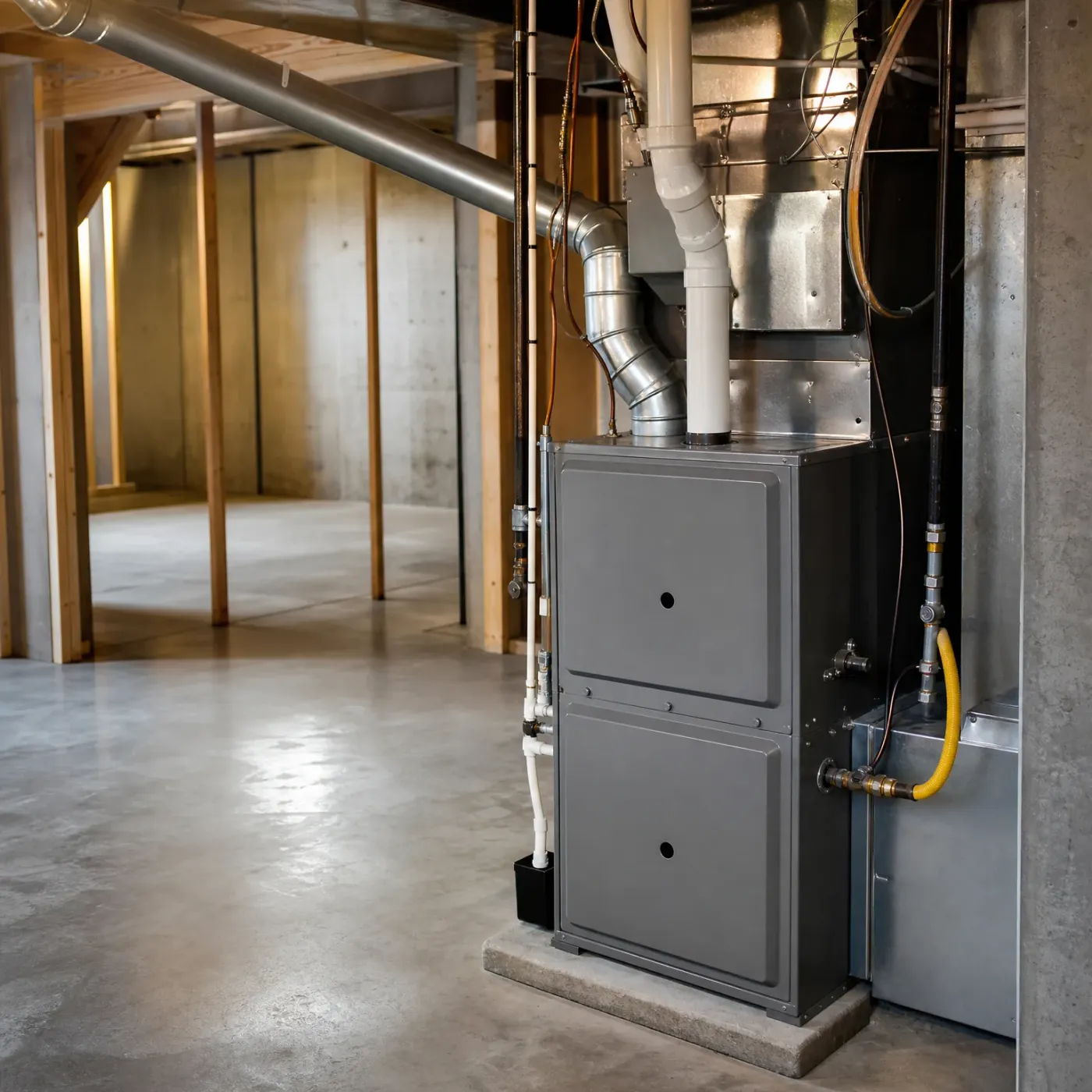
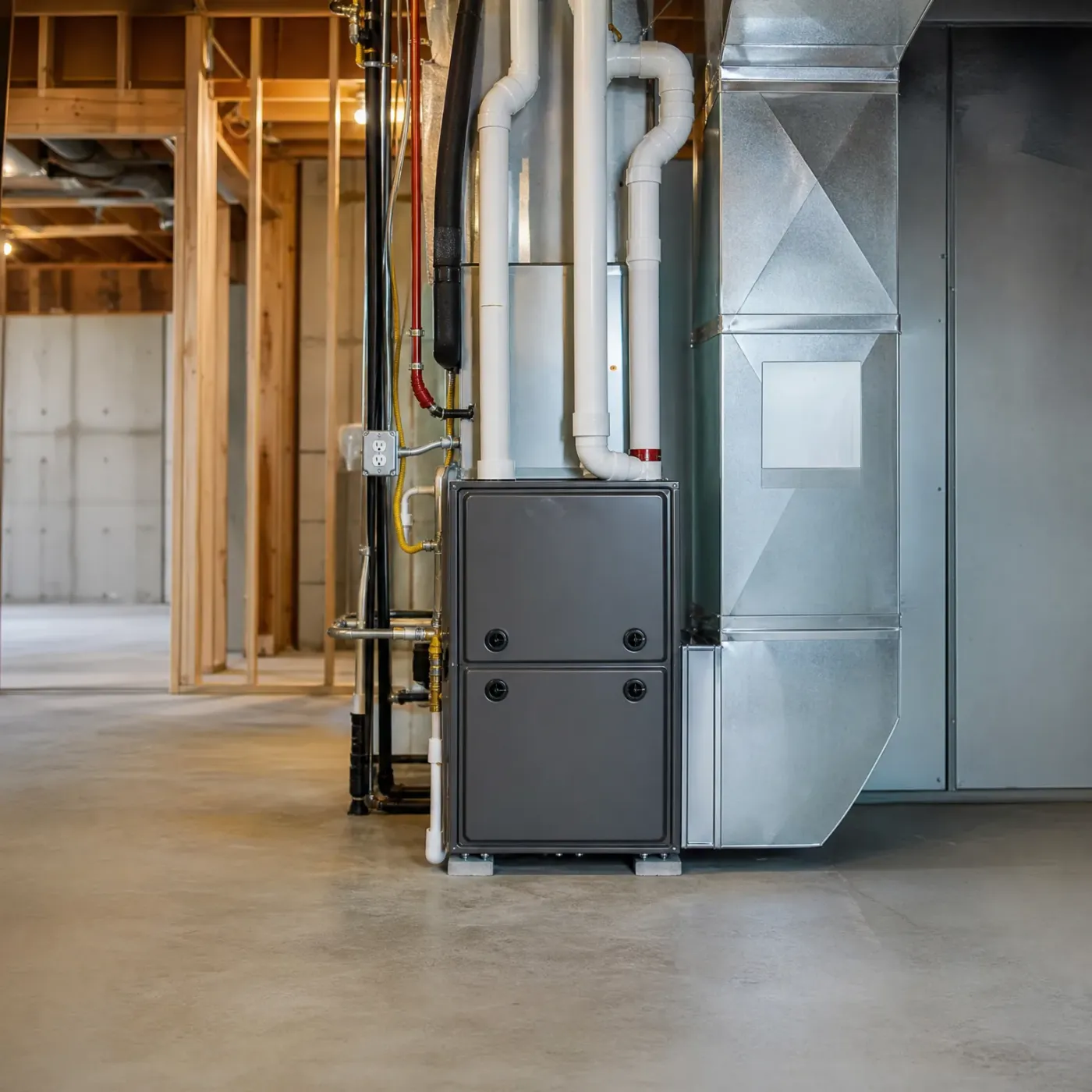
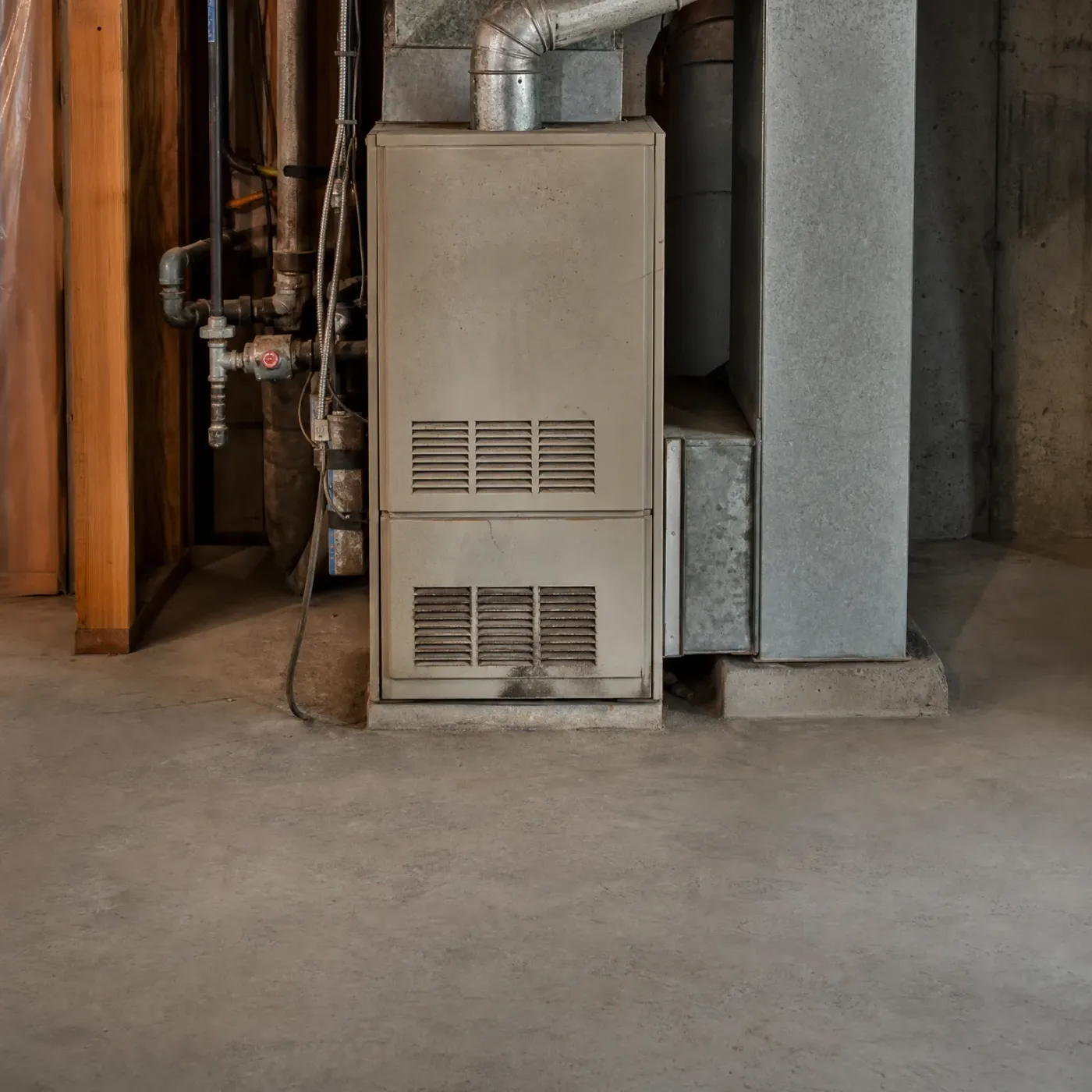
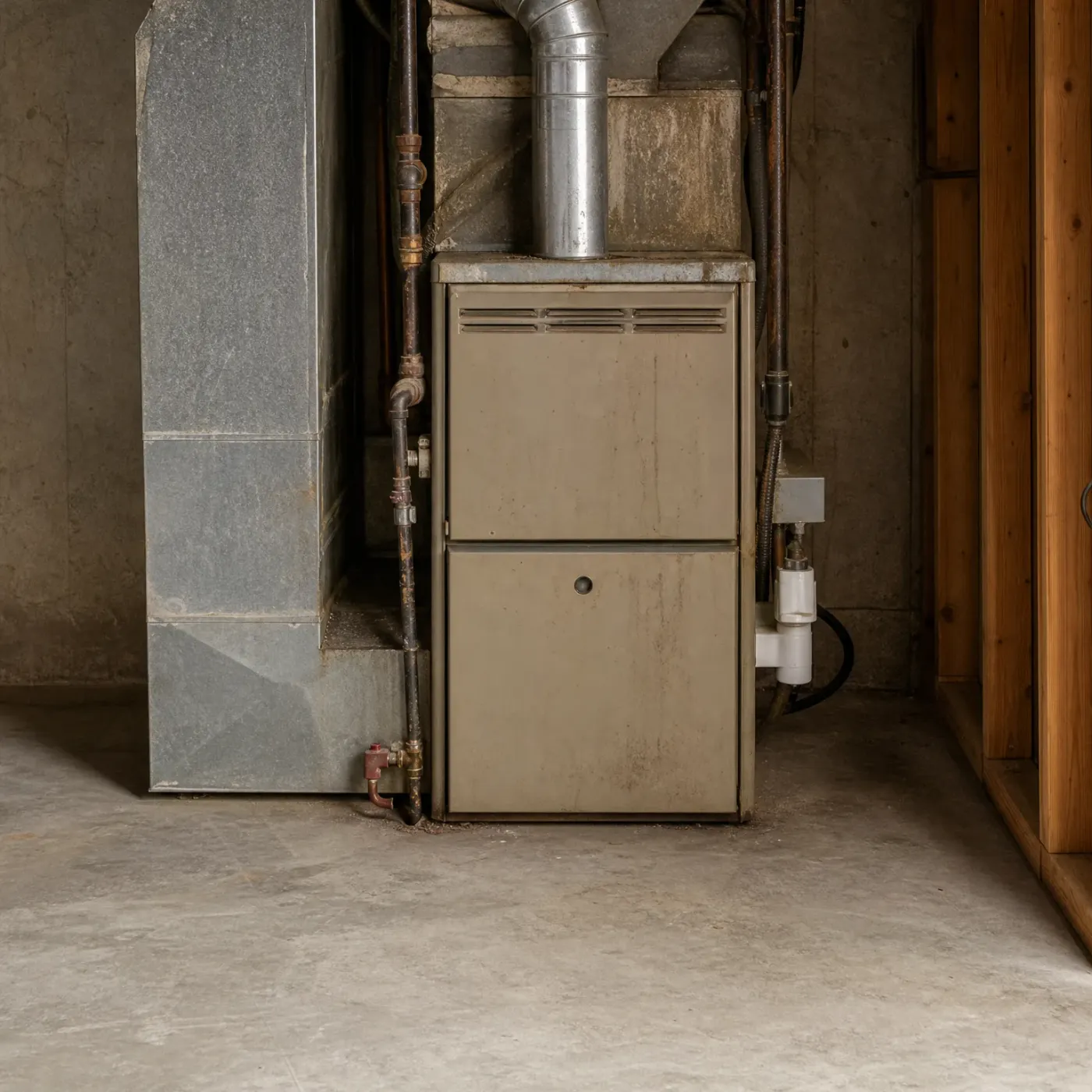
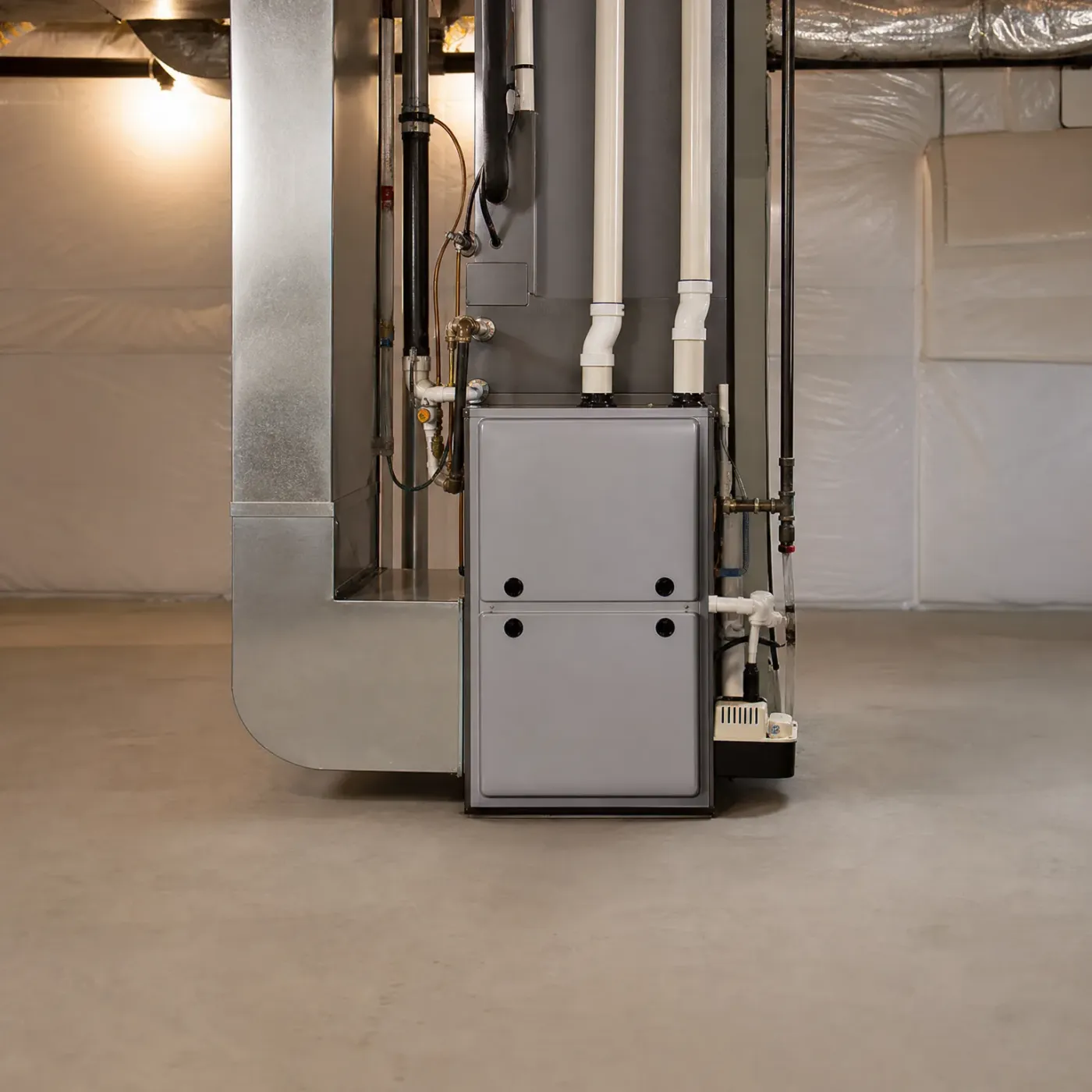
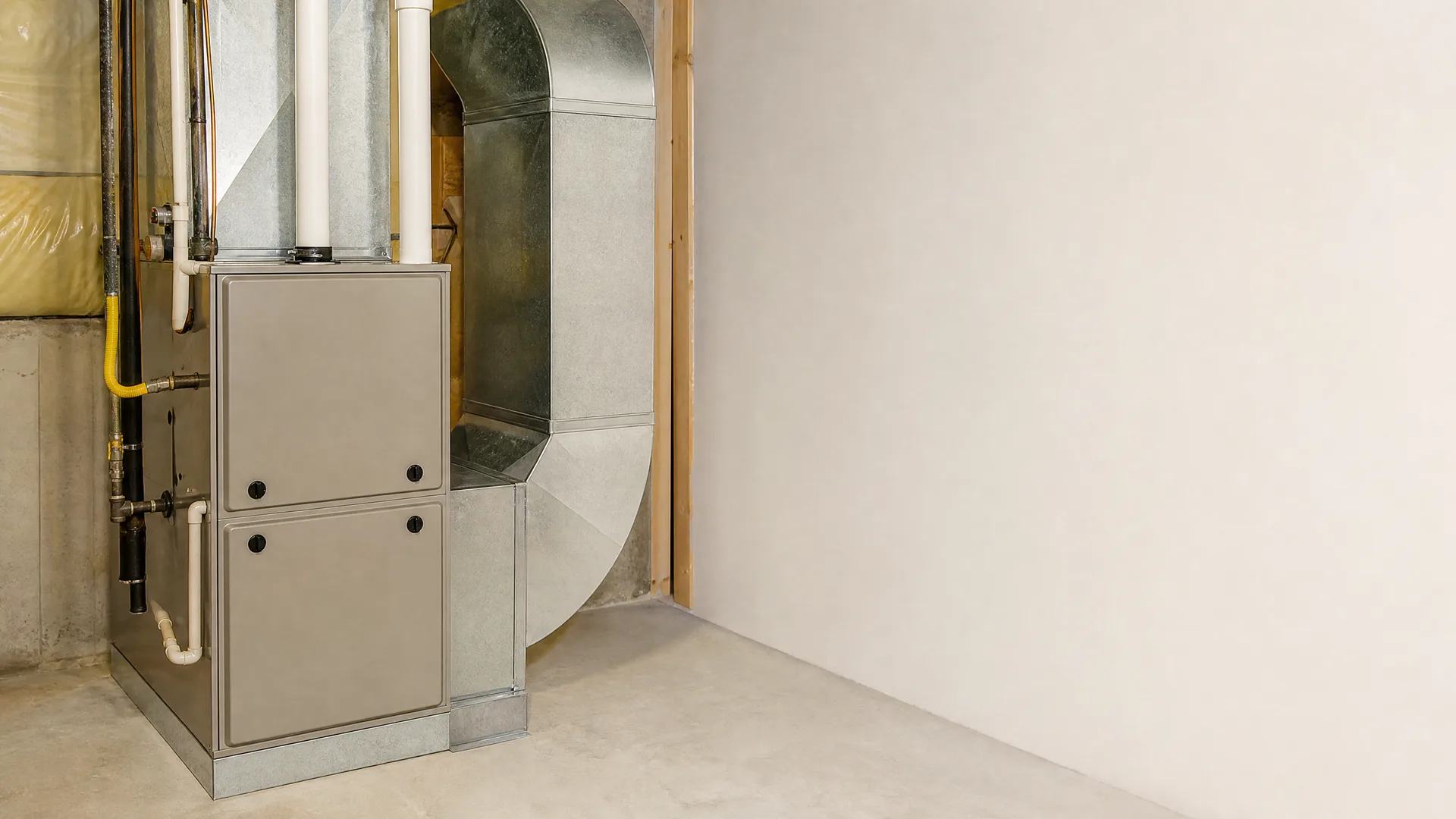
A gray high-efficiency furnace with two white PVC vent pipes stands beside galvanized sheet-metal ductwork in a dim basement with exposed joists and a concrete floor.

A furnace pro near you

Why your furnace is leaking water in New York

Water pooling under your furnace or dripping from a pipe usually comes down to one of a few things: a clogged condensate line, a cracked heat exchanger, or ductwork sweating from the humid New York air. This page walks through what each cause looks like and what it means for your system. Send your details once and a contractor who handles this in your area will follow up, so you're not stuck figuring it out alone.

Find my pro

Water under your furnace almost always comes from the condensate line, the pipe that drains off the water a high-efficiency furnace produces as it runs. If that line is clogged with algae or sediment, or the drain pan under it has cracked, water backs up and finds its way onto the floor instead. On an older furnace, the leak can mean something worse: a cracked heat exchanger letting condensation form where it shouldn't, which is a safety problem, not just a mess. There's a third cause that has nothing wrong with the furnace at all. New York summers get muggy, and if your ducts run through an unconditioned space, humid air hitting cold metal will sweat and drip just like a cold glass does. Where the water is coming from, and whether it's the furnace itself or the air around the ducts, is the first thing to figure out before anyone touches a wrench.

A gas furnace with sheet-metal ductwork, PVC vent pipes and copper and black piping stands against a wall in a basement with a bare light-colored wall and concrete floor.

The slope of the drain line matters

High-efficiency furnaces push condensate out through a plastic line that has to run downhill the whole way to the drain. If that line sags anywhere along its run, water sits in the low spot instead of draining out. Algae and sediment collect in that standing water, and the clog builds from there. A contractor checking this will look at the pitch of the line before anything else, because a line that doesn't slope right will clog again even after it's cleared.

A gray furnace with attached sheet-metal ductwork, white PVC vent pipes, copper and yellow gas lines stands against a wall in a room with a plain white wall and concrete floor.

Humidity adds a second source

New York summers get sticky, and that moisture works on ductwork too, not just the furnace itself. Ducts running through an unconditioned attic or basement can sweat when warm, humid air meets a cold metal surface, and that condensation drips down and pools in places that look like a furnace leak but aren't. Insulation wrapped around the duct where it passes through those spaces cuts down on that sweating. Telling the two apart matters, because a cracked heat exchanger needs a different fix than a duct that's just cold and wet.
Why does my furnace only leak water when it's running?

That pattern is a real clue. A furnace that's dry when it's off but drips once it kicks on points to something tied to the burner cycle itself, not a slow leak from a cracked pan that would show water all the time. You're narrowing it down by watching when the water shows up, which is exactly the right way to think about it before anyone comes out to look.

It only drains during a cycle because that's when it's actually making the water

A high-efficiency furnace only produces condensate while the burner is firing and the flue gas is cooling down through the heat exchanger. No burn, no condensate, no drip. So if water shows up only while it's running and stops within a few minutes after it shuts off, the line is likely draining fine most of the time but struggling to keep up with the volume, or there's a small crack in the exchanger that only leaks under the pressure of an active cycle. A line that's fully clogged usually keeps dripping or pooling even after the furnace shuts down, since the backed-up water has nowhere to go yet.

A woman in a gray turtleneck sweater stands by a window looking outside at snowy ground, with a dimly lit living room containing a sofa, shelves, lamp and a lit candle behind her.
A woman in a cream cable-knit turtleneck sweater stands in a warmly lit living room with a fireplace and shelves behind her, looking out a window toward snow-covered trees and a railed deck.
A woman in a cream knit turtleneck sweater stands by a window looking out at snow, with a lit fireplace, sofa and lamp in the room behind her.
A woman in a gray knit sweater sits by a window looking out at falling snow, with a dimly lit living room containing a sectional sofa, pillows, a lamp and houseplants behind her.
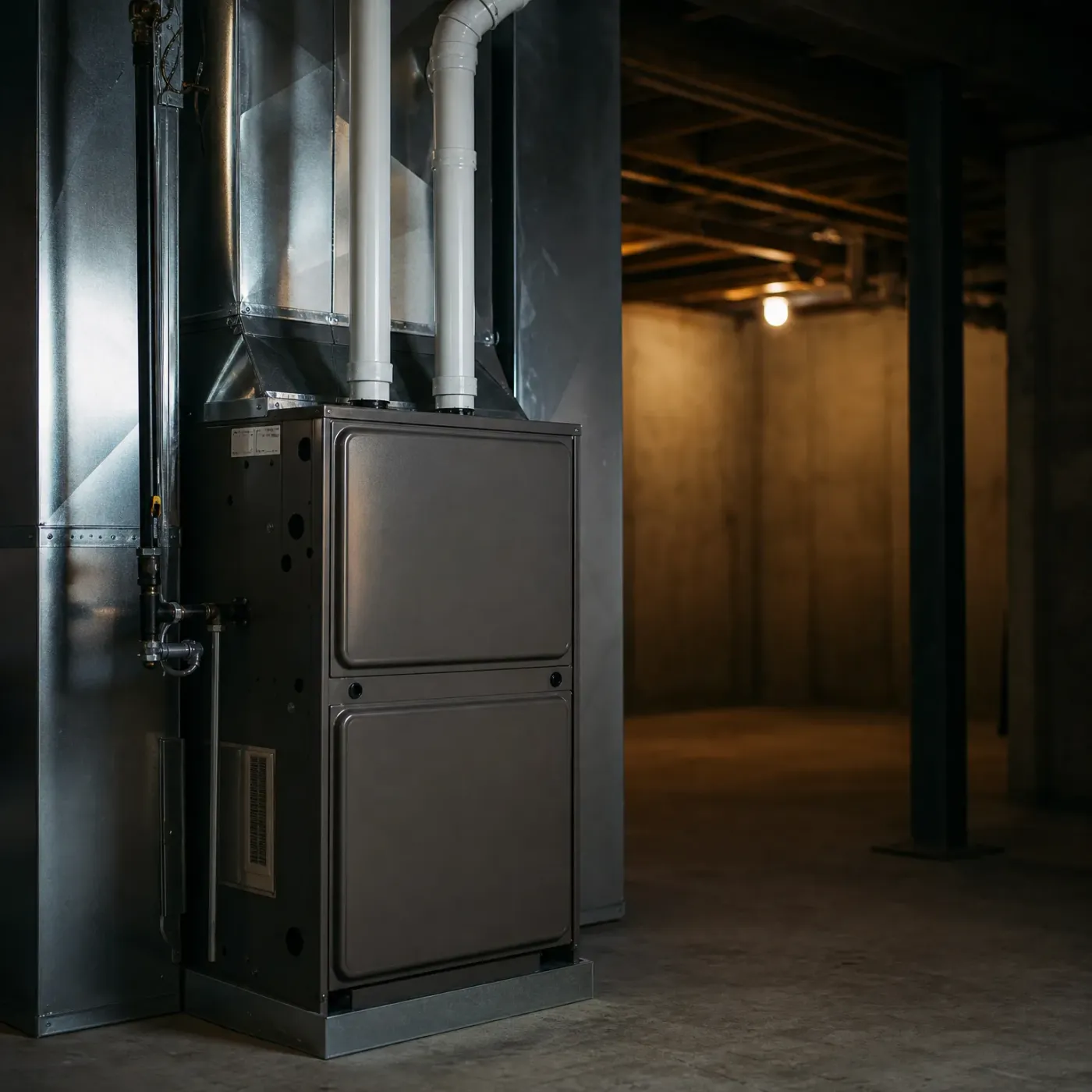
A gray gas furnace on a concrete pad in an unfinished basement, connected to sheet-metal ductwork, white PVC venting, and a yellow gas line, with concrete walls and wood framing in the background.

A local pro for your furnace repair

Send the request today and stop worrying about who to call.

Describe your furnace job, and a local pro who handles it gets in touch.

Send it today

It costs nothing to send, and you don't have to hire anyone.

What are you seeing under your furnace right now

Maybe it's a small puddle on the basement floor that shows up every time the furnace runs, or a damp patch on the drywall near the unit. Maybe you've noticed a musty smell before you ever saw the water, or rust forming on the bottom of the cabinet. Some homeowners catch it early, a drip or two on the pan. Others find standing water around the base, or a line running to the floor drain that never seems to empty. Left alone, that water finds the floor joists, the subfloor, or the electrical connections at the bottom of the unit, and a small drain problem turns into a repair that costs more than the line itself ever would have.

A gray high-efficiency furnace stands on a concrete basement floor beside galvanized sheet-metal ductwork, with white PVC vent pipes, gas and water lines, and unfinished wood framing behind it.

Running clean, draining where it should

A furnace like this clears its own condensate through the PVC line without any sign of it on the floor below. The pan stays dry, the flue pipes stay dry, and nothing collects around the ductwork or the gas line nearby.

A beige furnace with two louvered front panels stands on a concrete basement floor beside galvanized ductwork, metal pipes, and a wooden post.

Water finding its way out where it shouldn't

Here the water isn't staying inside the line or the flue vent. It's reaching the concrete floor near the duct and gas connections, which means something along the drain path or the heat exchanger itself is letting it escape.

A beige residential furnace stands on a concrete basement floor beside galvanized sheet-metal ductwork, a round flue pipe, copper gas piping, and a PVC condensate line, with a wood-paneled wall at right.
Before you get your furnace repair
A gray high-efficiency furnace in a basement with white PVC vent pipes, sheet-metal ductwork, copper and black piping, a condensate pump, and insulated walls above a concrete floor.
After you get your furnace repair

A clog that waits versus one that floods

A partial clog in the condensate line lets some water through and backs the rest up slowly. You might see a few drops after each cycle, or a damp ring around the drain pan that dries out between runs. It's easy to miss, especially if the furnace sits somewhere you don't walk past often. A full blockage is different. Once the line can't pass any water at all, the pan fills and overflows the same day, sometimes within one heating cycle. The puddle shows up fast and doesn't stop growing until the furnace shuts off or someone clears the line. Both start the same way. One just gives you more warning than the other.

A cracked pan versus a cracked heat exchanger

A cracked condensate pan leaks on its own schedule, whenever water collects in it, whether the furnace is running or sitting idle. You'll find water under the unit even hours after it last cycled. A cracked heat exchanger behaves differently. Condensation forms on it only while the burner is firing and the metal is going through that heat cycle, so the leak tracks with when the furnace runs, not with how much water happens to be sitting around. A pan is a $50 part. A heat exchanger crack means the furnace needs to come offline until a technician checks it, since that same crack can let combustion gas into the air you breathe.

Winter nights average 24°F statewide

Winter nights here average 24°F, so your furnace is running long stretches to keep up, cycle after cycle through the night. Every one of those cycles sends condensate down that drain line. A clog that might sit quiet in a mild month gets tested hard on a night that cold.

NOAA nClimDiv 1991-2020 county normals weighted by homes

A bearded man in a plaid flannel shirt stands in a kitchen looking out a window toward snow-covered shrubs, with a steaming mug on the windowsill and potted plants on a shelf behind him.
A smiling man with dark curly hair in a navy t-shirt sits on a gray couch indoors, with a large-leafed plant and a window in the background.

What the water is telling you

  • Water under a furnace almost always traces back to a clogged condensate line or a cracked heat exchanger, not something random.
  • A leak that only shows up while the furnace runs points to the burner cycle, not a slow drip from an old crack.
  • A partial clog can sit quiet for weeks, then show a damp ring or a few drops after each cycle on a cold night.
  • Algae, sediment, or a sagging line are the usual reasons that drain stops clearing condensate the way it should.
  • Once a contractor is on the job, finding the source and shutting off the leak is no longer something you have to sort out yourself.
  • Letting it run while the furnace works through long cycles night after night just gives the clog more chances to back up.

Most of the time, water under your furnace comes down to the condensate line not draining the way it should. Algae or sediment builds up inside that plastic pipe, or the line sags somewhere along its run, and the water a high-efficiency furnace produces has nowhere to go but out. A cracked heat exchanger is the other possibility, and it's the one that matters more, since that's not a drain problem but a safety one. Either way, the pattern you're seeing is a real clue. Water that only shows up while the furnace is running points to the burner cycle and the condensate it creates right then, not a slow leak that would leave a puddle whether the furnace is on or off. A clog doesn't always announce itself right away either. It can sit partly blocked for weeks, letting some water through and holding back the rest, until a run of cold nights sends the furnace through cycle after cycle and the backup finally shows on your floor. None of this is something you need to chase down piece by piece. Once a contractor is looking at the line, the pan, and the heat exchanger directly, the cause gets found and the leak gets shut off, and that part of it is off your hands. Leaving it alone just gives the clog more cycles to work against, on nights when your furnace is already running long and hard to keep up.

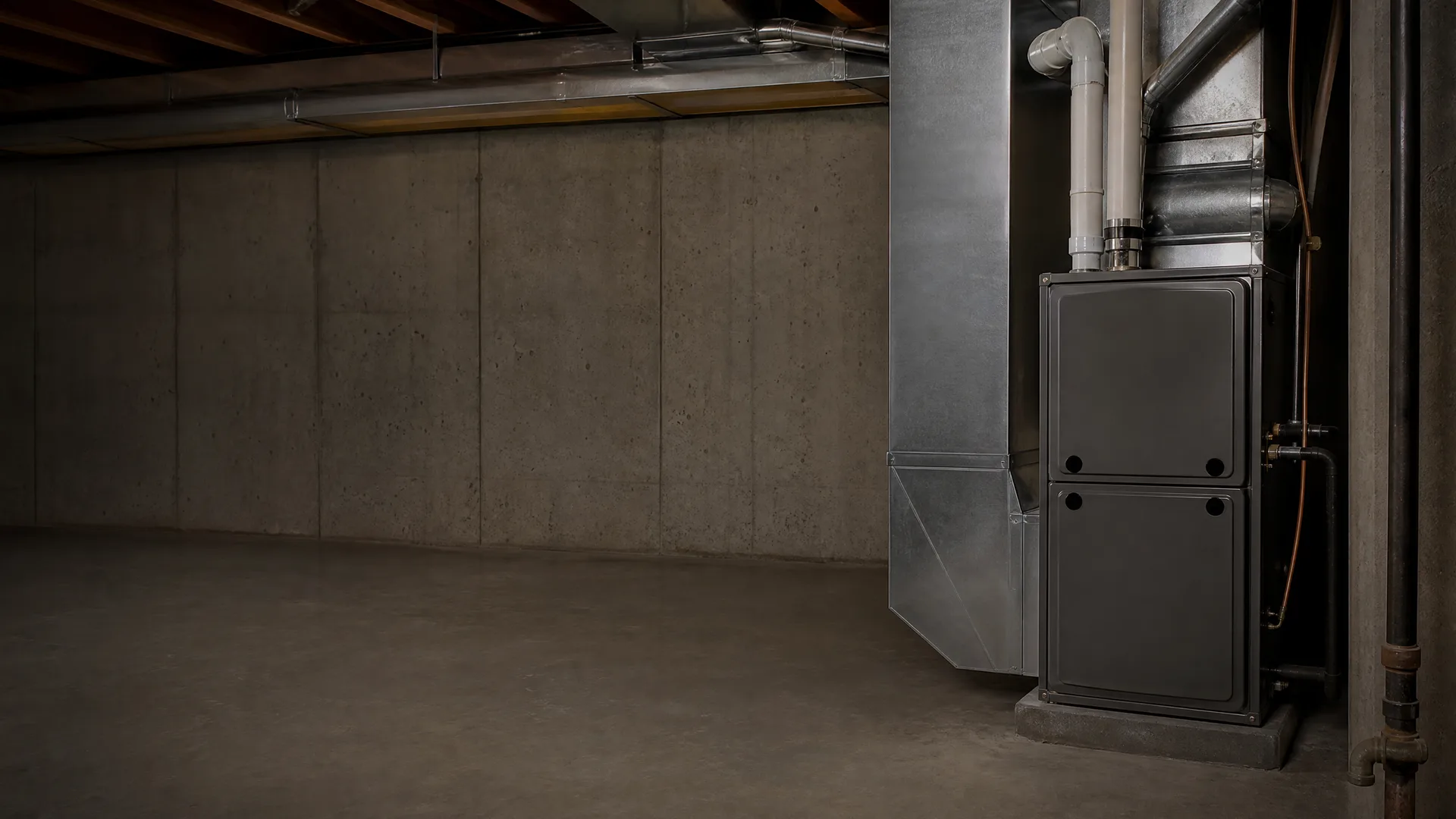
An empty basement with bare concrete walls and floor, exposed wooden joists and pipes overhead, and a dark furnace with sheet-metal ductwork and vent pipes in the right corner.

Get the right pro for your furnace

After this form, you can stop searching for a furnace pro.

Step 1 of 3: Equipment