Why your furnace makes a banging noise in New York

Send the request today and let a furnace pro reach out to you.

Step 1 of 3: Equipment

Why does my furnace make a banging noise when it kicks on?

That bang when your furnace fires up isn't something to live with all winter. In New York, this is usually the first cold snap of the year when it shows up, right when you need the furnace running every day. It can sound like it's coming from inside the ducts or from the furnace cabinet itself, and either way it's loud enough that you want to know what's causing it before it gets worse.

Delayed ignition is the most common cause

Most of the time that bang is gas building up in the burner chamber for a second or two longer than it should before it lights, then igniting all at once instead of catching smoothly. A dirty burner or a failing igniter is usually behind the delay. The other common cause is ductwork: metal ducts expand as hot air moves through them after the furnace has been off, and that expansion makes a popping or banging sound as they flex. With gas heat running for months at a stretch here, a delayed ignition bang tends to repeat every time the furnace cycles on, and it's worth having looked at since it points to a burner or ignition problem rather than just noisy ducts.

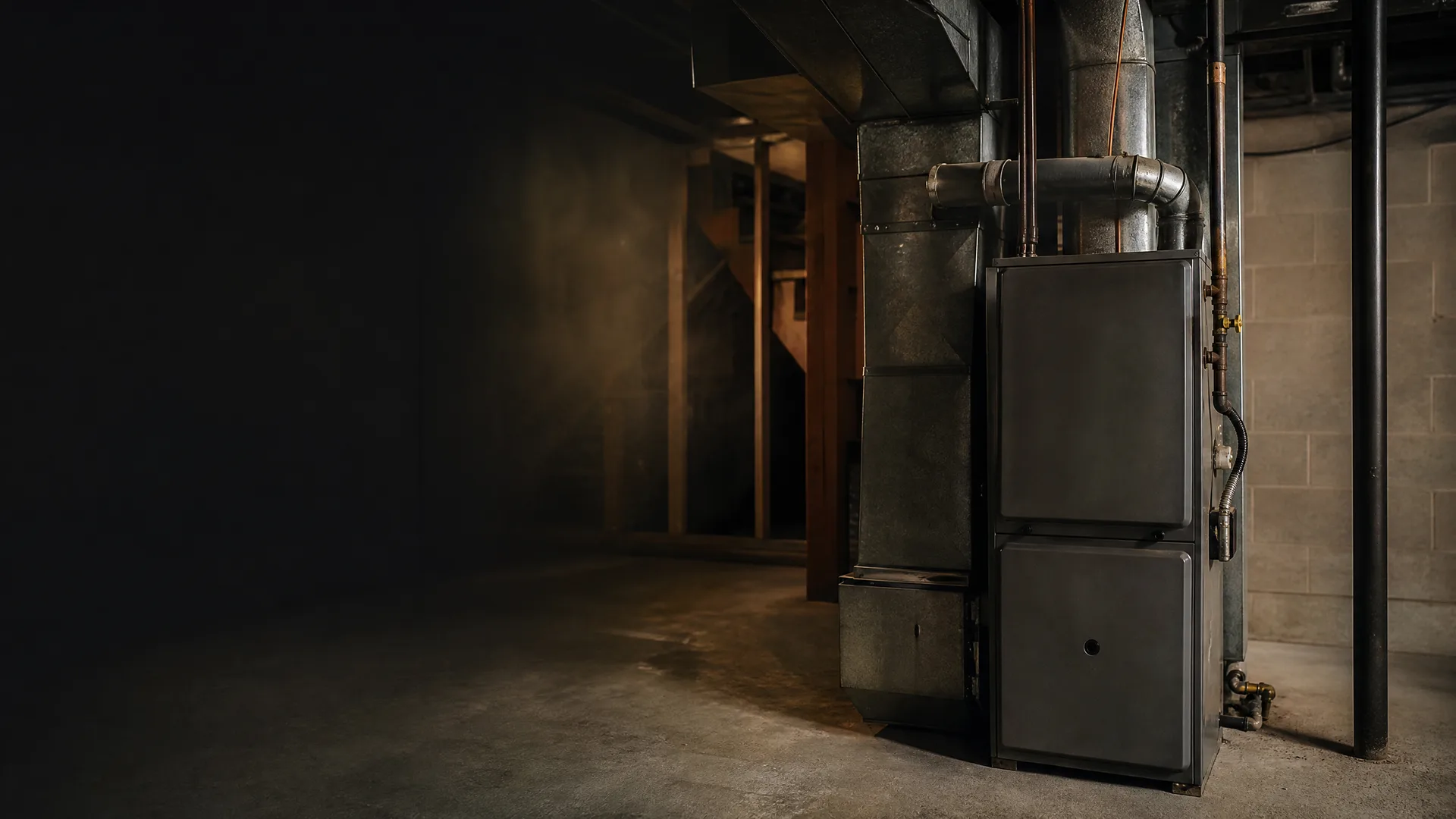
A furnace with sheet-metal ductwork and copper piping stands against a concrete block wall in a dim basement with a bare concrete floor.

You're down in the basement around six, pulling the holiday boxes off the shelf, when you notice the cold. The furnace sits there dark, not even trying. You hit the thermostat up five degrees and wait by the vent. Nothing. Back downstairs, a thin haze of dust hangs in the air near the cabinet, kicked loose from the last time it ran. You press your hand to the metal. Cold. Outside it's already dropping into the 30s, the kind of November evening where New York stops pretending fall is still happening. You think back to that bang it made last week when it kicked on, and wonder if that was the last time it's going to.
Dirty Burners or Cracked Heat Exchanger

Dirty Burners

  • A delayed ignition bang usually means the burners are dirty or the flame sensor is reading weak, so gas pools for a second before it lights.
  • A contractor can clean the burners and sensor in one visit, and the bang should stop the same day the furnace runs again.
  • This gets worse the longer it's ignored, since soot buildup keeps growing every time the furnace cycles through a cold night.
  • It's a straightforward fix for someone who services furnaces all winter in New York and knows dirty burners are the most common cause.

Cracked Heat Exchanger

  • A bang that comes with metal expanding or a rattling duct can point to a cracked heat exchanger, which is a bigger problem than a dirty burner.
  • A cracked heat exchanger needs a qualified eye, since it sits inside the furnace and isn't something to check yourself.
  • This isn't a same-day cleaning, it may mean a part replacement, and a technician who knows this equipment can tell you which one you're dealing with.
  • Leaving a cracked heat exchanger alone through a New York winter risks more than noise, since it's tied to how the furnace vents exhaust.
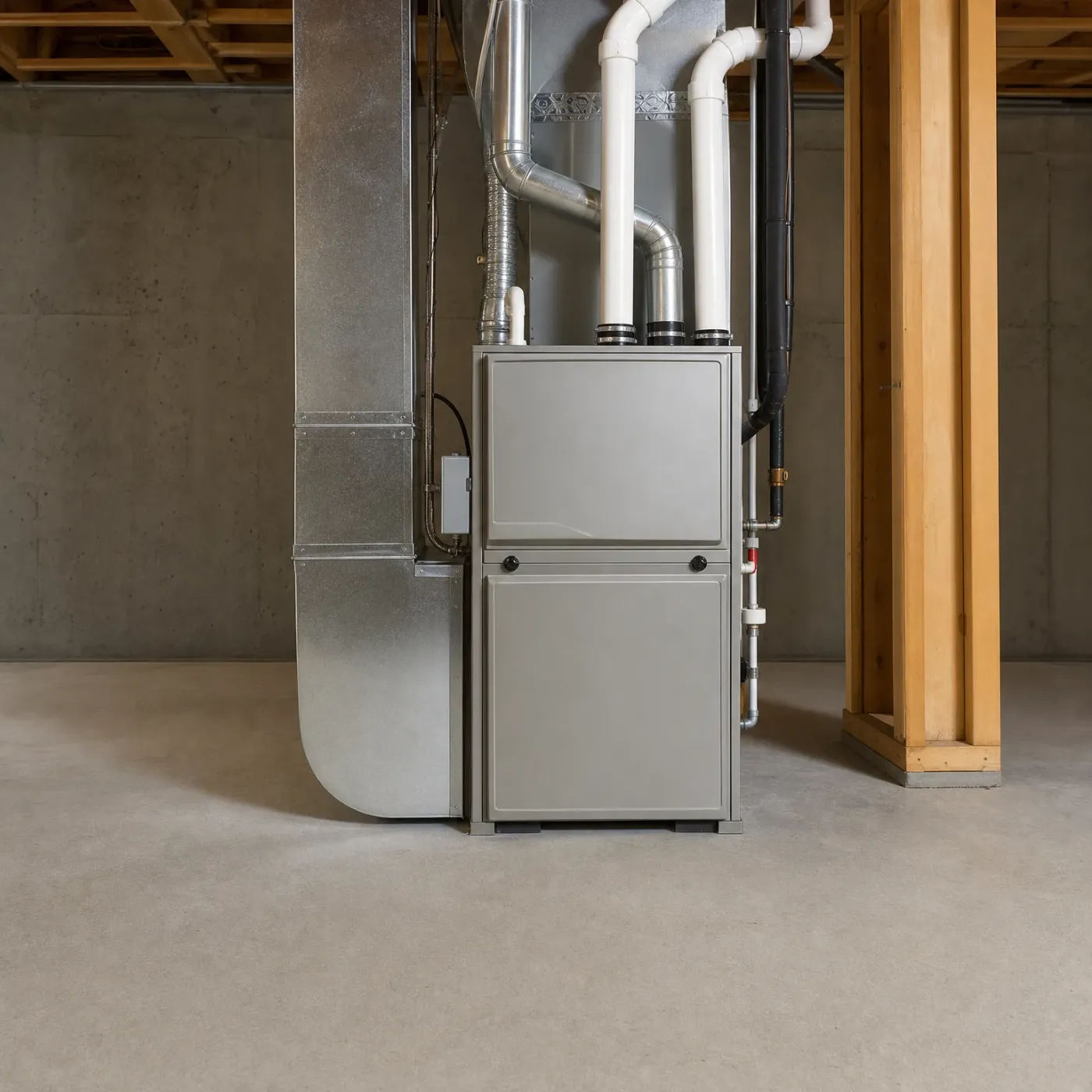
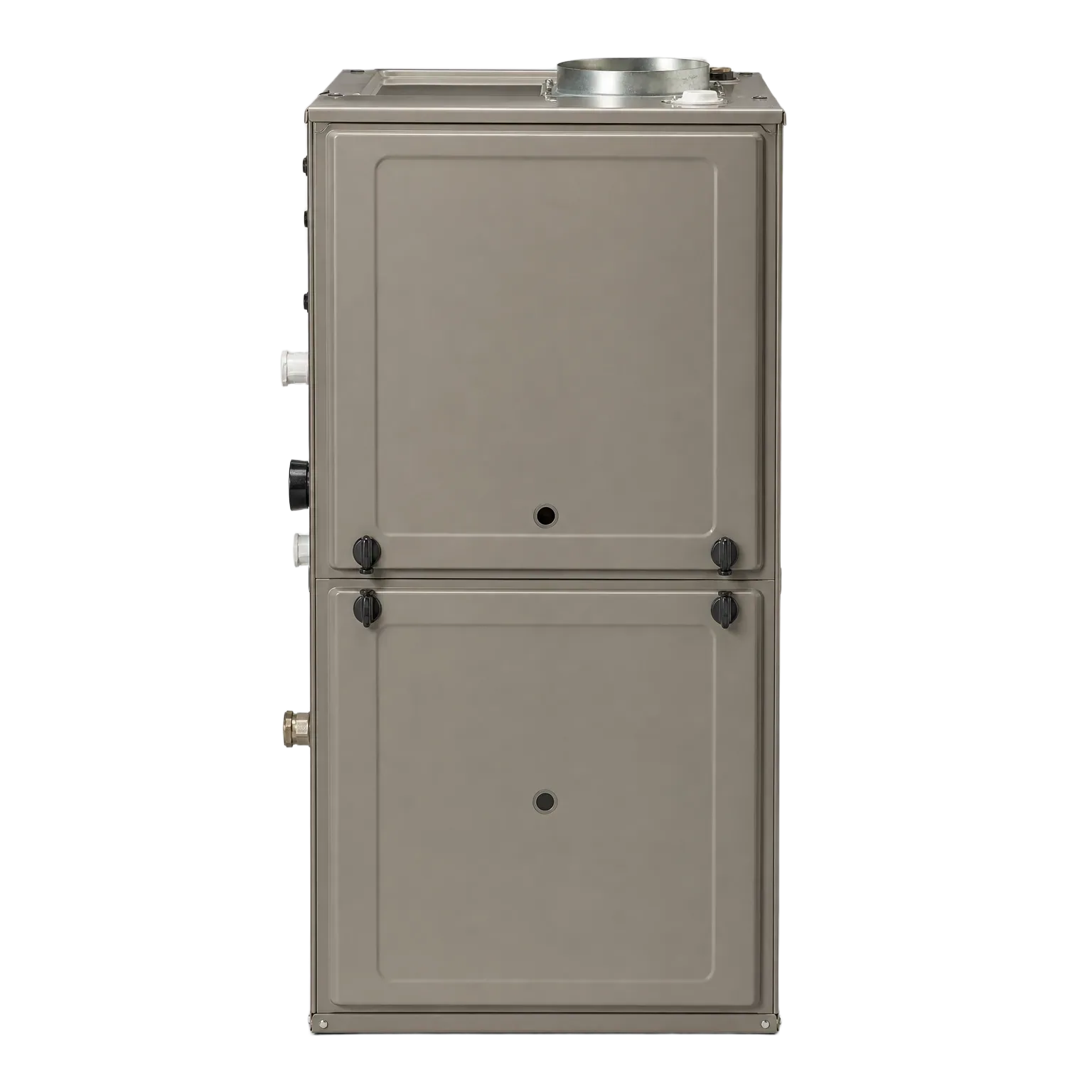
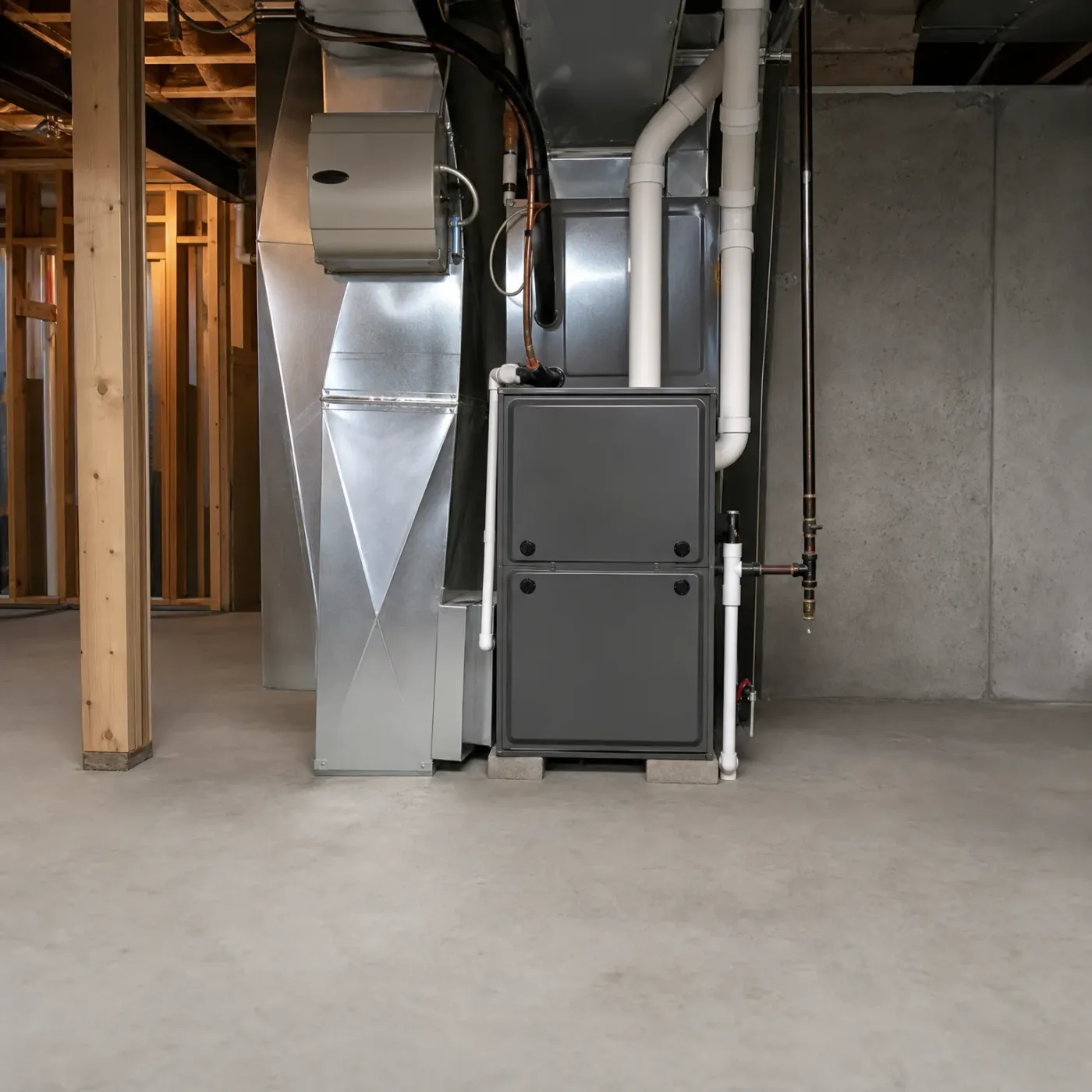
A gray high-efficiency furnace stands on a concrete basement floor beside sheet-metal ductwork, with white PVC vent pipes and a black flexible line running up to exposed wood floor joists, next to a wood-framed post against a concrete wall.

A Normal Startup

A furnace that's running right lights fast and quiet. The burners catch as soon as the igniter gets power, so there's no gas sitting around waiting to ignite. You might hear the blower kick on and some ductwork tick as it warms, but no bang.

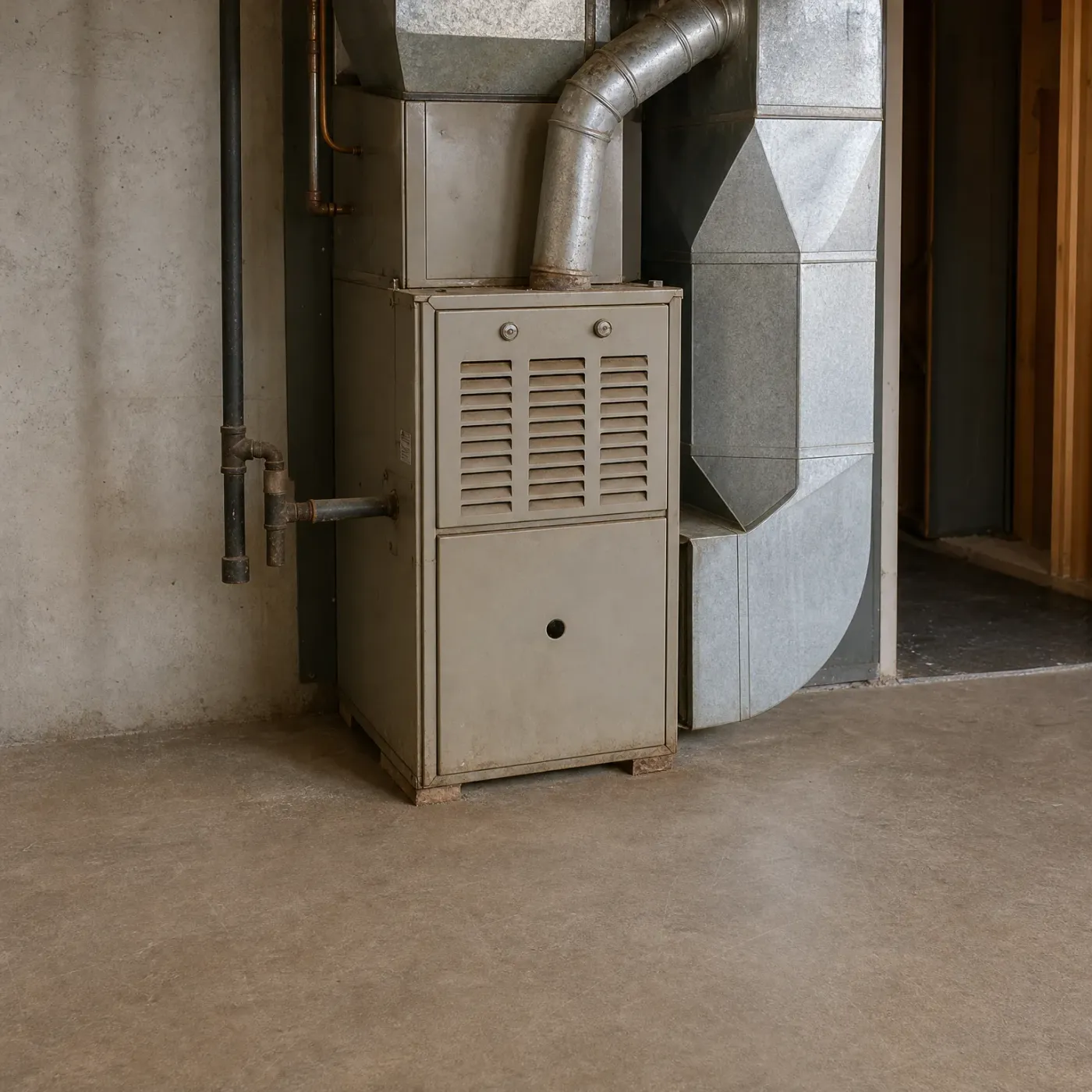
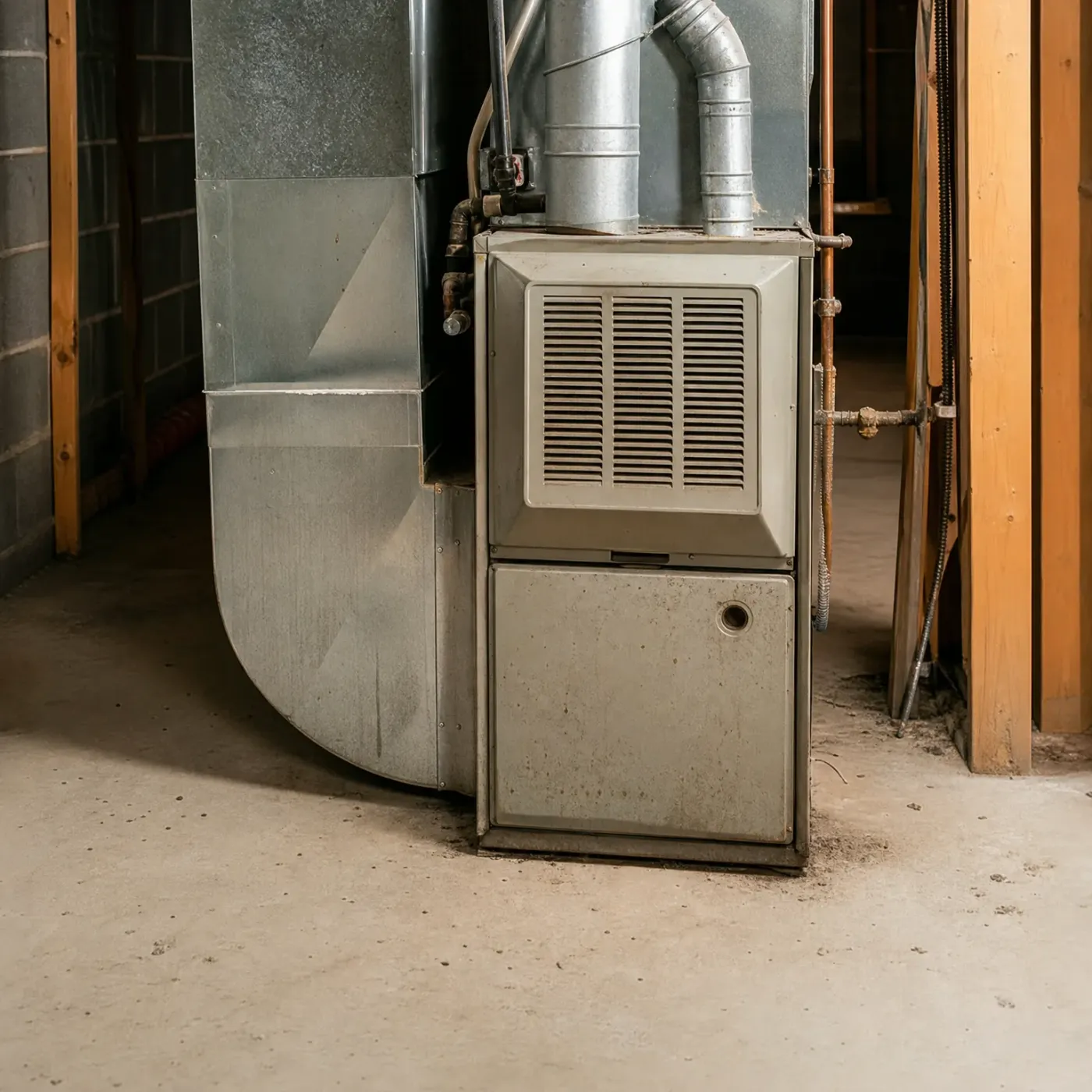
A beige metal furnace with a louvered front panel stands on a concrete floor against a concrete wall, connected to galvanized sheet-metal ductwork and a metal pipe.

A Furnace In Trouble

An older furnace with dirty burners or a weak flame sensor lets gas build up before it catches, and that's the bang. Left alone, it stresses the heat exchanger, and in a house like this one, running on gas, that's not something to wait out through a New York winter.

Is that bang in your furnace something to worry about?

You're probably hearing it from upstairs, a thud from the basement or the closet where the furnace sits, loud enough to notice over the TV. Maybe it happens every time the furnace kicks on, or just once in a while when the house has been cold for a few hours. Check the duct near the furnace for a popped seam or a dent, and look at the burner area for soot, a fine black dust around the access panel. If the bang keeps happening and nothing gets looked at, a cracked heat exchanger is the real risk, and that can let exhaust into the air you're breathing instead of sending it out the vent.

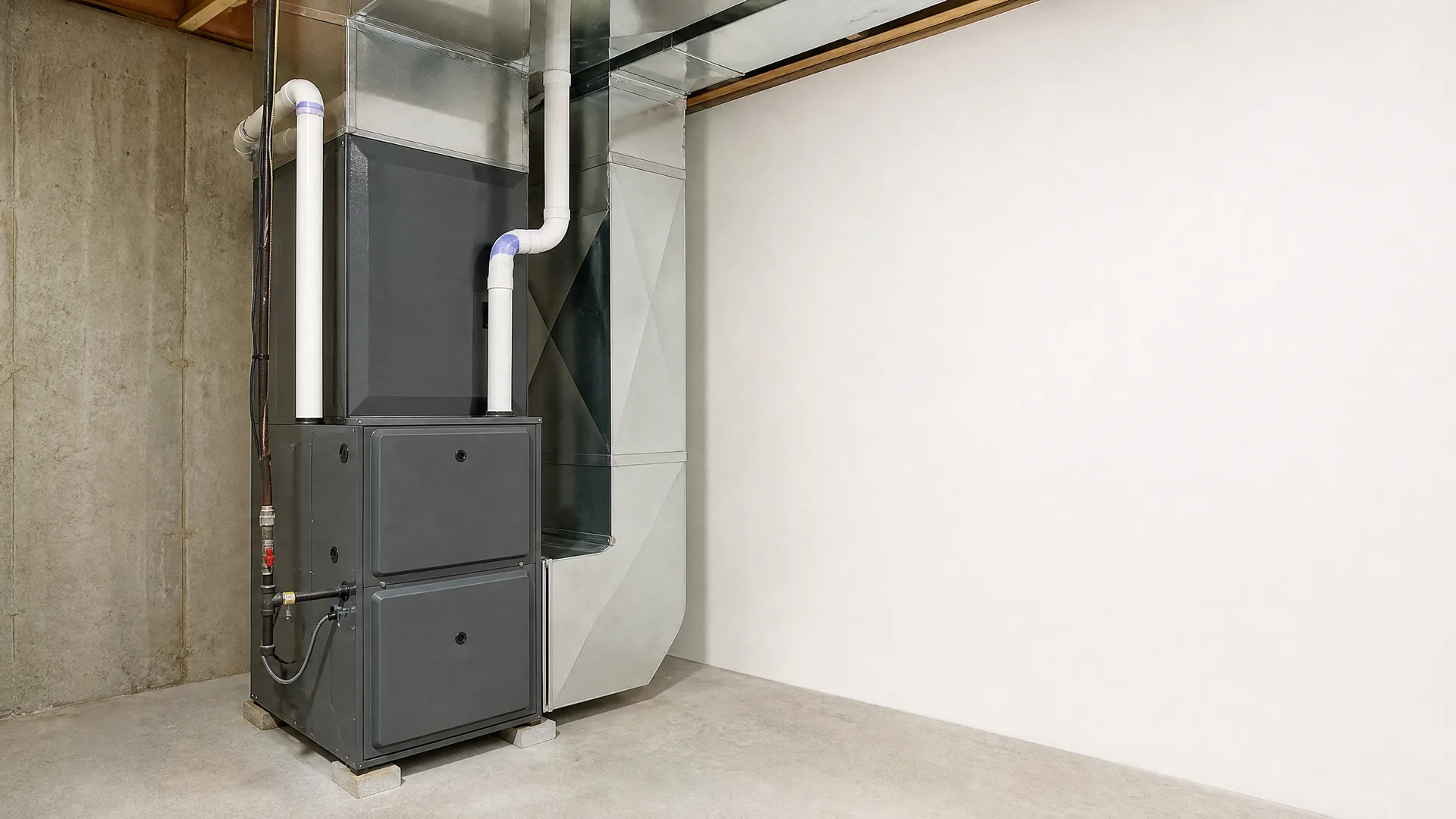
A dark gray high-efficiency furnace with white PVC vent pipes stands against a concrete basement wall, connected to sheet-metal ductwork running along the ceiling joists.

Why delayed ignition gets worse

Dirty burners don't clean themselves. Each time gas pools before it catches, that small delayed bang stresses the heat exchanger a little more. Left alone through a New York winter, what started as a dull thump can turn into a harder bang, and the extra strain shortens the life of parts that are expensive to replace. A contractor who checks the burners and flame sensor early stops that progression before it reaches the heat exchanger.

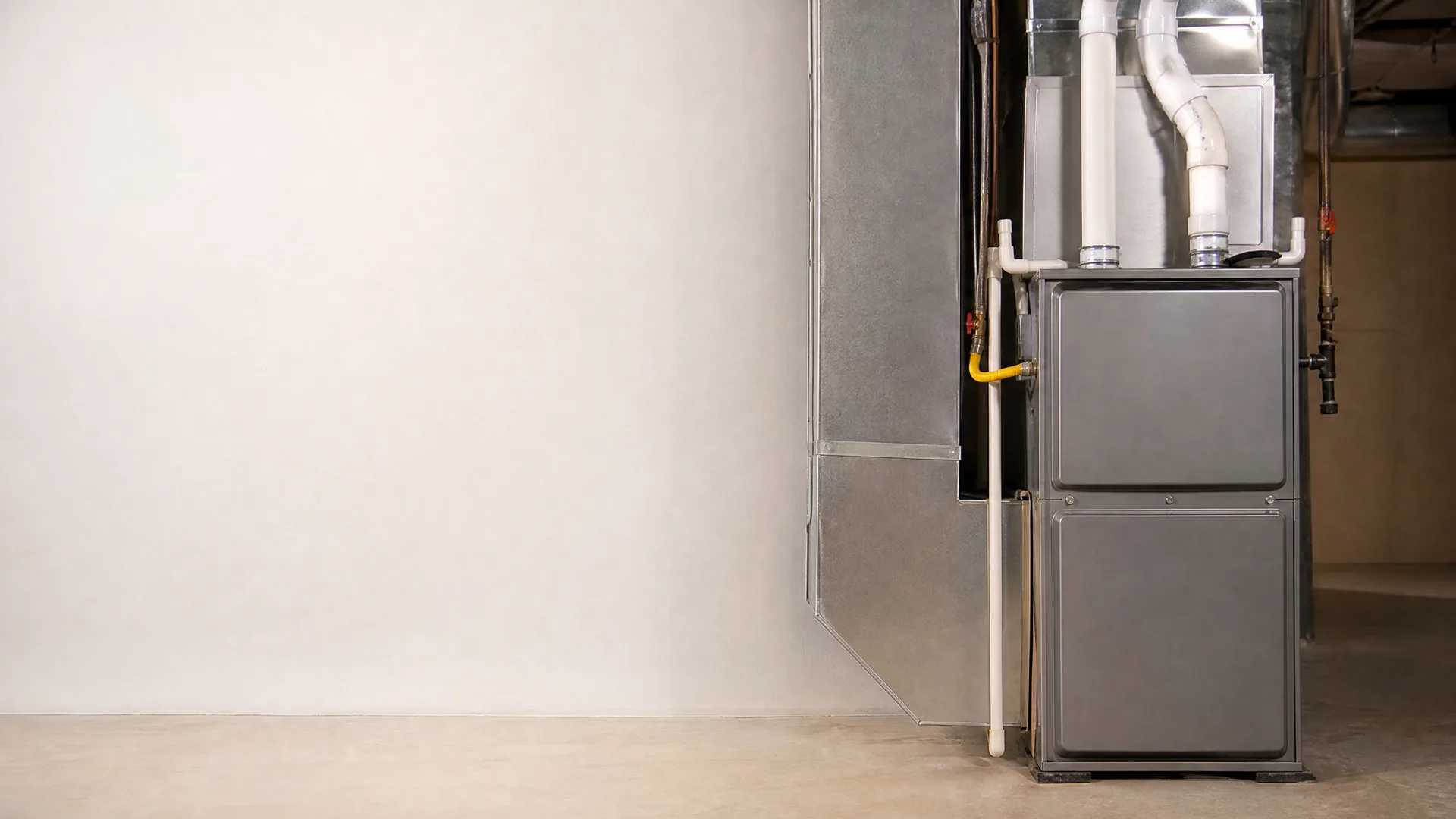
A gray high-efficiency furnace with white PVC vent pipes, a yellow gas line and metal ductwork stands against a plain light wall in a basement with a concrete floor.

What the ductwork is doing

Metal ductwork expands when hot air hits it and contracts when the furnace shuts off, and most homes have a few sections that aren't fastened down tight. That's the ticking and popping you hear as the system runs. It's normal and it's different from a bang at startup. If you can tell the two apart, that's useful information to pass along, since it helps a contractor know whether to look at the burners or at the duct runs first.

Winter nights average 24°F statewide

At 24°F overnight, your furnace is cycling on over and over most nights from December through February. Every one of those startups is another chance for that bang, so a delayed ignition problem left alone gets more chances to wear on the heat exchanger before spring.

NOAA nClimDiv 1991-2020 county normals weighted by homes

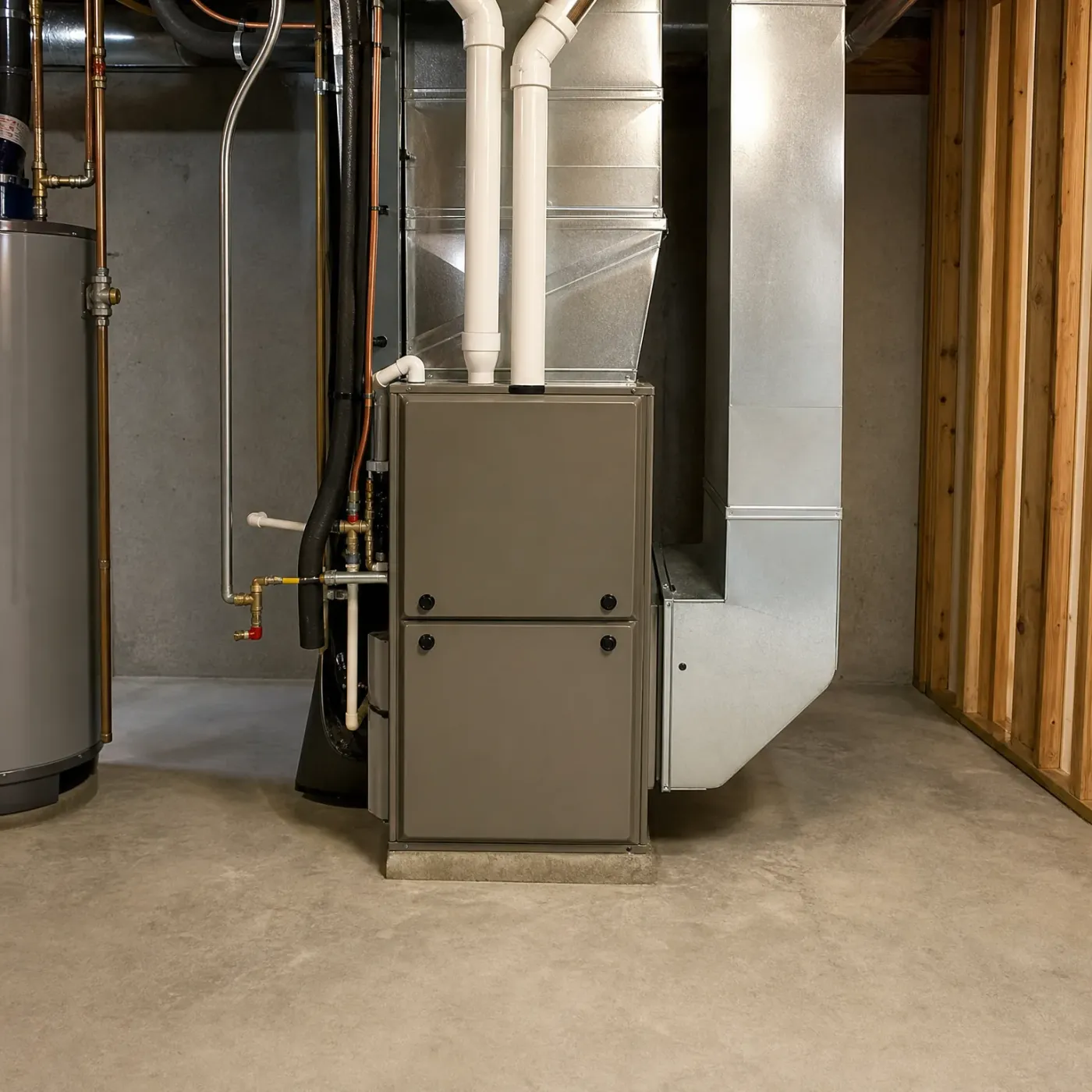
A gray high-efficiency furnace in a basement with PVC vent pipes, sheet-metal ductwork, copper and insulated pipes, a water heater at left, and an unfinished wood-stud wall at right.

Clean Burners, Quiet Start

This furnace lights the moment the igniter gets power. No gas sitting around waiting to catch, so no bang. The PVC flue and ductwork run the heat where it needs to go without the unit having to fight itself first.

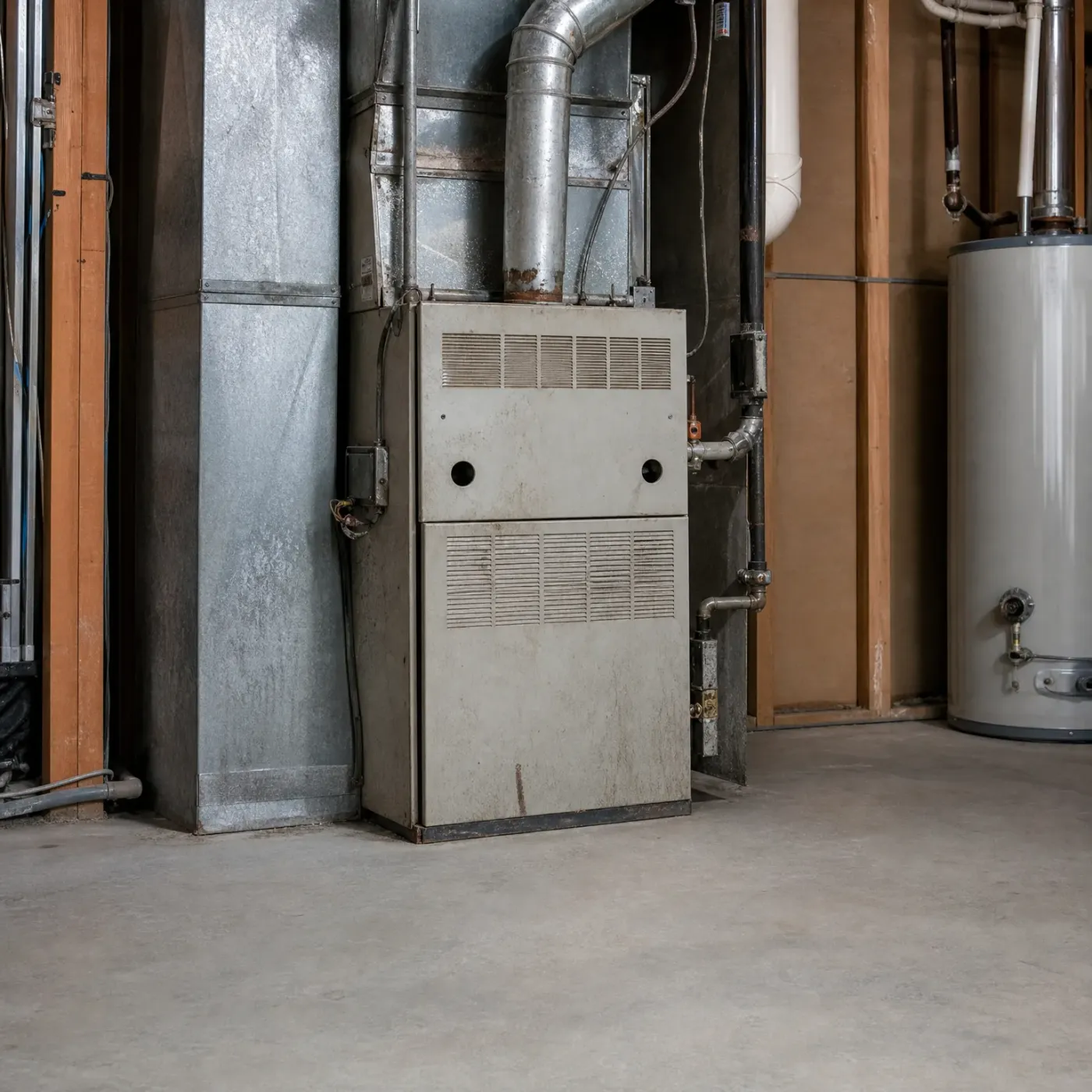
An older beige furnace with louvered front panels stands on a concrete basement floor beside galvanized ductwork, metal and plastic pipes, exposed wood framing, and a cylindrical water heater at right.

Dirty Burners, Delayed Bang

An older furnace like this one often has years of dust sitting on the burners and the flame sensor. Gas pools for a second before it lights, and that's the thud you hear through the galvanized ductwork and the floor above.

A gray-haired bearded man in a dark knit sweater sits on a light gray sofa in a sunlit living room, looking to his left, with a framed artwork, a potted palm, and a curtained glass door behind him.
A middle-aged man in a dark green sweater sits on a light grey sofa looking toward a sunlit window, with a wooden shelving unit, lamp and potted plants in the background.
A man in a dark green sweater sits on a light grey sofa in a sunlit living room, looking to his left, with a shelving unit, houseplants, framed art and a large window behind him.
A gray-haired bearded man in a dark green sweater sits on a light gray sofa in a sunlit living room with a potted plant, framed picture, and dark shelving in the background.

Done looking for a furnace pro

Only one pro gets your request, so you hear from one company.

You're not committing to anything by asking.

How ignition actually happens

  • The igniter glows for about 30 seconds before the gas valve opens, so power gets there first.
  • Gas flows next, and in a working furnace it reaches the burners and catches within a second or two.
  • The flame sensor confirms the burners lit; if it reads weak, the control board cuts gas and tries again.
  • A second try that works means the first batch of gas built up before catching, which is where the bang comes from.
  • The blower doesn't start moving air until a sensor reads the heat exchanger has warmed up, several seconds after ignition.
  • None of this sequence involves a belt; gas furnaces fire the burners directly off the igniter and gas valve.

A gas furnace fires in a set order, and every step has to pass before the next one starts. Power reaches the igniter first, and it glows for about 30 seconds, building up heat before anything else happens. Once it's hot enough, the control board opens the gas valve. In a furnace that's running right, gas reaches the burners and catches almost immediately, within a second or two of the valve opening. The flame sensor is watching for that. It's a thin metal rod sitting right in the flame, and it confirms to the control board that ignition actually happened. If the sensor reads a weak flame or no flame, the board shuts the gas valve and tries the whole sequence again. That second attempt is usually the one that works, and it's also where the bang comes from. Gas that built up during the failed first attempt ignites all at once instead of catching cleanly, and you hear it as a thud from the basement. The blower stays off through all of this. It only kicks on once a separate sensor reads that the heat exchanger has warmed up, which takes several seconds after ignition. None of this runs off a belt. Gas furnaces fire the burners directly from the igniter and gas valve, so a bang has nothing to do with belts or pulleys. It points back to something in the ignition sequence itself.

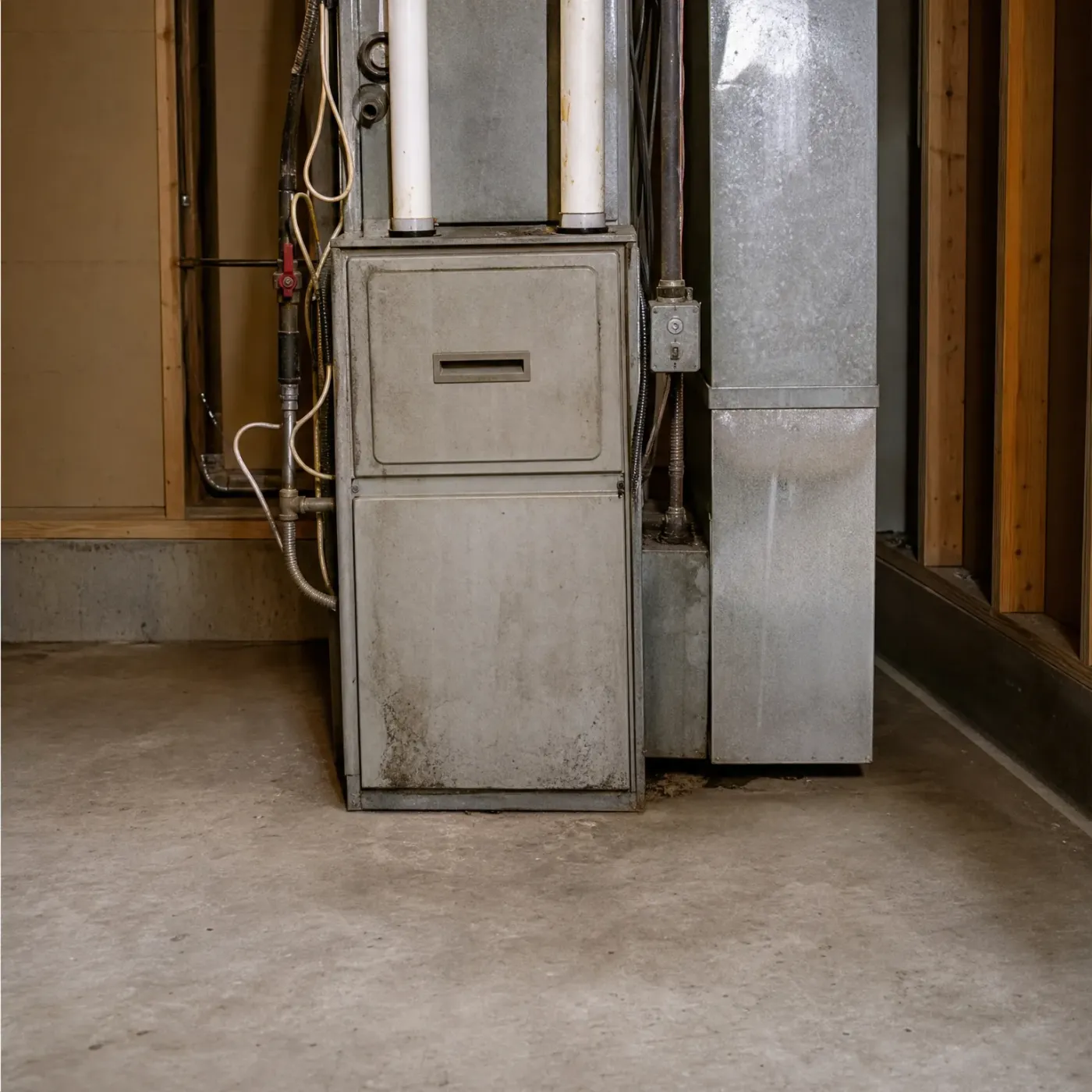
An older gas furnace with two white PVC vent pipes stands on a concrete basement floor beside galvanized sheet-metal ductwork, flexible conduit, and piping along a wall.
Before you get your furnace repair
A gray high-efficiency furnace with white PVC venting pipes stands on blocks in a basement next to sheet-metal ductwork, with exposed wood framing on the left and a concrete wall and floor.
After you get your furnace repair
  1. Thermostat calls for heat and power reaches the igniter

  2. Igniter glows hot enough to light gas on contact

  3. Gas valve opens and gas flows to the burners

  4. Burners catch, ideally within a second or two

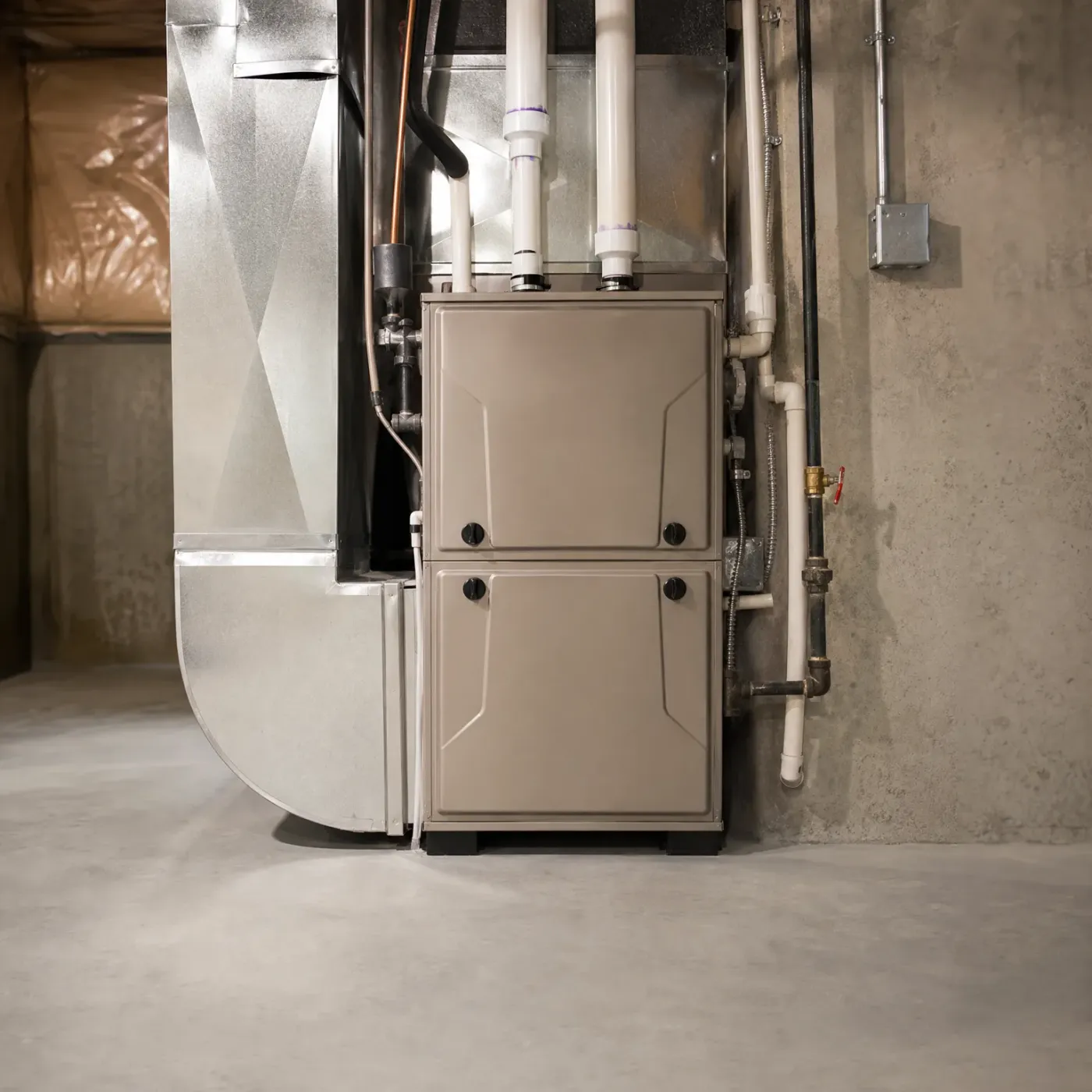
A beige high-efficiency furnace stands on a concrete basement floor beside sheet-metal ductwork, with white PVC vent pipes, flexible conduit and copper and steel piping running up a concrete wall to an electrical box.
Gas catches the moment the igniter glows, so the furnace starts fast and the basement stays quiet.
An older gas furnace with a louvered front panel stands on a concrete basement floor beside large sheet-metal ductwork, a metal flue pipe, copper piping and wood framing.
Dust has built up around the base and the burners underneath are likely in the same shape, which is why the bang keeps coming back.
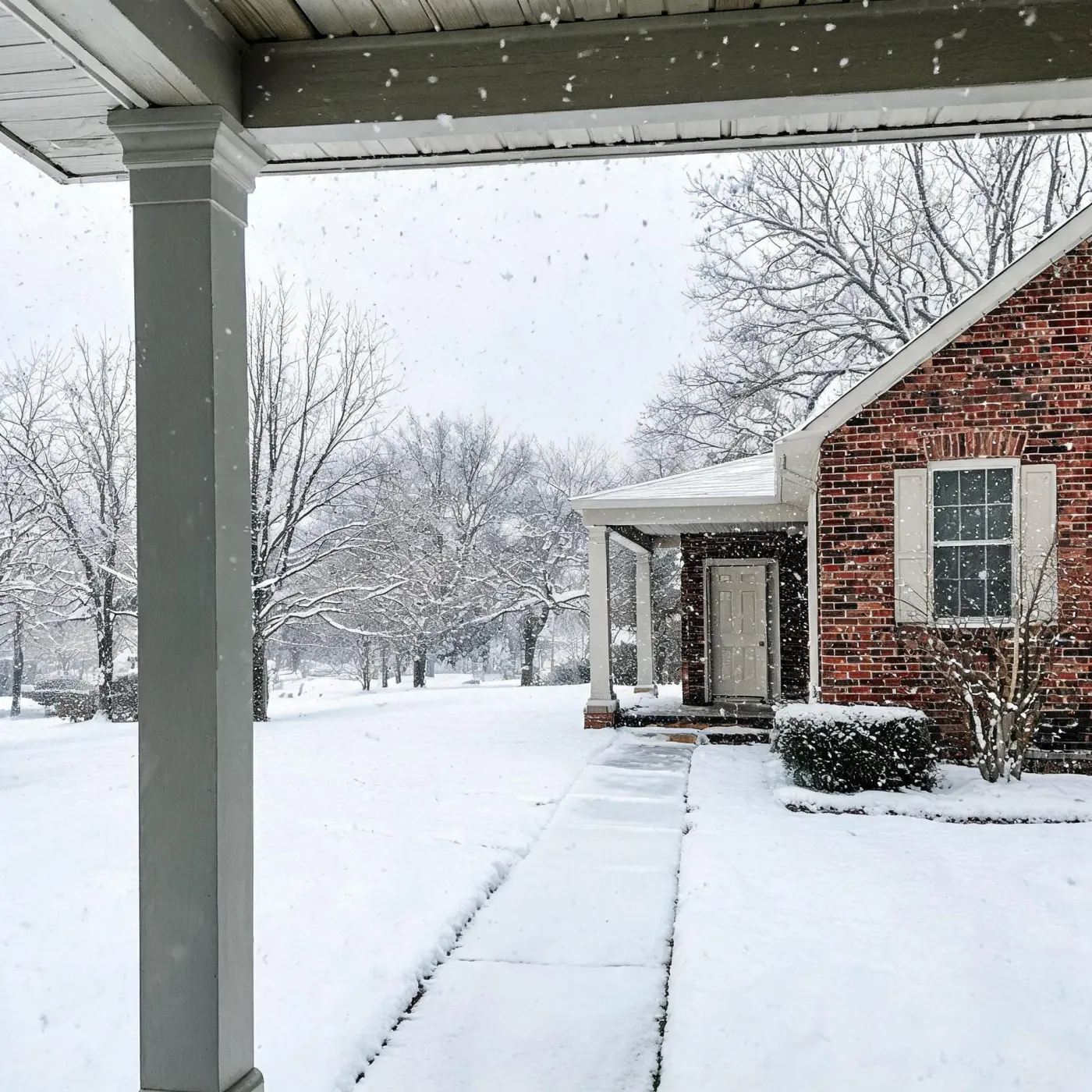
View from under a covered porch with a white column toward a brick house with a white front door and shuttered window, with snow falling and covering the lawn, walkway, shrubs, and bare trees.

Statewide, winter nights average 24°F, according to NOAA climate data. That kind of cold keeps a furnace cycling on and off most of the night rather than running one long stretch. Each cycle means the igniter glows, the gas valve opens, and the burners are supposed to catch right away. If they're dirty, that's one more chance for gas to pool for a second before it lights, and one more bang from the basement. On a night in the low 20s, you might hear it five or six times before morning. The cold itself isn't the problem. It just means the furnace is firing often enough that a small delayed ignition issue gets hard to ignore.

NOAA nClimDiv 1991-2020 county normals weighted by homes

A woman with shoulder-length graying brown hair in a cream knit cardigan sits in a dark armchair indoors, looking off to the side with a slight smile, with a shelf, window and houseplant blurred behind her.
A woman with dark hair in a bun sits wrapped in a chunky knit blanket on a couch with a child resting his head on her shoulder, eyes closed, beside a lit lamp and bookshelf indoors.

That bang comes down to burners or a flame sensor that need attention before the cold settles in for good. It's not a mystery and it's not something your furnace has to live with the rest of the winter. A furnace technician who works on these systems all season in New York has seen this exact bang plenty of times, usually right after that first hard freeze, and knows what to check first. When you send in the request, it goes to one licensed local contractor, not a handful of companies calling you back at once. You'll know who's coming and what they do. Until then, keep an eye on how the bang sounds each morning. If it's gotten louder or sharper than it was last week, that's worth mentioning when the contractor asks. The fix itself is usually straightforward once someone's down there with the burners in front of them. You don't need to know which part it is tonight. You just need someone who does.

Corner of a room with a white window at left, a white fireplace mantel with dark stone surround at right holding a weathered clay vase of leafy branches, and a cream upholstered sofa with a knit throw and tan pillow in the foreground.
A cushioned window seat with a brown lumbar pillow beside a white-framed window overlooking green trees, next to built-in cream cabinetry with shelves holding ceramic vessels and a wooden bowl.
An entryway with a dark wood console table holding a stone vase of olive branches and a shallow wooden bowl, a woven basket on the lower shelf, a framed landscape print on the wall, and a glass-paned wood door at left.
A wooden vanity cabinet with dark knobs and a beige stone countertop holding a round terracotta vase with leafy branches, beside a wood-framed mirror and a white sink.
Sunlit room corner with wide-plank oak flooring, white baseboard molding and beige walls, a window at left showing green trees, and a dark cabinet at right topped by a stone vase holding a leafy branch.

It's off your list after this

Your request stays with one local pro.

Get one local pro

It costs nothing to send, and you don't have to hire anyone.