Profile view of a bearded man wearing a dark baseball cap and a dark gray T-shirt against a plain off-white background.

Why your furnace smells like burning in New York

Step 1 of 3: Equipment

Why does my furnace smell like burning?

You turned the furnace on and caught a burning smell coming out of the vents. In a New York winter you don't want to shut it off and just hope it passes, but you also don't want to ignore something that could be serious. Most of the time there's a plain reason behind it, tied to what happens when a gas furnace that's been sitting since spring starts moving air and firing again.

It's usually dust burning off, but a sharp or lasting smell means something else is wrong

The first time your furnace runs after months off, dust that settled on the heat exchanger and in the ducts burns off as the system heats up. That smell fades within an hour or two and doesn't come back. A smell that lingers past that, or smells sharp like hot metal or plastic, points to something else: a dirty filter choking airflow, a blower motor running hot, or wiring that's failing inside the unit. With gas heat running most homes here through the winter, that furnace works hard for months straight, and a problem that starts small at the start of the season tends to get worse by January.

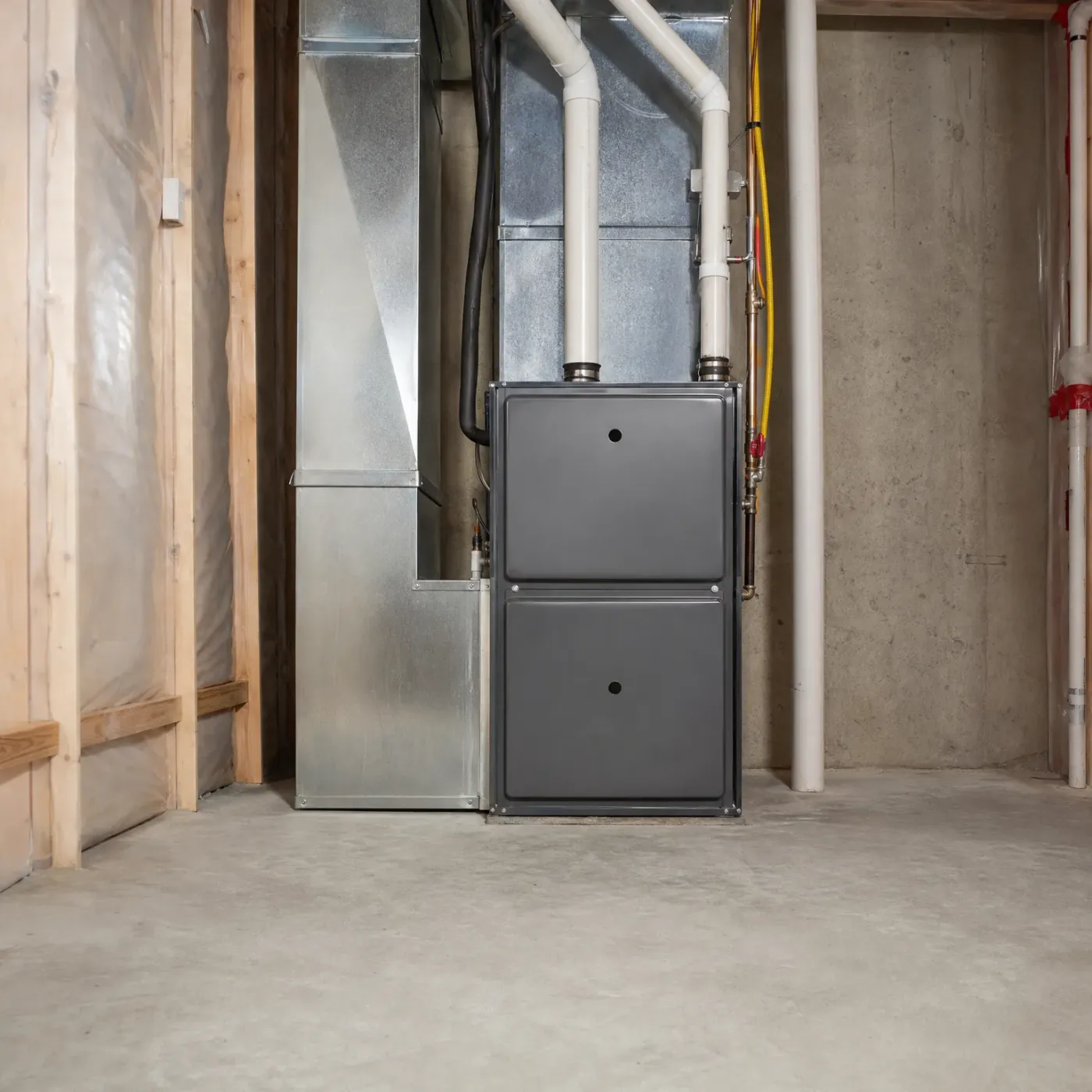
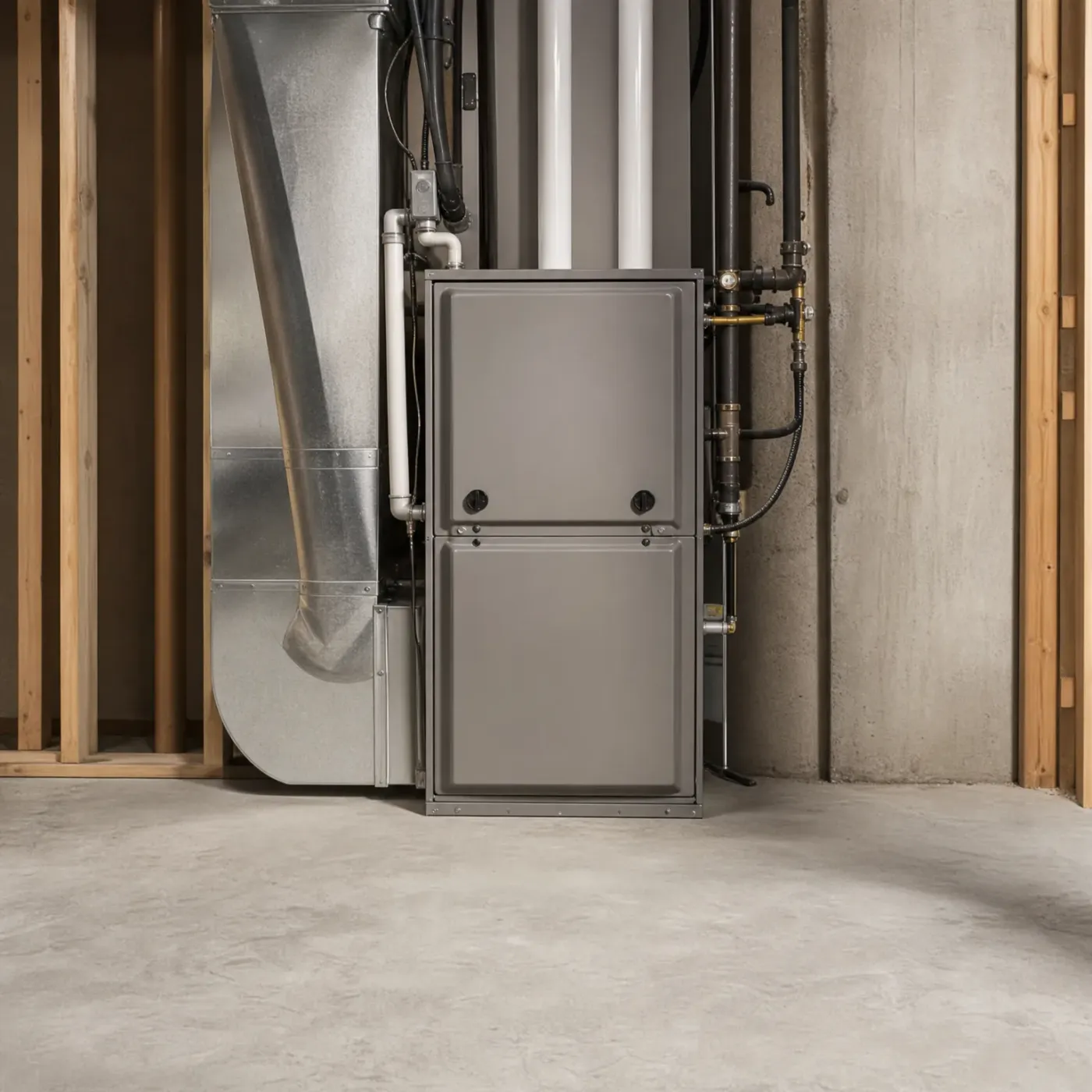
A beige high-efficiency furnace with white PVC vent pipes stands beside galvanized sheet-metal ductwork in a basement with a concrete floor, exposed wood studs, and metal piping along the wall.

A clean dust burn-off

The first time heat runs after months off, dust sitting on the heat exchanger and in the ducts burns away. You get a faint smell for an hour or so, then it clears. The furnace cycles normally and the smell doesn't come back once it's gone.

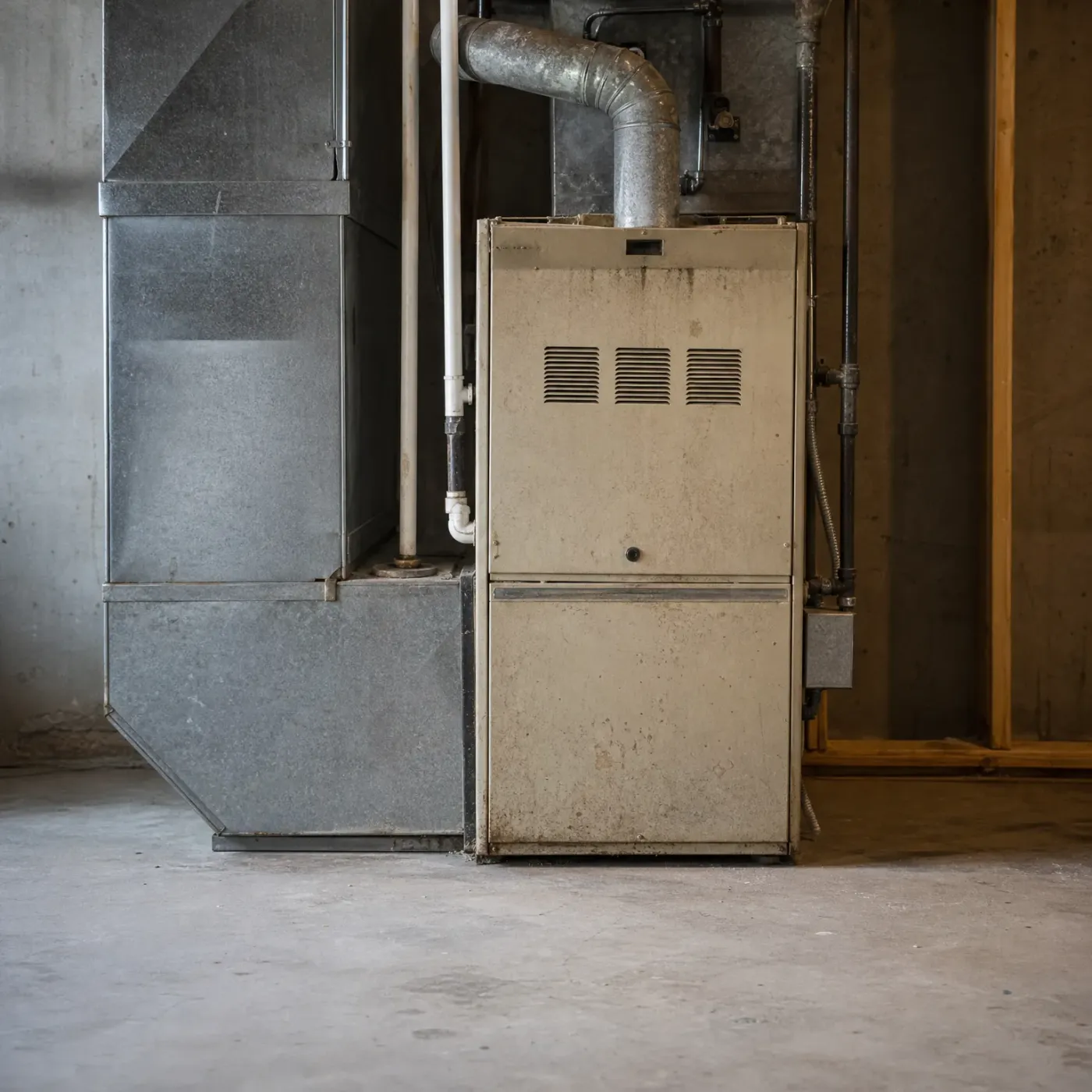
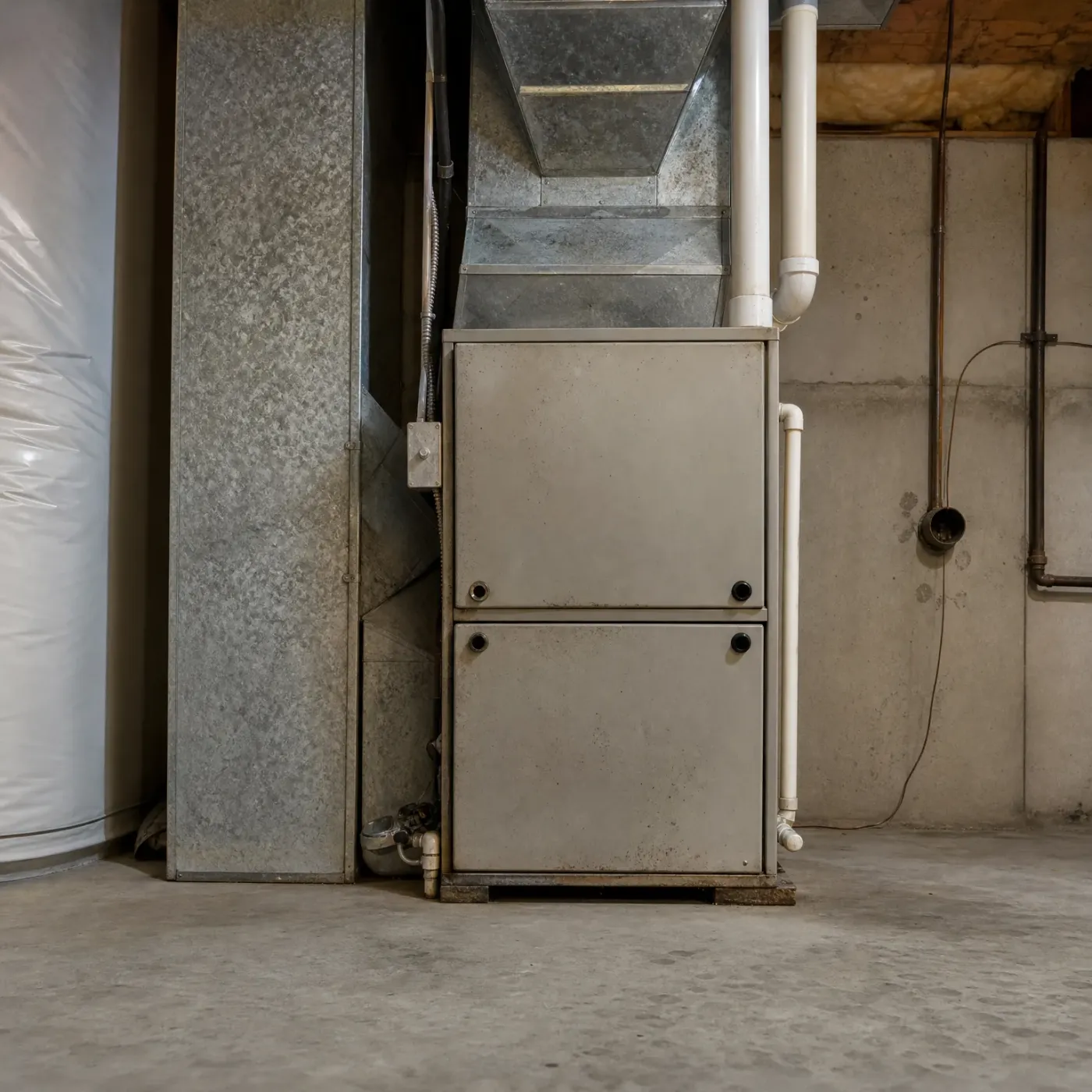
An older beige furnace with a louvered vent panel stands on a concrete basement floor beside galvanized sheet-metal ductwork, a metal flue pipe and vertical pipes along a concrete wall.

A smell that stays or changes

If the smell is still there on the second or third cycle, or it turns sharp like burning plastic or metal, something inside is overheating. A cracked heat exchanger, a failing blower motor, or wiring under strain can all smell this way, and none of them clear up on their own.

A smiling man in a blue denim shirt over a white tee sits at a light stone kitchen counter with a grey mug and a bowl of oranges and bananas, with pendant lights and shelving behind him.
A smiling bearded man in a grey long-sleeved shirt sits at a kitchen counter with a dark mug, with a dining table, pendant light and glass doors onto greenery behind him.
A bearded man in a dark green knit sweater smiles and looks off to the side while standing at a kitchen counter with a white mug of coffee, with open shelving, a potted tree, and a dining table near large windows behind him.
A man with dark curly hair in a dark green sweater stands smiling and looking to the side in a kitchen with white cabinets, a potted plant, a stone countertop with a ceramic mug, and a dining area with framed art in the background.

A sharp electrical or plastic smell

This is different from dust burning off. It can mean a wire insulation or a plastic part like a blower wheel is overheating near the motor, and it won't clear on its own.

Hand off my repair

A smell that doesn't fade after an hour

Normal burn-off clears once the furnace has run a cycle or two. If yours is still there after that, something inside is causing it, not just dust from the summer layoff.

Hand off my repair

Keep It Running or Shut It Off

Run the furnace

  • If the smell is faint and fades within an hour, the furnace can usually keep running while the dust burns off the heat exchanger.
  • Watching how the smell changes over the next cycle tells a contractor something useful if it doesn't clear.
  • This only holds if the furnace cycles on and off normally and nothing else seems off, like odd noises or a breaker tripping.
  • New York winters don't give you much room to be without heat, so this is the choice for a smell that's already easing up.
  • Letting it run a little longer costs you nothing extra on the gas bill since the burn-off is a one-time thing, not a recurring draw.

Shut it down

  • A sharp electrical or plastic smell, or one that lingers past an hour, means something is overheating and won't resolve by waiting.
  • Running a furnace with a damaged wire or an overheating blower wheel risks turning a repair into a replacement.
  • Shutting off the furnace at the switch costs you heat for a night, which is worth it against a motor or wiring failure.
  • A contractor local to New York who services furnaces every winter has likely seen this exact smell call before and knows what usually causes it.
  • Sending one request means one contractor looks at it, not a handful of companies competing for the job.
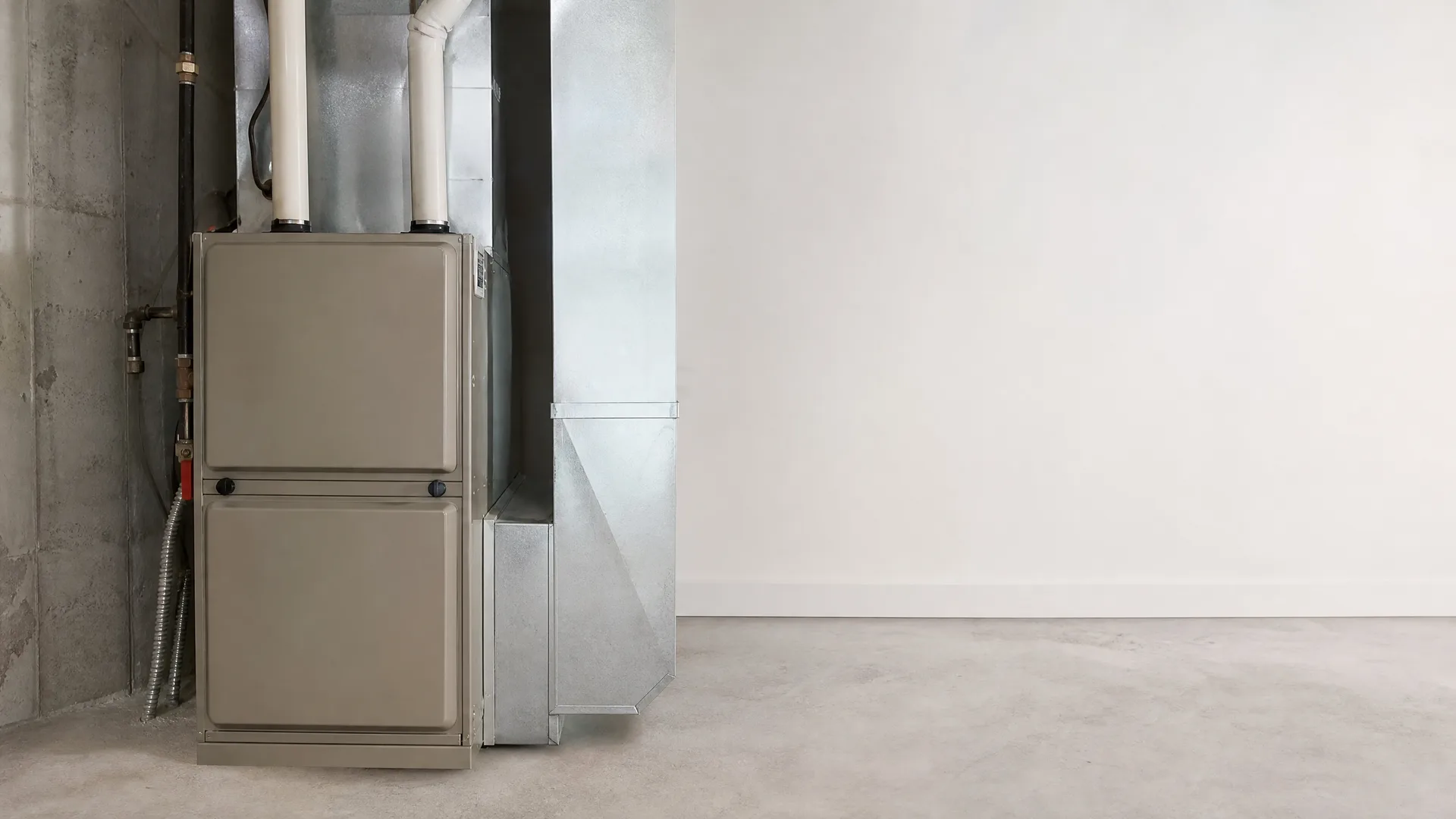
A beige high-efficiency furnace with two white PVC pipes stands beside sheet-metal ductwork and a concrete wall in an empty basement with a bare light-colored wall and concrete floor.

What keeps running while you wait

A furnace that's overheating a wire or a plastic part doesn't fix itself by running more. Each cycle puts the same strain on whatever's already stressed, and in a New York winter the furnace might cycle on ten or twelve times a day. If a blower wheel is rubbing or a wire is chafed against the housing, that's ten or twelve more chances for it to get worse before anyone looks at it.

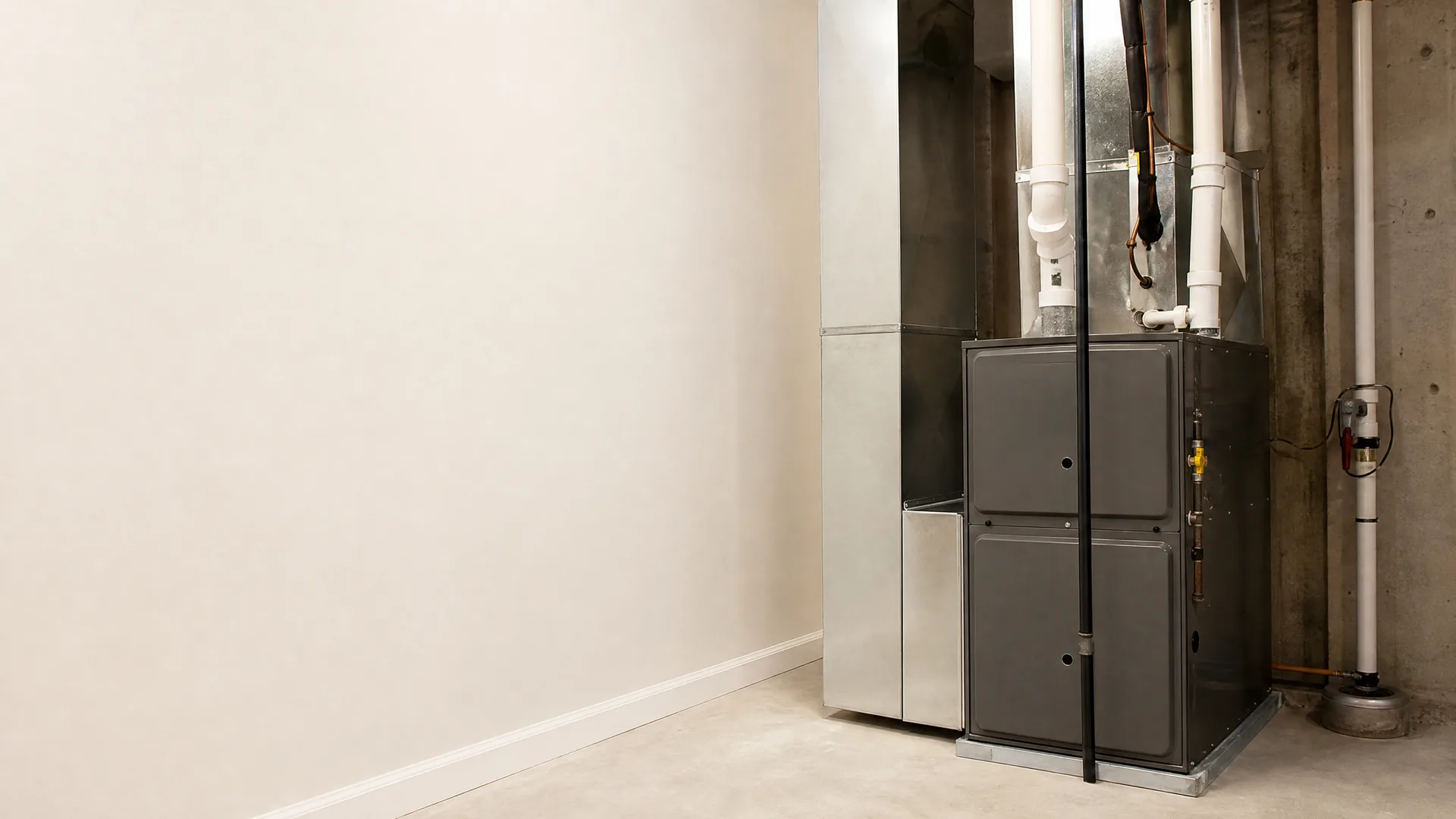
A gray furnace with sheet-metal ductwork and white PVC vent pipes stands in the corner of a finished basement room with a blank beige wall and concrete floor.

What a short delay can turn into

A smell that started as a short-lived warning can end with the furnace shutting itself down on a safety switch, usually overnight when it's coldest and a part is hardest to get. Catching it at the smell stage, before it trips that switch, is what keeps a repair a repair instead of a no-heat call. A local contractor who services furnaces all winter has likely smelled this exact thing before and can usually tell you over the phone whether it's safe to leave running until they arrive.

What are you noticing right now in your house

You probably caught it standing near a vent or walking past the thermostat. The smell might be faint and gone in a few minutes, or it might come back every time the furnace kicks on. Some rooms carry it more than others depending on which vents are closest to the furnace. You may also notice the furnace running longer than usual to reach the temperature you set, or shutting off and restarting more often than it used to. If the smell keeps showing up cycle after cycle and you keep running the furnace anyway, whatever's overheating stays under the same strain each time, and in a cold stretch that's a lot of cycles to put it through before someone looks at it.

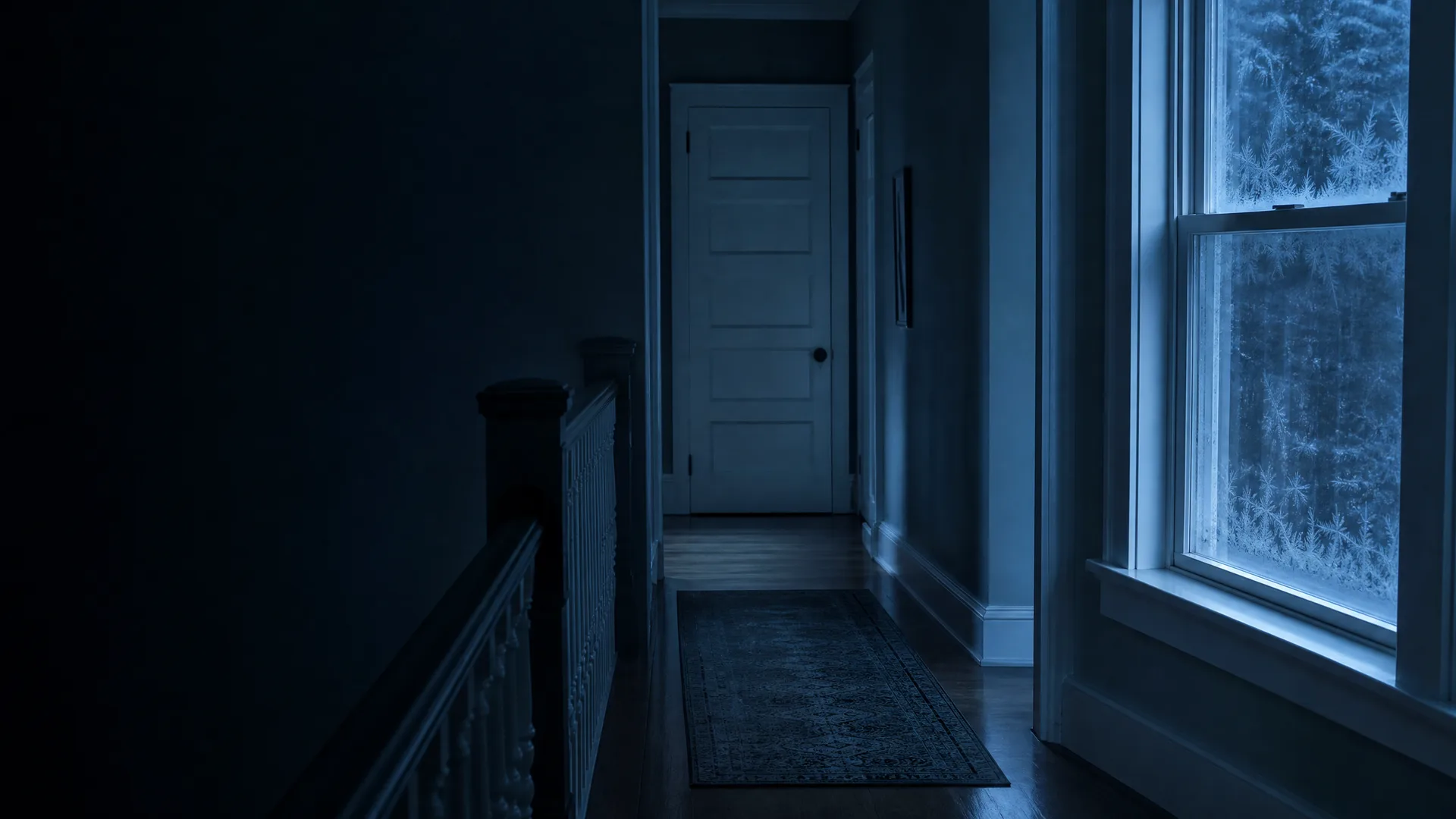
Dimly lit interior hallway at night with a closed white paneled door at the end, a long runner rug on a wood floor, a stair railing at left, and a frost-covered window admitting blue light at right.

You're up before the alarm, feet on the hallway floor, and the house feels colder than it should. The vents are quiet. No hum from downstairs, no warm air pushing out near your ankles. Frost has crept into the corners of the window at the end of the hall. You stand there a second, listening for the furnace to kick on the way it always does, and it doesn't. Whatever burned earlier tonight was the last cycle it ran. Outside it's well below freezing, the kind of January night New York gets more than one of, and the house is losing the heat it had.

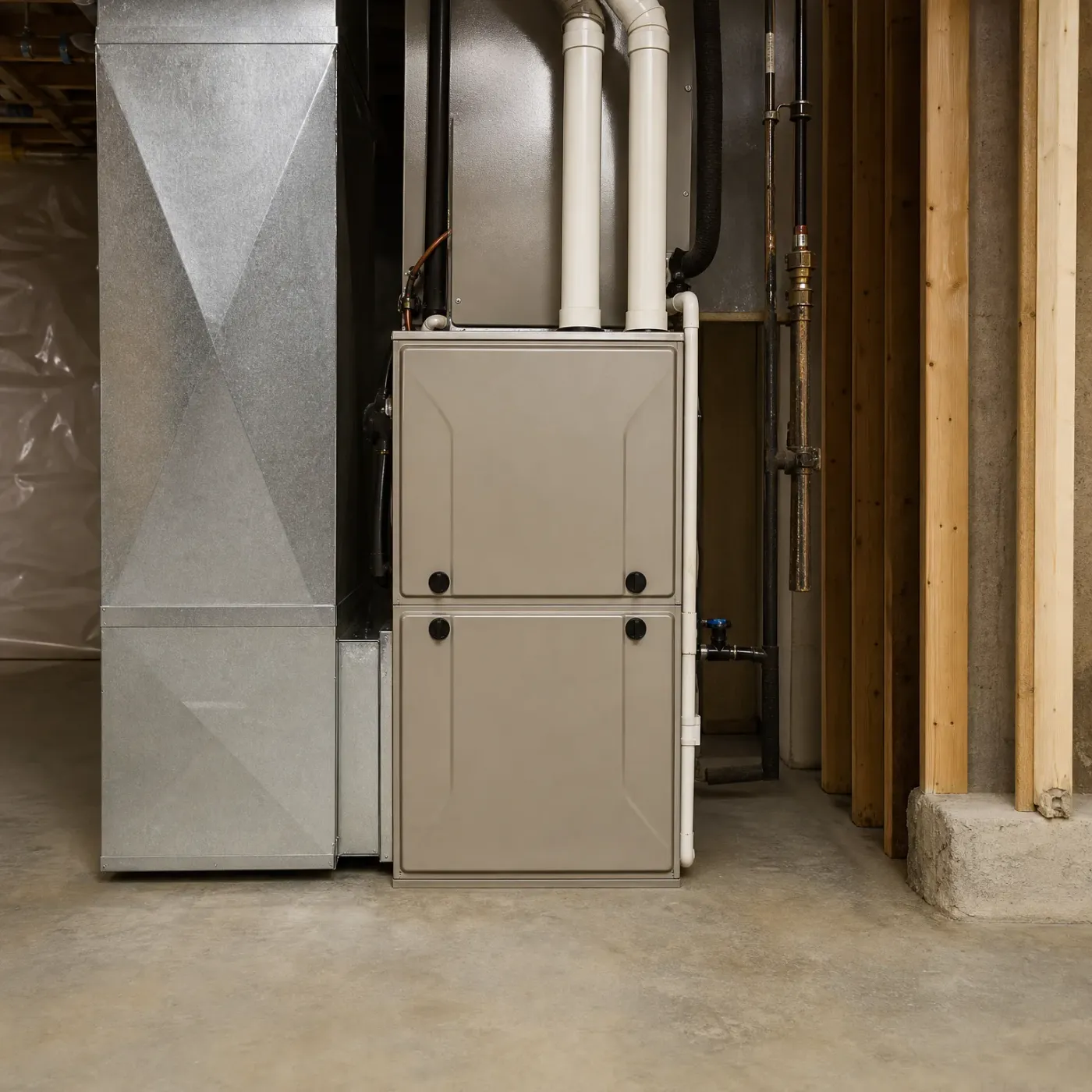
A gray high-efficiency furnace with two PVC vent pipes stands in an unfinished basement beside sheet-metal ductwork, a framed and plastic-covered wall, and a bare concrete wall with vertical pipes.
Furnace tied into sheet-metal ducts and a yellow gas line, running the way it should with nothing to smell.
A gray furnace cabinet in a basement, connected to galvanized sheet-metal ductwork and white PVC pipes, against a concrete wall with exposed metal piping and insulation overhead.
Furnace propped on a pallet against bare block, condensate lines exposed where a leak or short can start unnoticed.
A smiling man in a dark blue T-shirt sits on a light gray sofa in a living room with a wooden shelf and window behind him, with a laptop edge visible in the foreground.
A bearded man in a plaid flannel shirt stands indoors looking out a frost-covered window, with a steaming dark blue mug on the wooden sill and snow-covered trees outside.

Let someone else find the pro

A burning smell from your furnace isn't something to sit with for days while you wait to see what happens. A wire insulation problem or an overheating blower motor gets worse with every cycle, and on a cold night in New York that furnace could be running ten or more times before morning. Someone who services furnaces in this area all winter has seen this exact smell before and knows what usually causes it in a system like yours, what's worth checking first, and what can wait until tomorrow versus what can't. Sorting that out yourself, standing by the thermostat trying to decide if it's safe, costs you time the problem doesn't need you to spend. Hand it off to one local contractor who already knows this equipment, and the deciding stops being yours to carry while your house still has heat.

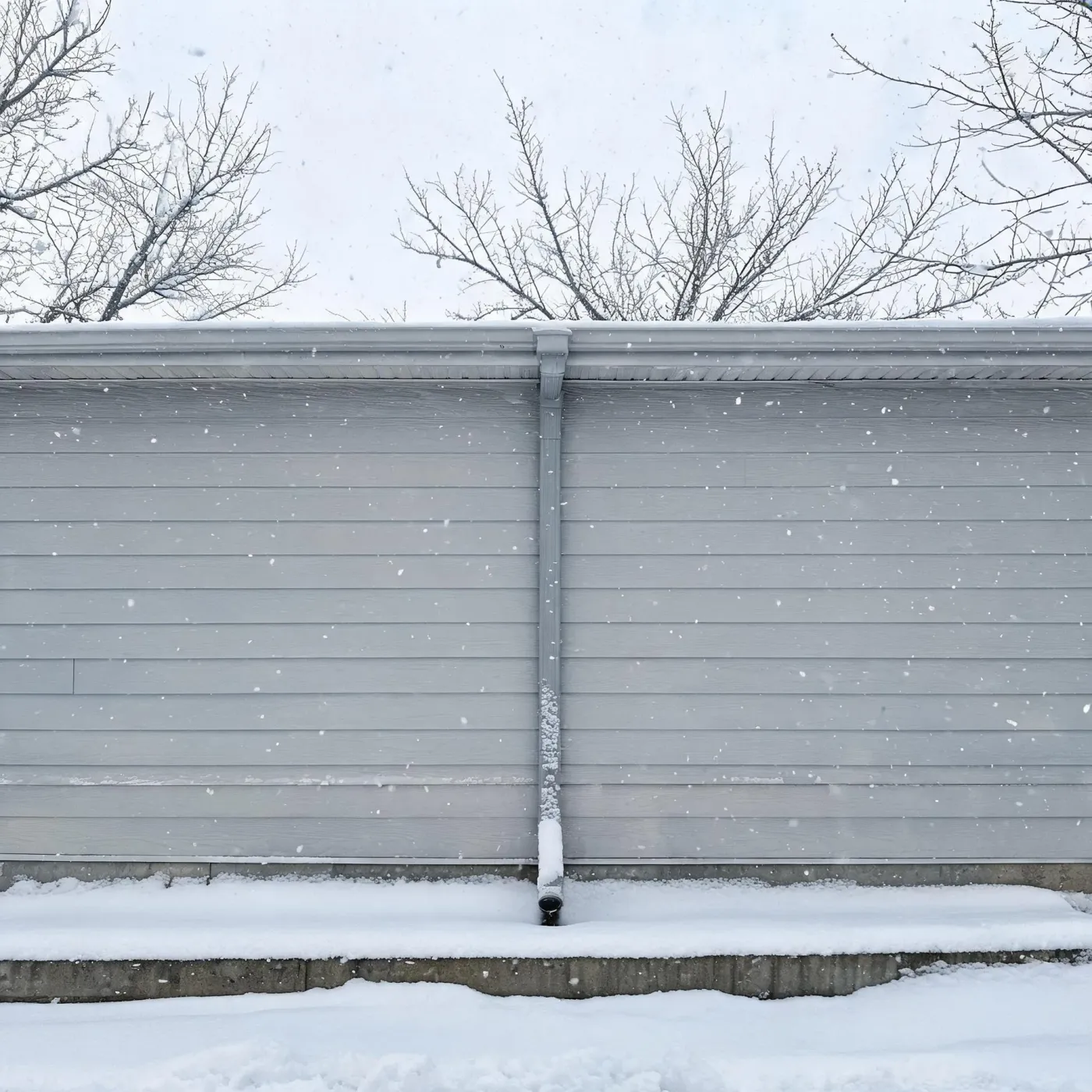
Gray horizontal lap siding on a building wall with a central downspout, seen during falling snow, with snow-covered ground and bare tree branches above the roofline.

Statewide, winter nights average 24°F, according to NOAA climate data. That's the kind of cold that keeps a furnace cycling on and off most of the night instead of running a short stretch and shutting off. Every cycle is another chance for a stressed wire or an overheating blower part to heat up again, and on a night that cold your furnace might be firing ten or more times before morning. If there's already a burning smell coming from the vents, those repeated cycles are what turn a small problem into one that doesn't go away on its own by sunrise.

NOAA nClimDiv 1991-2020 county normals weighted by homes

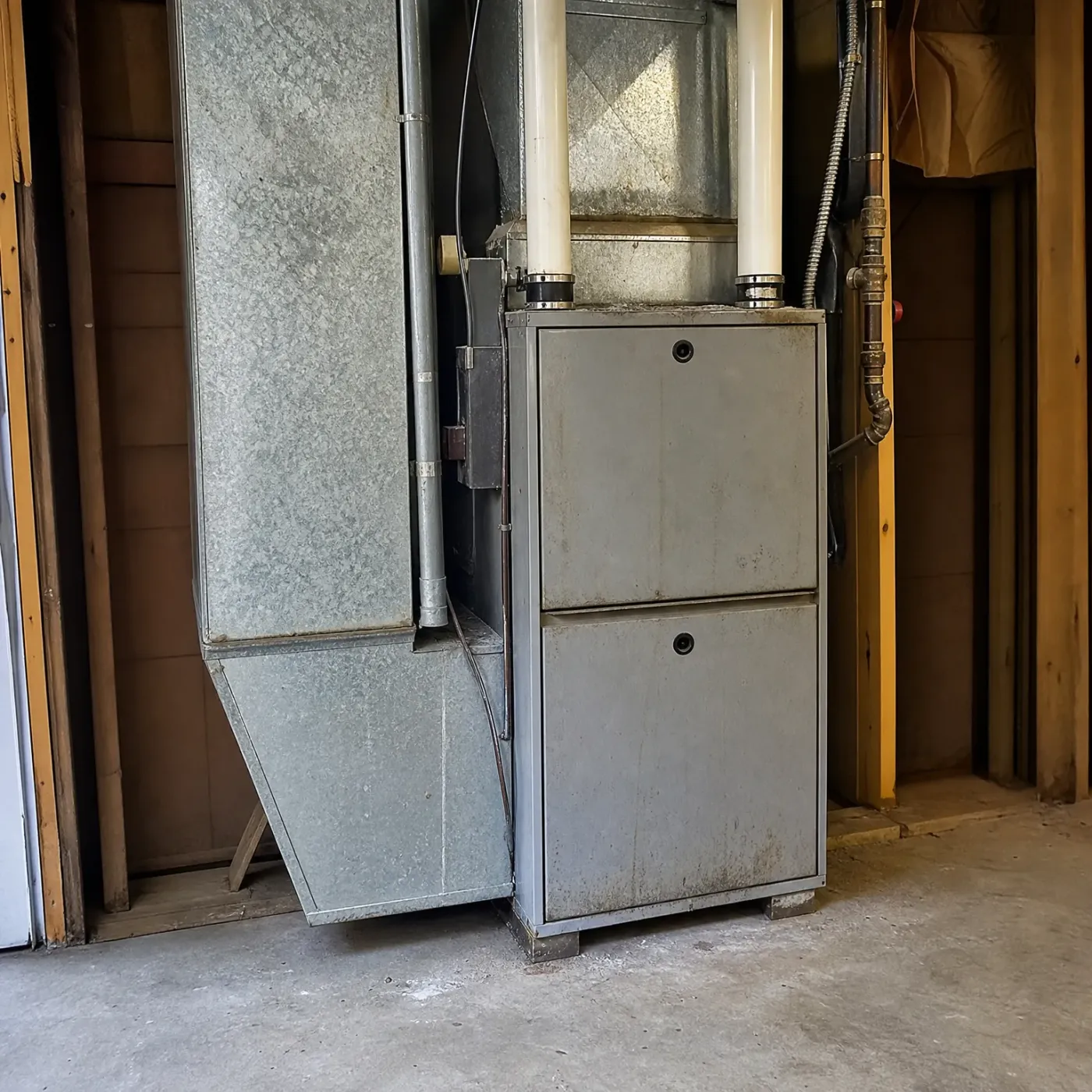
A gray metal furnace with two white PVC vent pipes stands on a concrete floor beside galvanized sheet-metal ductwork in a basement or utility space with wood framing.
Before you get your furnace repair
A gray furnace cabinet in a basement with sheet-metal ductwork, white PVC vent pipes, and black gas piping against a concrete wall and wood-framed partition on a bare concrete floor.
After you get your furnace repair

How a furnace actually fires

  • A furnace fires by sparking an igniter, opening the gas valve, then pushing a flame across the burners in that order.
  • The blower motor only turns on once a sensor confirms the heat exchanger is warm, so cold air doesn't blow through the vents first.
  • Burners sit under the heat exchanger, and that's where dust collects over the months the furnace sits unused.
  • A dirty flame sensor can make the burners shut off early, which forces the furnace to restart and build heat again and again.
  • The limit switch is what shuts the burners off if the heat exchanger gets hotter than it should, before anything downstream overheats.
  • Short cycling puts the igniter and the blower motor through more start-up stress than a normal, full-length heating run.

A gas furnace doesn't just light up and blow hot air. The igniter sparks first, then the gas valve opens, and the flame spreads across the burners in that order. Those burners sit directly under the heat exchanger, which is the metal box that actually heats the air before the blower pushes it through your ducts. The blower itself waits on a sensor. It won't turn on until that sensor confirms the heat exchanger has warmed up, which is why you don't feel a blast of cold air the second the furnace kicks on.

Two parts decide whether that sequence goes smoothly. The flame sensor tells the burners to stay lit once they're going. If it's coated in dust or corrosion, it can misread the flame and shut the burners off early, which makes the furnace restart and try to build heat all over again. The limit switch has a different job. It watches the heat exchanger's temperature and cuts the burners off if it climbs past where it should, before anything further down the line gets damaged.

A furnace that's short cycling, meaning it starts, stops, and restarts instead of running a normal length cycle, puts the igniter and the blower motor through far more start-up stress than they're built for. Each restart is another spark, another ignition, another load on the motor. That's wear a contractor can trace back to a specific part once they're in front of it.

Winter nights average 24°F statewide

At 24°F overnight, your furnace isn't shutting off for long between cycles. That's more chances for a wire or part that's already overheating to get worse before morning, not fewer.

NOAA nClimDiv 1991-2020 county normals weighted by homes

A burning smell that fades in an hour is dust. One that keeps coming back, or smells sharp like hot plastic or wire, is a part under strain, and it won't fix itself by running. That's the whole answer. What you do with it is simpler than the smell makes it feel. A local contractor who works on furnaces all winter in New York has seen this exact smell before, usually tied to a blower motor or a wire that's been overheating a little more each cycle, and knows what to check first instead of guessing. You'll get matched with one contractor, not a handful calling at once, so you're dealing with one licensed person who knows your furnace by the time they're done, not retelling the problem to the next company. At 24°F overnight, that furnace is going to keep cycling whether you act or not. The only choice is whether someone's looked at it before the next cold night or after.

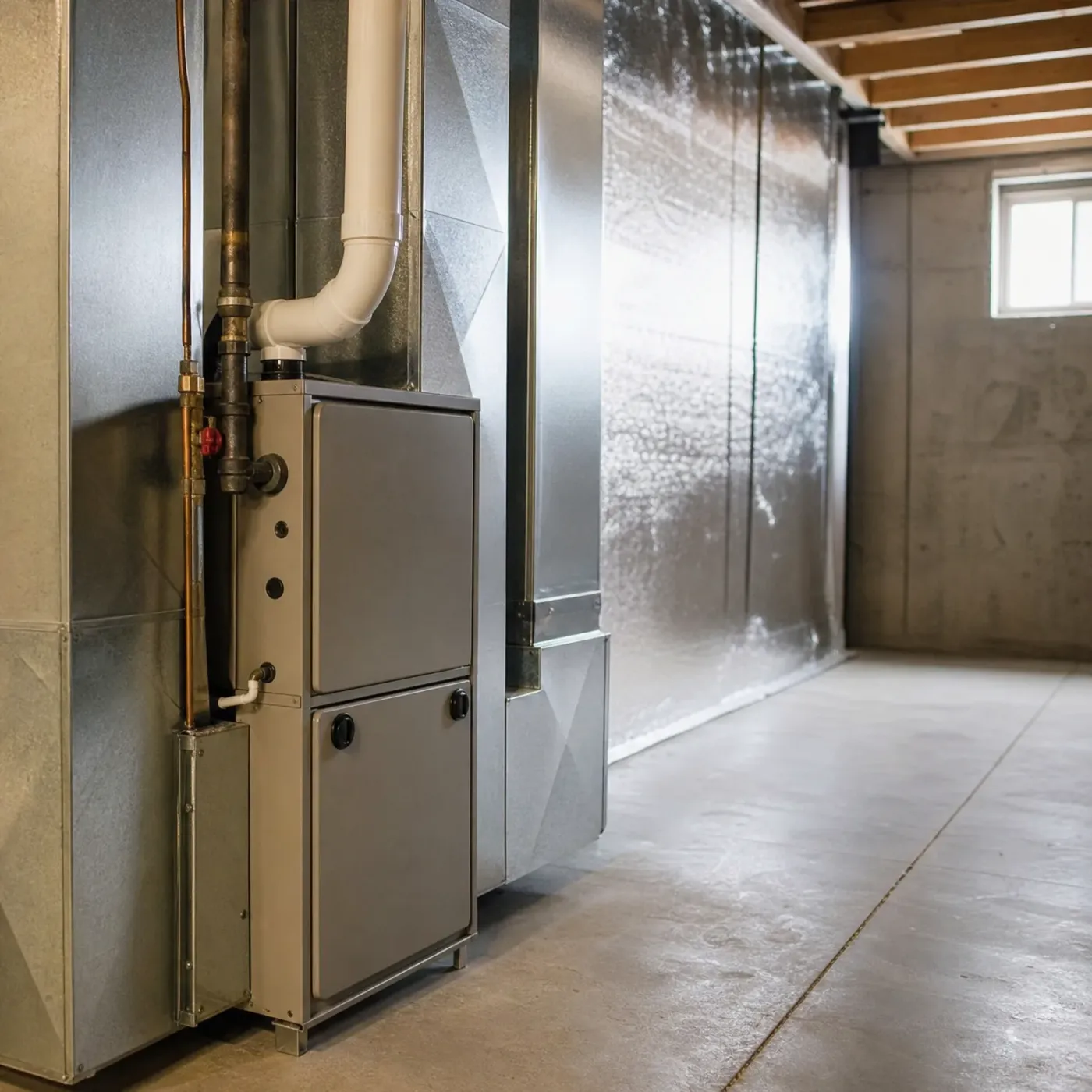
A gray furnace with a white PVC vent pipe and copper piping stands beside large galvanized sheet-metal ducts in an unfinished basement with concrete floor, concrete walls, foil-faced insulation, and a small window.

One request and it's handed off

Reach a local pro

The pro who reaches out is licensed in New York.

Asking costs nothing, and the choice to hire stays yours.