




Why your furnace won't shut off in New York

One request and the search for a pro is handled.

Send my request

A furnace that won't shut off usually comes down to the thermostat telling it to keep running, or a part inside the furnace that's stuck in the on position. A dirty flame sensor can also do this, since the furnace keeps firing to try to reach a temperature it can't sense correctly. Most New York homes heat with gas, and a gas furnace that runs nonstop burns through fuel it doesn't need to, which adds up fast with how much power and fuel already cost here. It can also mean parts inside are wearing out faster than they should from running long after the house is warm enough. A furnace stuck running isn't something to watch for a few days and see if it sorts itself out. It's worth having someone look at the thermostat wiring, the flame sensor and the limit switch before the part that's stuck causes a bigger failure.

A smiling man in a navy long-sleeve shirt sits at a wooden table in a kitchen and dining area, with a ceramic mug, a potted plant, and a sliding glass door behind him.
A smiling bearded man in a green henley shirt stands at a kitchen island with a gray mug, looking off to the side, with a dining area and shelves blurred behind him.
A smiling bearded man in a navy sweater sits at a white kitchen island with a ceramic mug, with open shelves, potted plants and a range hood behind him.
A smiling man in a dark olive long-sleeve shirt sits in a kitchen beside a counter with a dark mug, with a dining table, sideboard and hallway visible in the blurred background.

Why does my furnace keep running and never shut off?

A furnace that just keeps running feels different from one that short cycles. You're not watching it kick on and off all day, it just never stops, and the house either overheats or never quite gets there. With gas prices and electric rates both high in New York, that's not something you want to let ride through a cold stretch while you figure out what it means.

It's the limit switch or the thermostat, not the burners themselves

Inside your furnace is a limit switch that tells the blower and burners when to stop. If that switch fails, or if a thermostat sends a constant call for heat because its wiring or sensor is off, the furnace has no signal to shut down. It will keep burning gas and moving air until something cuts power to it. This is different from a furnace that short cycles, where something shuts it off too soon. A furnace that runs nonstop is being told to run, by a bad switch or a thermostat that thinks the house is colder than it is. Either way, it's not something to leave running overnight to see if it sorts itself out.

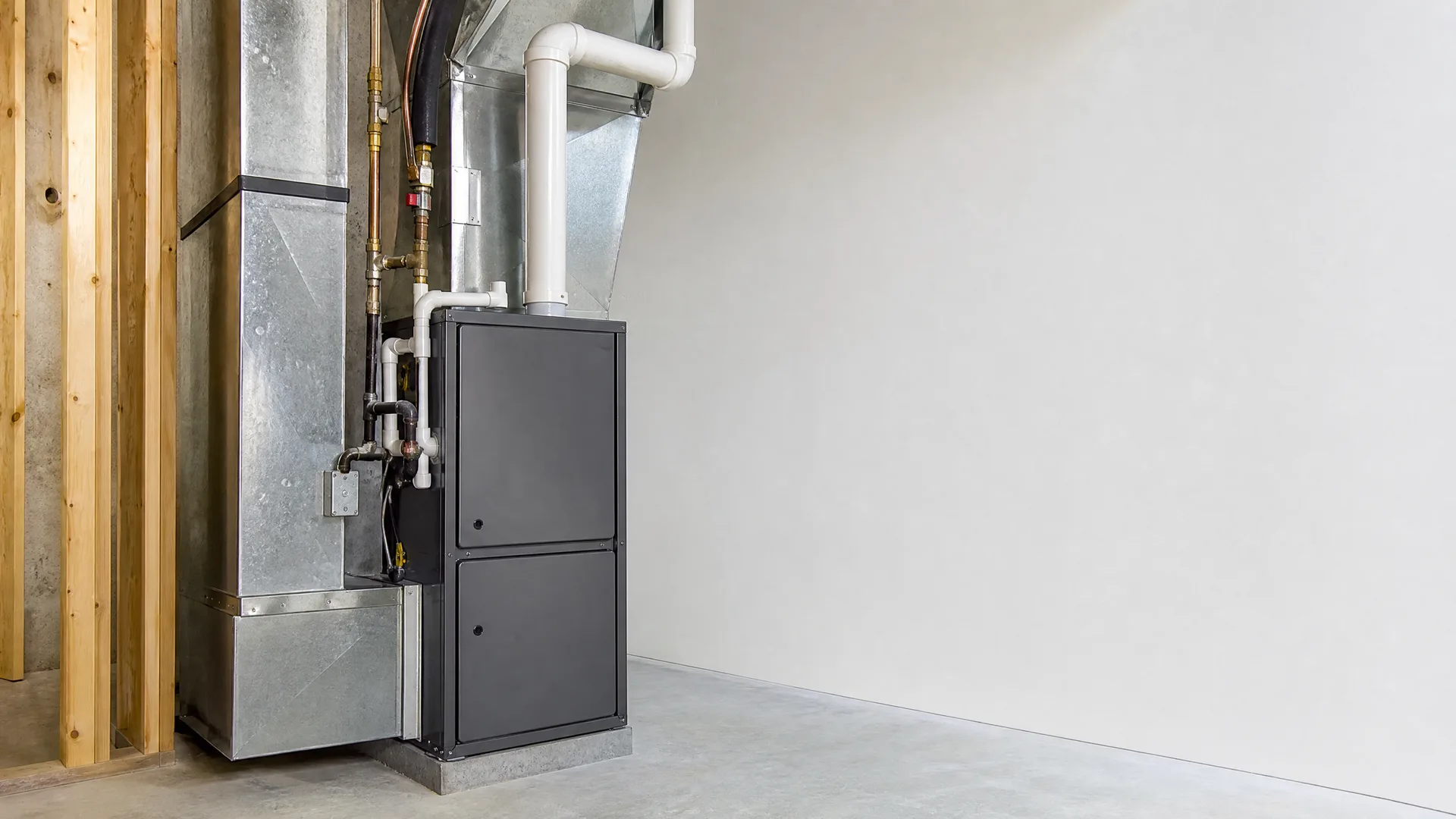
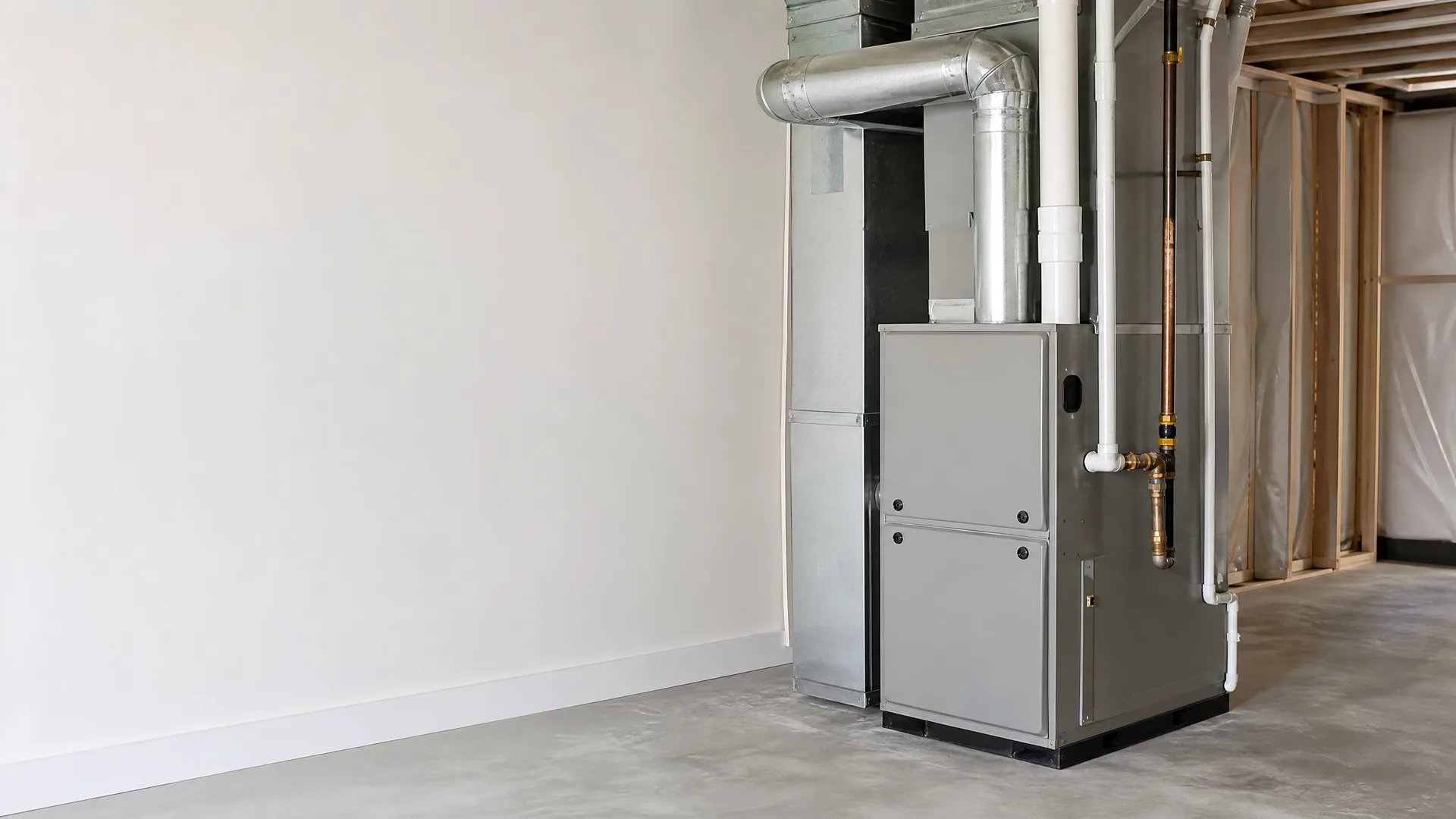
A dark gray furnace connected to galvanized sheet-metal ductwork, white PVC vent pipes and copper piping, standing against a plain light wall in a room with a bare concrete floor and exposed wood framing at left.

The thermostat may be the cause

If the thermostat's wiring has a short, or the unit itself has failed, it can send a constant call for heat to the furnace even after the room is warm enough. The furnace has no way to know the room already hit temperature. It just does what the thermostat tells it. Setting the thermostat down a few degrees and watching whether the furnace responds is one way to check if that's where the problem sits.

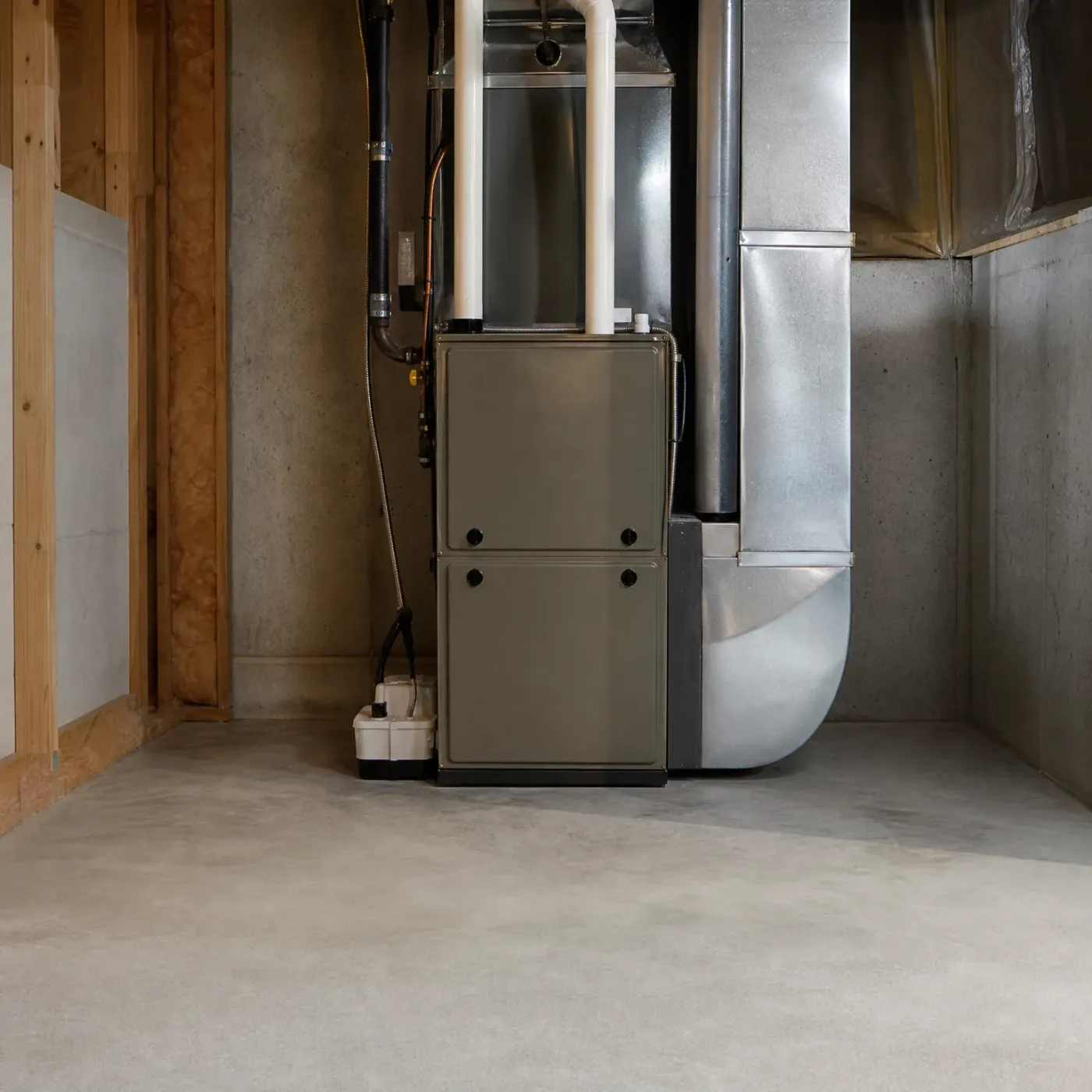
A gray high-efficiency furnace with sheet-metal ductwork, white PVC vent pipes and copper piping stands against a wall in an unfinished basement with a concrete floor and insulated wood stud framing at right.

A stuck relay keeps it firing

Inside the furnace, the blower and burners are controlled by relays and a control board that switch power on and off. If a relay gets stuck closed, the furnace keeps getting told to run even with no call for heat coming in. This isn't something you can see or test from outside the cabinet. It takes a contractor opening the furnace and checking the control board itself to find a stuck relay.

Thermostat or Furnace Part

Thermostat problem

  • A thermostat with a short in its wiring can send a steady call for heat even after the room is warm.
  • If the thermostat is level and wired right but still runs long, the problem is likely inside it, not the furnace.
  • Moving the thermostat or replacing its batteries won't help if the wiring itself is sending the wrong signal.
  • A contractor can test the low-voltage wiring between the thermostat and the furnace to see where the call for heat is stuck.
  • Swapping the thermostat is usually faster and cheaper than any repair inside the furnace itself.

Stuck furnace part

  • A dirty flame sensor can make the furnace keep firing because it reads the flame as weaker than it is.
  • A relay or gas valve stuck closed keeps the burners going even after the thermostat stops calling for heat.
  • A furnace that overheats the house but never shuts off is more likely a part stuck on than a thermostat issue.
  • These parts sit inside the furnace cabinet, so checking them means opening the unit, not just the wall thermostat.
  • Letting a stuck part run unchecked raises the gas bill every day it goes uncorrected, and power in New York already costs more than most of the country.
A gray high-efficiency furnace with white PVC vent pipes stands against a concrete basement wall beside sheet-metal ductwork, a small condensate pump on the floor, and exposed wood framing at left.

Furnace cycling the way it should

A furnace like this one fires, satisfies the thermostat, and shuts off. Warm air moves through the ductwork above it, the condensate pump clears water from the high-efficiency unit, and the flue pipes vent exhaust outside. No flames, no fan running past what the house needs.
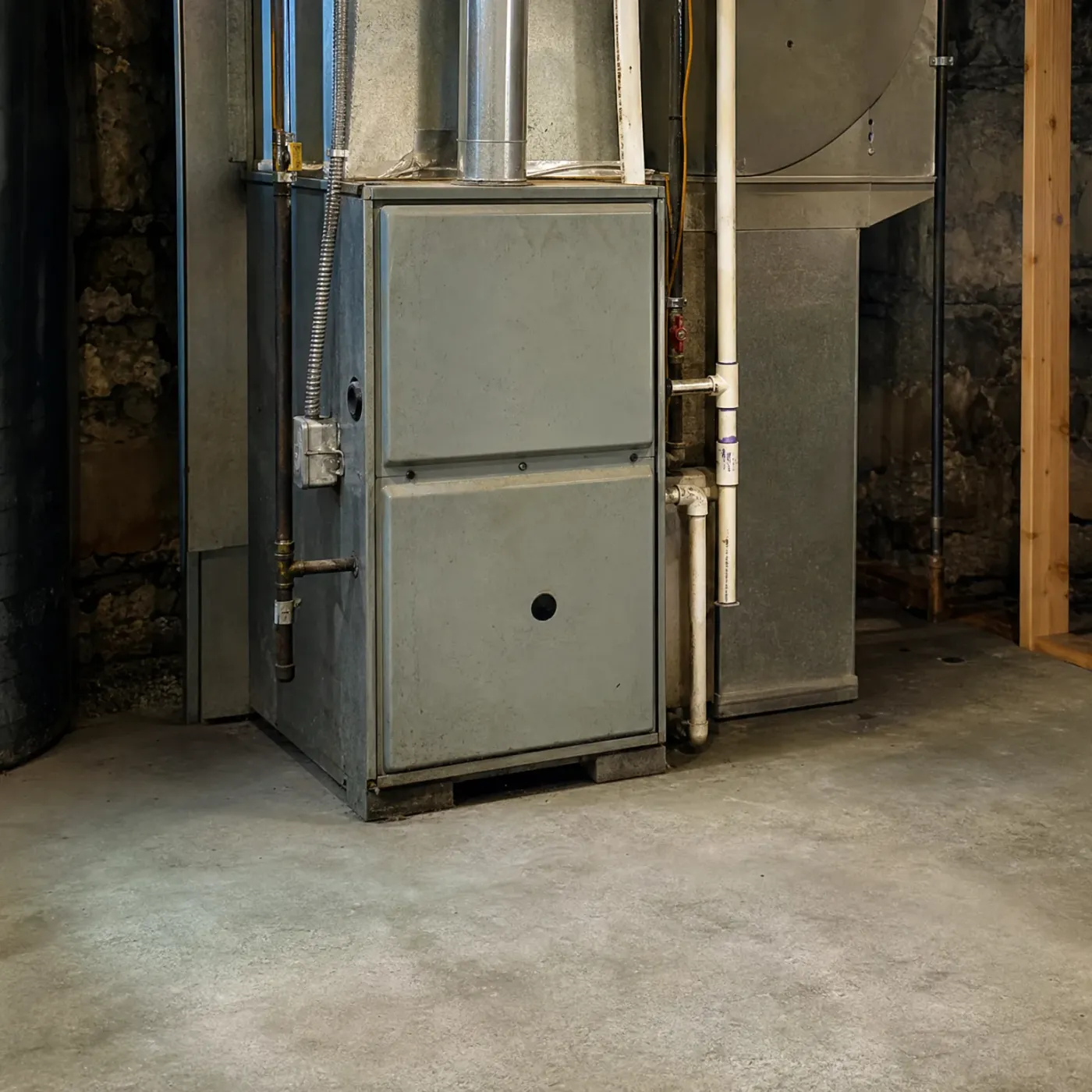
A gray sheet-metal furnace with flue pipe and adjacent ductwork stands against a stone basement wall on a concrete floor, with white PVC and metal pipes running nearby.

Furnace that won't stop

This furnace keeps firing long after the house is warm. Gas lines and corrugated tubing feed it the same as always, but something, the thermostat's call or a stuck part inside, isn't telling it to quit. Left alone, it runs up your gas bill and wears the parts inside faster.

What are you noticing right now in your house

The blower just keeps running, or the burners stay lit long after the rooms upstairs feel warm enough. You might notice the house creeping past the thermostat setting, windows getting warm to the touch, or a room that never cools down even with the furnace working the whole time. Some homeowners catch it by the gas bill first, since a furnace that won't shut off is burning gas the entire time it runs. With power rates what they are in New York, the blower motor pulling current nonstop adds to that bill too. Left alone, the furnace is working harder and longer than it needs to, and parts built to cycle on and off are instead running continuously, which wears on them faster.

Exterior wall of a building with gray horizontal siding, a metal downspout at center, and a concrete block foundation, with snow on the roof edge, ledge, and ground, and bare trees against an overcast sky during falling snow.

Winter nights average 24°F statewide, per NOAA. That's a long stretch of cold calling for heat, and a furnace that won't shut off is losing you money every one of those nights, not just running longer than it should. On a thermostat stuck calling for heat, or a flame sensor too dirty to signal the furnace to stop, the burners just keep firing while the house drifts past the temperature you set. With power costs in New York among the highest in the country, that difference shows up fast on the bill. Send the form and you're done hunting. No calling around, no explaining the problem three different times to three different companies, no sorting through quotes. A contractor who repairs furnaces takes it from there.

NOAA nClimDiv 1991-2020 county normals weighted by homes

Hand off the search today

A furnace that won't shut off doesn't fix itself by waiting it out, and in a New York winter you don't have room to experiment with thermostat settings or hope the next cold snap behaves better. Most homes here run on gas, and a furnace stuck firing is burning through it the whole time, night after night. Figuring out whether it's the thermostat or something stuck inside the furnace itself means someone has to actually look, and finding that someone usually means searching contractor sites, calling a few, explaining the same thing about your thermostat and your burners staying lit to each one, then sitting with quotes trying to guess who's right. Send this request instead and that whole search stops being yours to run. You stop checking the thermostat yourself and wondering if you're reading it right, stop warming up the same explanation for a third phone call, and get to just wait for someone who already knows what a furnace that won't shut off usually means in a house like yours.

The parts that control the burners

  • The limit switch tells the blower and burners apart, and a failed one can leave the burners firing with no signal to stop.
  • A gas valve that's stuck open keeps feeding the burners even after the control board sends the signal to shut off.
  • The control board itself reads signals from the thermostat and the limit switch, and a bad relay on it can keep the burners lit on its own.
  • Blower run-on after the burners cut off is normal, but burners staying lit for 20 minutes or more past a satisfied thermostat points to a stuck part.
  • A cracked heat exchanger can trip a safety switch meant to shut the furnace down, and some furnaces fail that check by staying on instead of off.
  • The inducer motor has to prove it's pulling exhaust out before the burners light, and a board that misreads that signal can leave the burners running continuously.

Inside the furnace, a handful of parts decide when the burners fire and when they stop, and the thermostat is only the start of that chain. The control board takes the call for heat from the thermostat, checks that the inducer motor is pulling exhaust out through the flue, then opens the gas valve and fires the burners. Once the thermostat is satisfied, the board is supposed to close the valve and shut the burners down, while the blower keeps running a few minutes longer on its own to pull the remaining heat out of the heat exchanger. That blower run-on is normal and not a sign anything is wrong. What isn't normal is the burners themselves staying lit well past the point the thermostat should have cut them off. That can mean the gas valve is stuck open, feeding fuel even after the board tells it to close. It can mean a relay on the board itself has failed, keeping the burners lit independent of what the thermostat is saying. It can mean the limit switch, which is supposed to separate blower operation from burner operation, has failed in a way that leaves the burners with no signal to stop. A cracked heat exchanger can trigger a safety switch meant to shut things down, and on some units that failure shows up as the opposite, the furnace staying on rather than shutting off. Any one of these is a furnace part failing, not a thermostat setting to adjust.

A man in a blue T-shirt sits on a light gray sofa, laughing while looking at an open laptop in the foreground, with a framed picture, lamp and potted plant behind him.
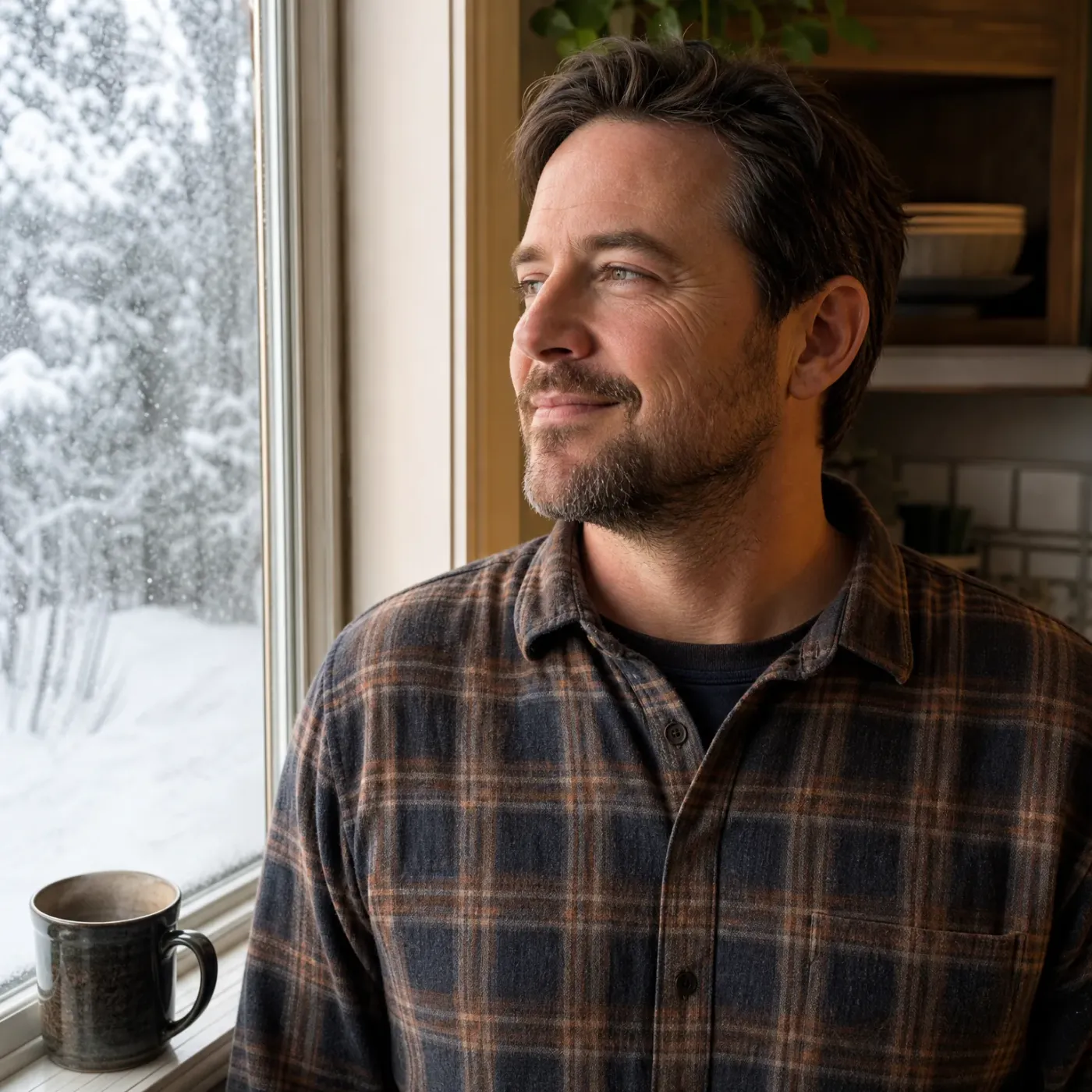
A bearded man in a blue and brown plaid flannel shirt stands indoors looking out a window at snow-covered trees, with a ceramic mug on the windowsill.
  1. Thermostat sends a call for heat to the control board

  2. Control board opens the gas valve and starts ignition

  3. Burners light and the limit switch monitors plenum temperature

  4. Blower pushes warm air once the plenum reaches set temperature

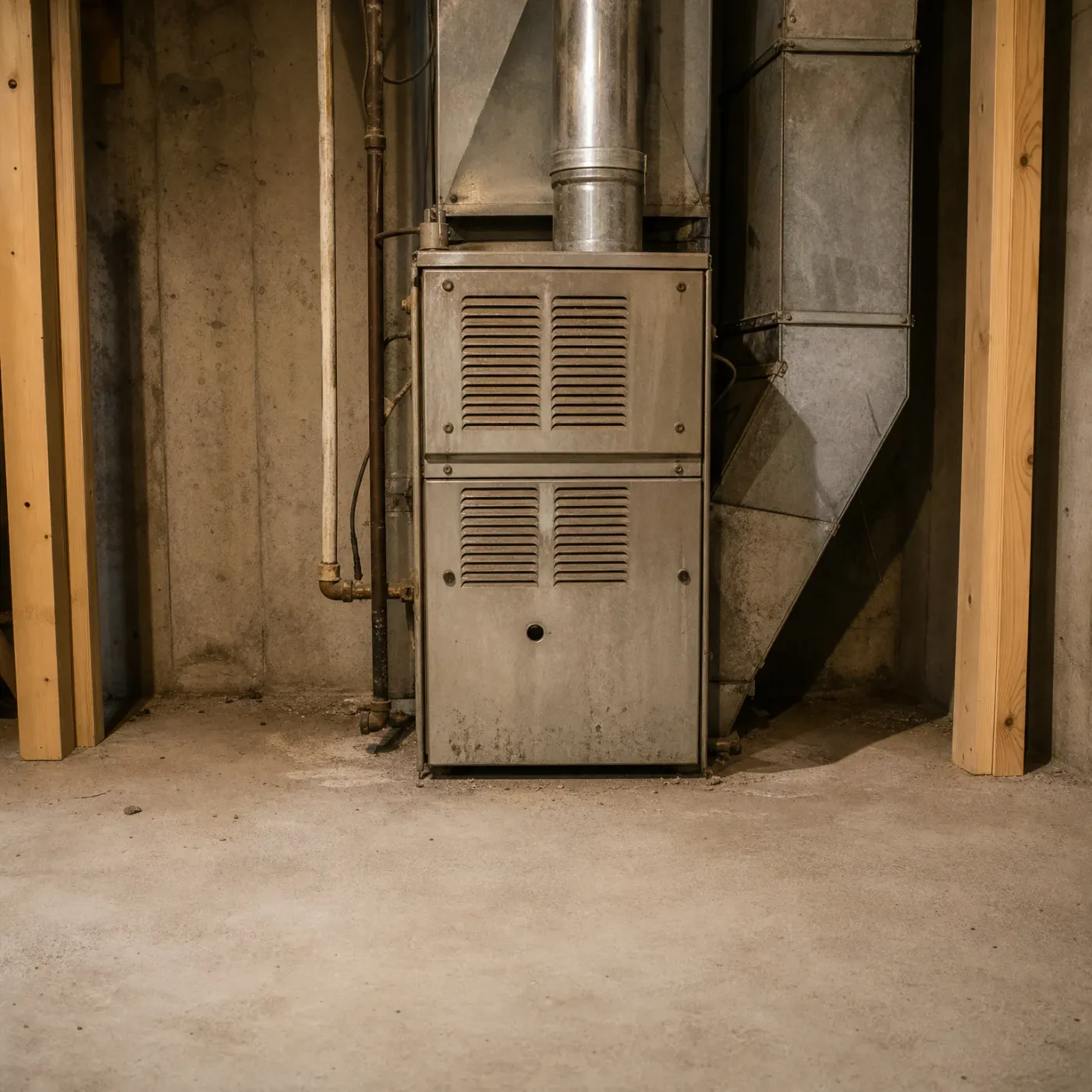
A metal furnace with louvered panels stands against a concrete basement wall, connected to sheet-metal ductwork and a round flue pipe, with wooden framing posts and a pipe nearby.
Before you get your furnace repair
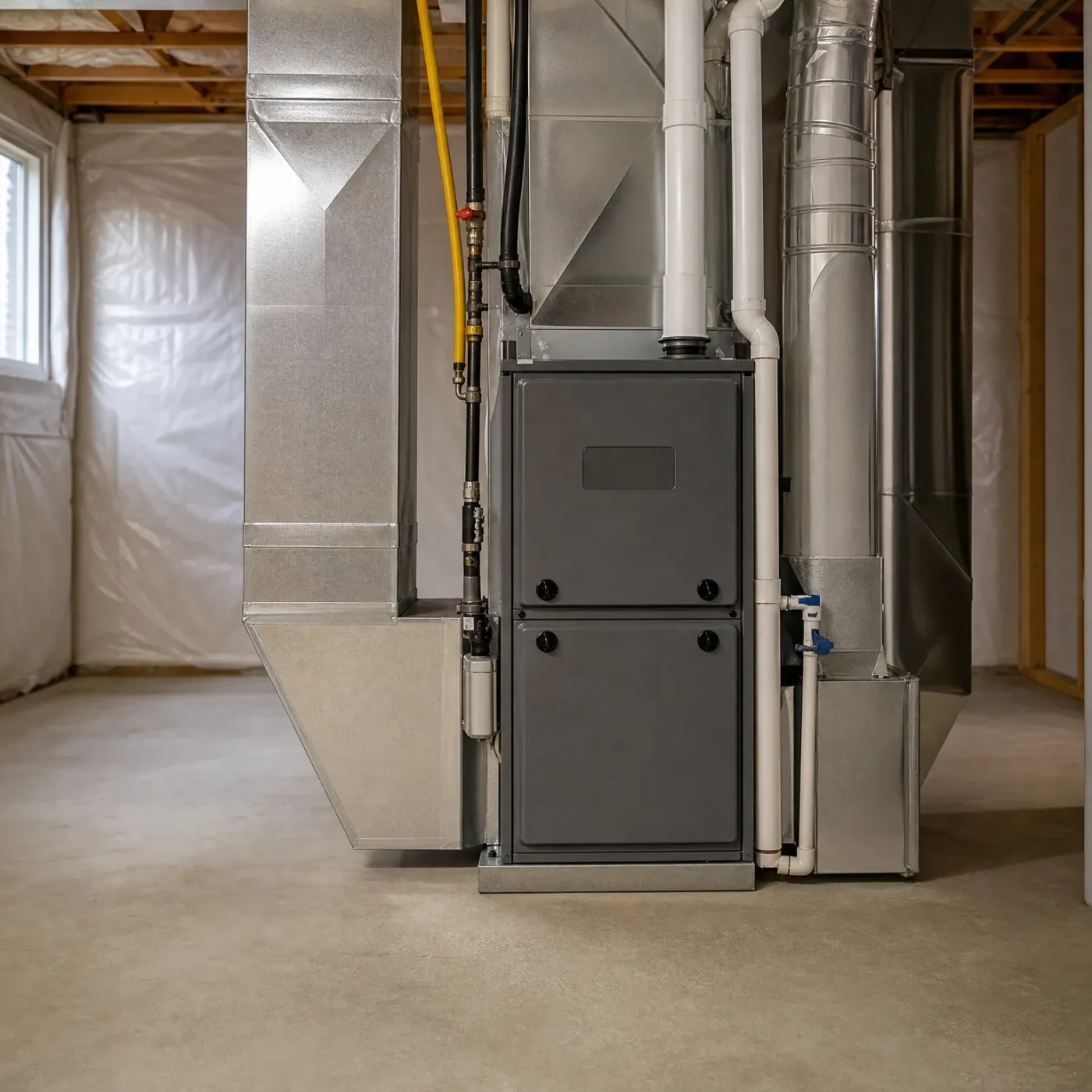
A gray gas furnace stands on a concrete basement floor, connected to sheet-metal ductwork, white PVC vent pipes, and a yellow gas line, with plastic sheeting covering the walls.
After you get your furnace repair

Winter nights average 24°F statewide

At 24°F on a typical winter night, your furnace should be cycling on and off to hold the house steady, not running straight through until morning. If it's not shutting off, it's burning gas the whole night instead of just part of it.

NOAA nClimDiv 1991-2020 county normals weighted by homes

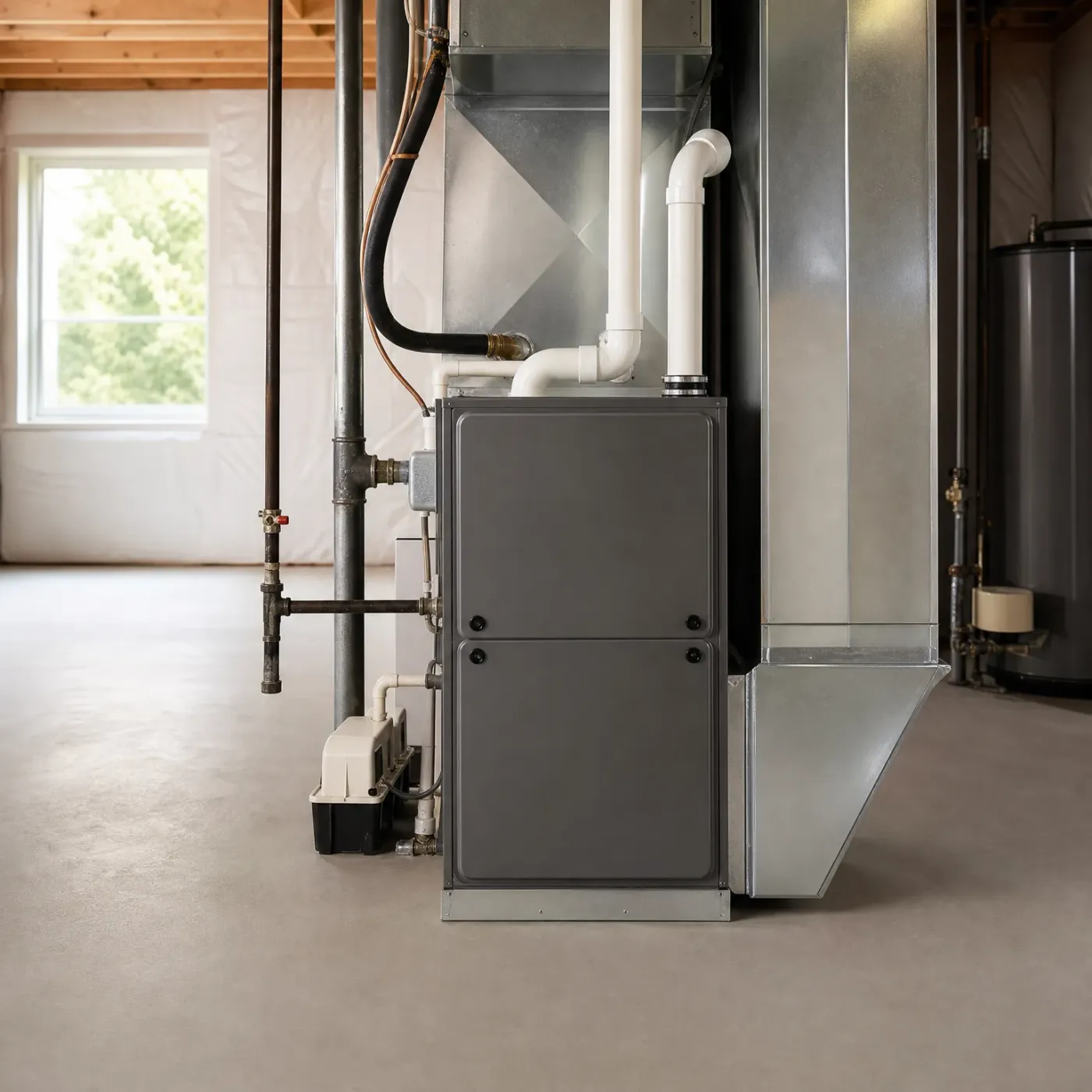
A gray high-efficiency furnace in a basement with sheet-metal ductwork, white PVC vent pipes, metal plumbing lines, a condensate pump on the floor, and a window showing green trees outside.

Cycling normally

A furnace like this fires up, heats the plenum, and shuts off once the thermostat's satisfied. The ductwork overhead carries that warm air out to the rooms, the condensate pump clears water as it collects, and the flue pipes vent exhaust outside without any smell reaching the basement.

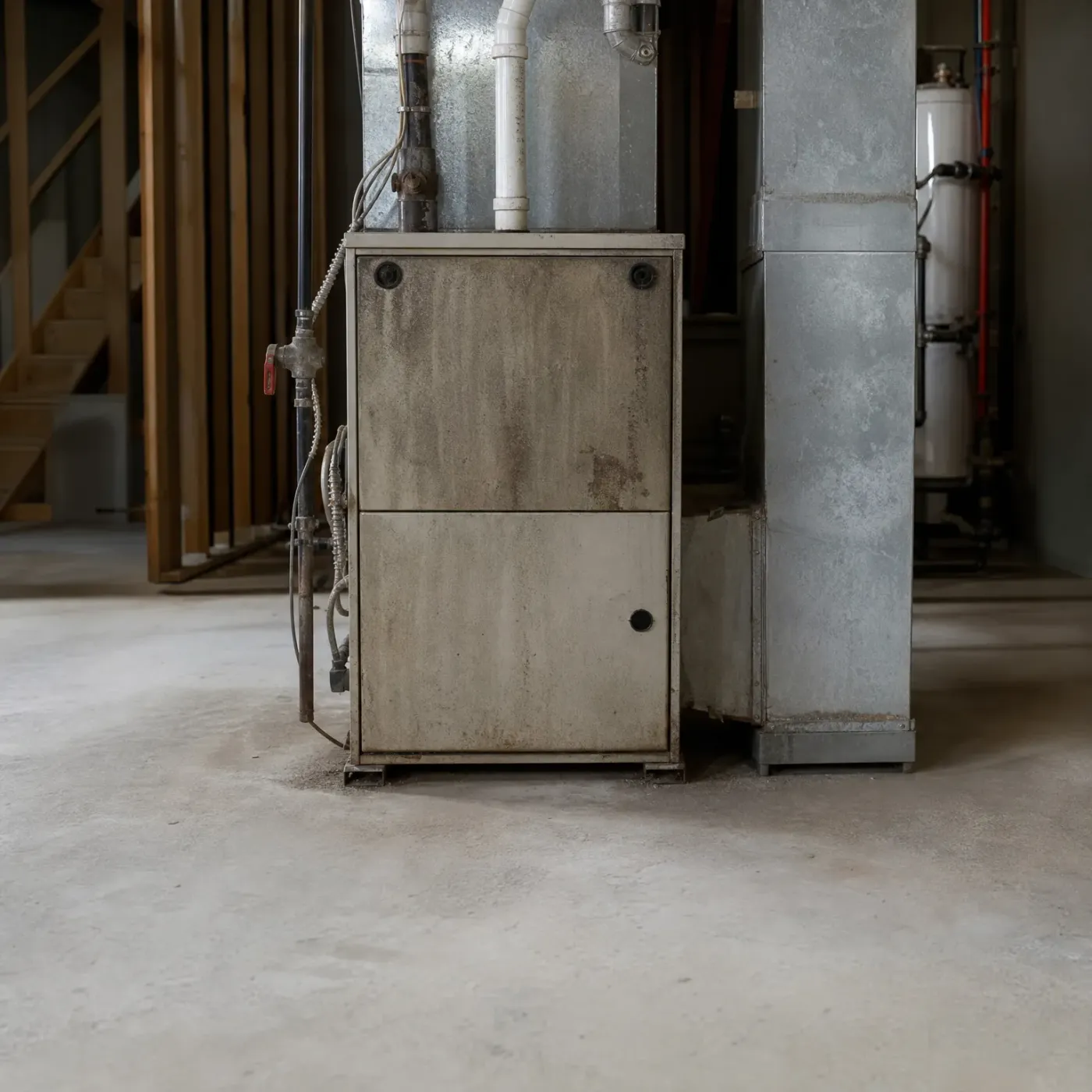
An older metal furnace with PVC and metal pipes stands on a concrete basement floor beside galvanized ductwork, with wooden stairs and a water tank in the background.

Stuck running

A furnace like this looks the part, old casing, dust on every surface, gas line and condensate pipes still hooked up along the side, but it won't stop firing. The burners stay lit well past the point they should've shut down, and nothing inside is telling them to stop.

A closed silver laptop and a white cup of coffee on a saucer sit on a wooden table in front of a wooden chair, a plain beige wall, a potted leafy plant and a window with greenery outside.

A furnace that won't shut off has a reason behind it

Somewhere between the thermostat and the burners, something is stuck telling the furnace to keep going. It might be a short in the thermostat wiring, a limit switch that failed, a gas valve that won't close, or a flame sensor too dirty to read the fire correctly. Each one points to a different fix, but the furnace itself can't tell you which. That takes someone who can test the wiring, check the switch, and look at the sensor in person.

Left alone, it keeps burning gas through nights that average 24°F, heating the house past where you set it. Finding someone to look at it is the part you can hand off. Once you send the form, you're done calling around, explaining the same problem to a second and third contractor, and weighing quotes against each other. Someone licensed to work on your furnace takes it from here.

A dark ceramic mug on a round wooden table beside a light grey sofa with a woven cushion and knit throw, with a window, potted plant, floor lamp and wooden cabinet blurred in the background.
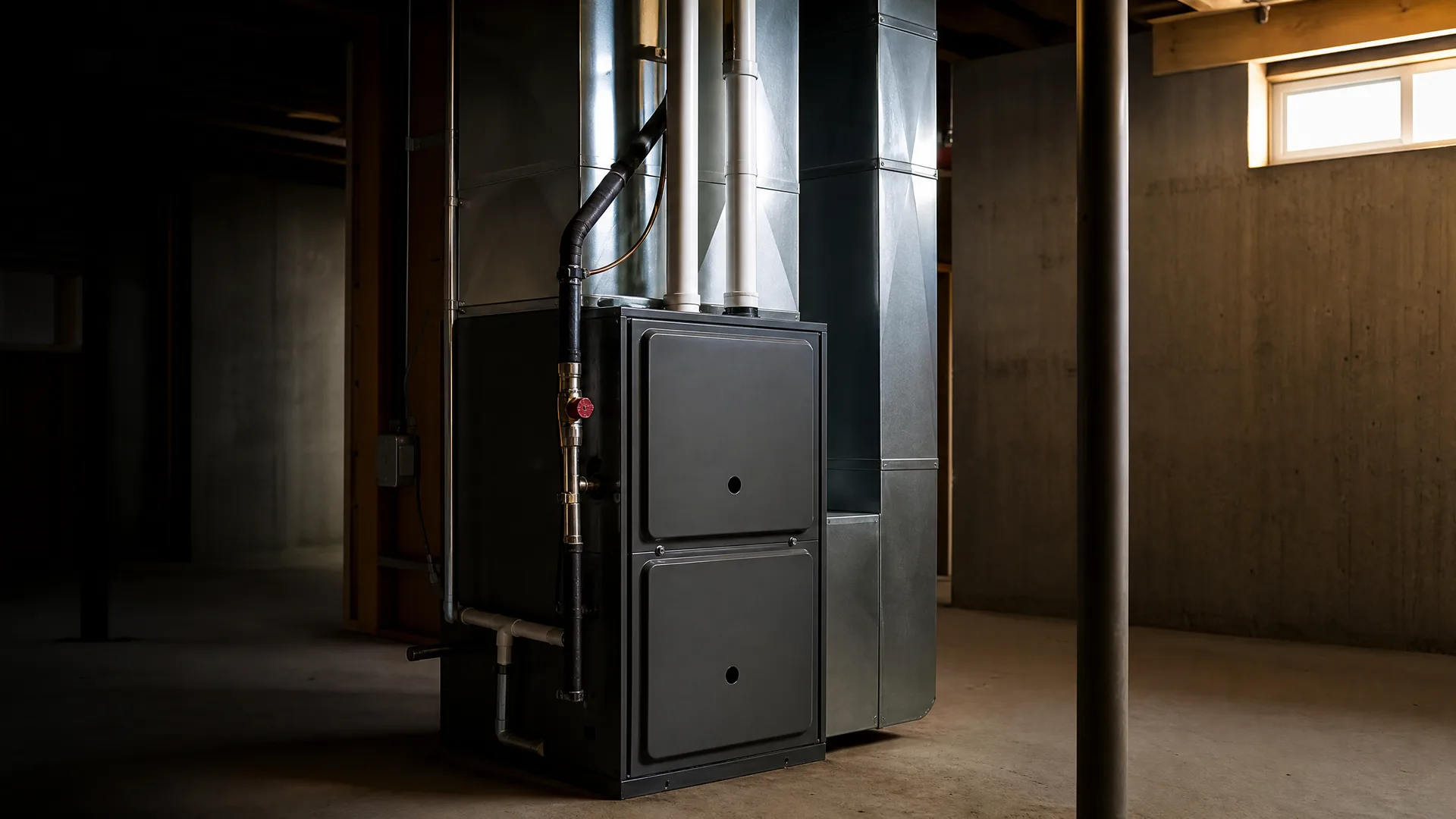
A dark gray high-efficiency furnace with two white vent pipes and connected sheet-metal ductwork stands in an unfinished basement with concrete walls, a support pole, and a small window.

Hand off the furnace problem

Step 1 of 3: Equipment